End of an Era: Audi Kills the A8 and the Fight for Large Luxury Sedans
Written and reviewed by the CarCultureHQ Editorial Team. See our Editorial Policy for sourcing and corrections.
Estimated Read Time: 8 minutes
Summary: It is official: Audi is killing the A8 this year. This is not just one car model ending; it is a definitive sign that the entire market for traditional, internal-combustion large luxury sedans is dead. The flagship formula that defined automotive success for 50 years (Point A) has been replaced by massive SUVs and cold-technology electric vehicles (Point B). We break down why this specific car mattered, what killed it, and why you should care that the traditional "three-box" flagship is gone.
It’s Over for the Big Sedan Hype
Audi just confirmed what everyone wrenching on these cars already knew: the A8 is finished.
Production wraps up later in 2024. After decades as the alternative flagship for executives who valued understated technology over raw street presence, the understated sleeper is done. This isn't just a model change; there is no immediate gasoline replacement.
Generic news sites will treat this as just another industry footnote. Brenda at the accounting office will say "too bad, they were comfortable." At Car Culture HQ, we are not interested in Brenda’s generic sentiment. We are interested in the engineering shift.
The death of the A8 matters because it defines the absolute, final surrender of the traditional internal combustion (ICE) large luxury sedans to two dominant market forces: massive SUVs and cold-technology large luxury electric vehicles.
Join CarCultureHQ
Claim your free digital garage
Build your ride profile, log modifications, join a crew, and get your build in front of thousands of enthusiasts.
Create your free garageWhat Actually Killed the A8 (Spoiler: It Wasn't SUVs... Directly)
The problem was never the A8. It was a spectacular car, especially when fitted with the monster 4.0T or, in rare cases, the W12. The engineering was precise, the aluminum space frame made it drive smaller than its size, and the comfort was peerless.
But traditional luxury is dead.
Consumers did not wake up and suddenly decide they hated comfortable sedans. The definition of automotive status has changed. Luxury is no longer defined by how well a sedan manages dynamic weight transfer or isolates you from the road; it is defined by utility, massive technological interfaces, and the instant torque of large luxury electric vehicles.
Audi’s own internal sales prove the shift. The A8, once their technological halo, was completely overshadowed by the Q8 and the massive profits generated by cars that prioritized utility first.
large luxury electric vehicles Are the New Flagship V8/W12
The final bullet in the A8's block was the reality of modern propulsion. The large luxury sedans category was built on the premise of "effortless power." A huge V8 or a heavy W12 provided effortless torque, smoothness, and isolation from vibration. They were quiet, powerful executive shuttles.
Large luxury electric vehicles accomplish that specific mission better, with less complexity, and zero emissions. A quiet, single-speed EV powertrain offers a smoothness that no internal combustion engine, regardless of its cylinder count, can match.
The psychology has flipped. The tech-conscious executive who used to buy an A8 is now demanding a high-performance EV. They value OTA updates and large luxury electric vehicles dynamics over dynamic, heavy engine sounds. Audi knows this, and their resources are fully committed to large luxury electric vehicles.
A Eulogy for an Engineered Sleeper
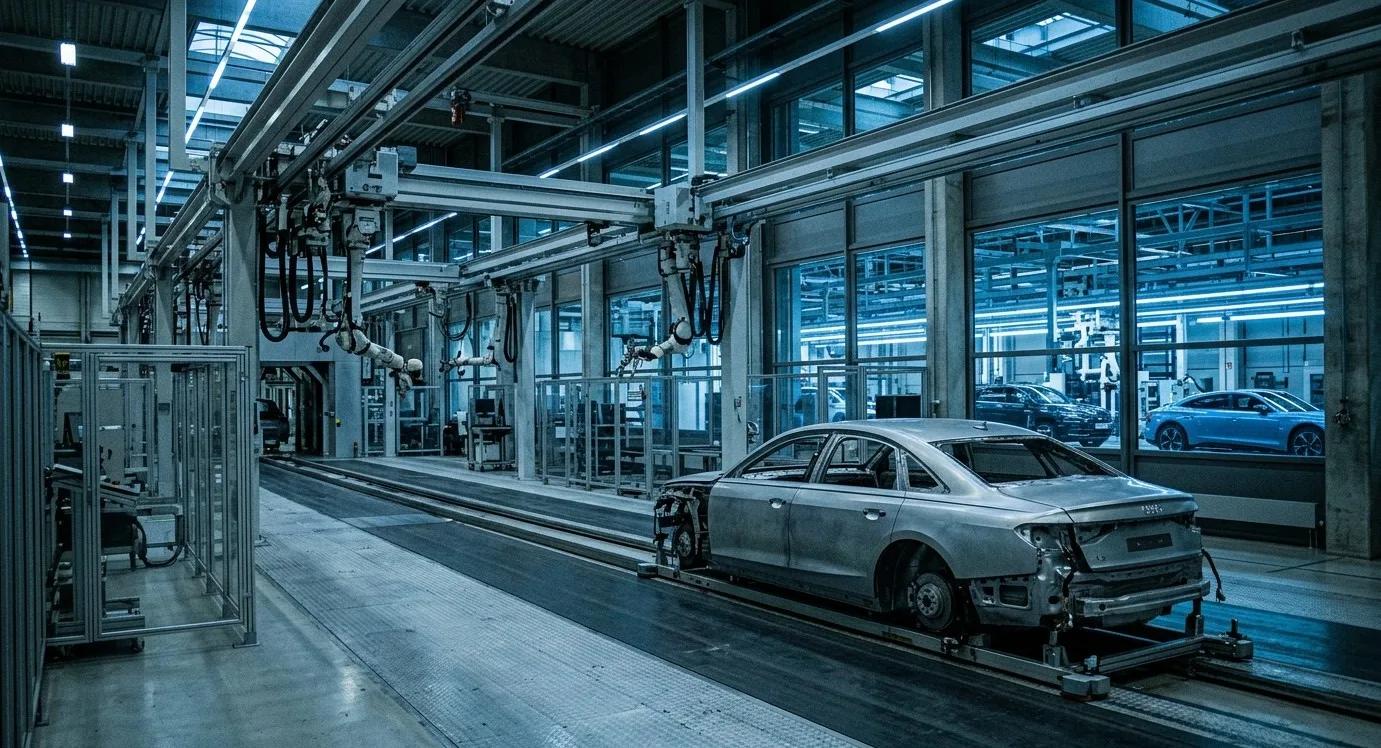
This specific car, the A8, matters because it represented something unique among large luxury sedans.
Mercedes had the S-Class, which was the visible, undeniable status symbol. BMW had the 7 Series, which was the sports car in an executive suit. The Audi was always the technical sleeper. It was the choice of people who wanted the highest level of German engineering but wanted zero street presence. It was anonymous.
It prioritized logic over show. It was built using the advanced aluminum space frame, which was an engineering achievement that reduced weight significantly compared to its rivals, giving it superior driving dynamics. Its "luxury" was felt in how well the suspension reacted, how precise the steering felt, and how quiet the cabin was at 130 mph, not just in how many screens it had.
Audi is erasing that logical, understated engineering identity. The next flagship will prioritize high-tech large luxury electric vehicles dynamics and user interface first, losing that quiet mechanical excellence that defined the A8.
The Garage Discussion is Done: Move on to EVs
BMW and Mercedes are still playing the internal combustion game... for now. The new 7 Series and the current S-Class offer ICE powertrains, but let's be honest: their true identities have already shifted to the i7 and the EQS.
The A8’s death is the final notification on your dashboard. If you are an automotive enthusiast who still respects the engineering complexity of a traditional FLAGSHIP, you should be sad. This marks the definitive end of the ICE large luxury sedans as a primary market force. The next flagship formula will be electric, focused on software and large luxury electric vehicles dynamics, not traditional engineering.
A8 production ends soon. Get one while you can, or move on to the massive technological interfaces. The garage is closed. The large luxury sedans era is over.
Join CarCultureHQ
Claim your free digital garage
Build your ride profile, log modifications, join a crew, and get your build in front of thousands of enthusiasts.
Create your free garageFrequently asked questions
Why did Audi decide to cancel the A8 now?
The cancellation is part of Audi's larger commitment to transition entirely to large luxury electric vehicles by the early 2030s. The ICE platform for a traditional large luxury sedan is incredibly expensive to develop and maintain, and the sales volume simply does not justify that investment when all R&D resources must be pushed toward upcoming large luxury electric vehicles platforms. Consumers psychology (Q8 and Urus) and technology demand (large luxury electric vehicles) killed the traditional model.
Is Audi developing a direct replacement for the A8?
Audi has not confirmed a direct, three-box large luxury sedans successor. However, they are developing a massive EV sedan, likely based on the upcoming PPE architecture, which will serve as their technological and luxury flagship. It will be an EV-first large luxury vehicle, focusing on range, technology, and interior experience rather than traditional ICE large luxury sedans dynamics.
How did the A8’s technology differ from its competitors like the Mercedes S-Class or BMW 7 Series?
The Audi A8 was always the "engineering-first" sleeper in the category. While Mercedes prioritized absolute, visible comfort and tech showmanship, and BMW prioritized a "driver-focused" executive experience, Audi focused heavily on logic and construction. The massive A8 legacy was its full aluminum space frame, which reduced weight significantly. Its dynamics were quiet and effective rather than overt.
What is the future of large luxury sedans in general?
Traditional gasoline-powered large luxury sedans are a dying breed. Mercedes and BMW still offer them, but they are essentially placeholder products while the true transition to large luxury electric vehicles (EQS, i7) solidifies. The defining characteristics of luxury flagships (smoothness, torque, isolation) are actually better delivered by large luxury electric vehicles, making the engineering rationale for internal combustion large luxury sedans increasingly difficult to justify for manufacturers.


Comments
Join the conversation on End of an Era: Audi Kills the A8 and the Fight for Large Luxury Sedans. Keep it civil — admins moderate reports.
Loading comments…