From Parking Lot Hangout to Sanctioned Show: The Hard Work of Building a Legit Event
Anyone can drop a pin in a group chat and call it a car meet. Keeping that gathering alive, turning it into a legit permitted event, and not getting kicked out by property management or local police is where the real work begins. This post breaks down the unglamorous reality of building a sanctioned car show from scratch, from municipal permits and venue insurance to crowd control and keeping the respect of the local community.
From Parking Lot Hangout to Sanctioned Show: The Hard Work of Building a Legit Event
Anyone with an Instagram account and a few friends can drop a pin for an empty shopping plaza at 9:00 PM on a Friday. For thirty minutes, it feels great. Fifty cars show up, people rev their engines, somebody gets bored and dumps their clutch across two parking bays, and within twenty minutes, three police cruisers roll in with flashing red and blues to clear the lot.
Meet over. Everyone scatters.
That is how most car gatherings start and die.
If you want to build something that actually lasts, something where people can bring their clean project cars without worrying about trespass warnings or impound flatbeds, you have to make the jump from a rogue parking lot meetup to a fully sanctioned event.
It is unglamorous, frustrating work, but it is the only way real automotive community events survive.
Planning a real meet or weekend track day? List it on the Car Culture HQ Event Calendar. Connect with local crews, organize roll-ins, and give builders a reliable home base.
Join CarCultureHQ
Claim your free digital garage
Build your ride profile, log modifications, join a crew, and get your build in front of thousands of enthusiasts.
Create your free garageThe Illusion of the Free Parking Lot
The biggest misconception in the scene is that parking lots are public property. They are not. Strip malls, industrial parks, and stadium plazas belong to private landlords, corporate property managers, and municipal entities.
The moment a crowd shows up without permission, property managers see only three things:
Potential property damage to asphalt, curbs, and light poles
Massive liability lawsuits if a car hits a pedestrian
A morning clean-up bill for discarded soda cans, fast-food bags, and rubber marks
If you want to stay in that lot, you have to approach the owner before you ever post a flyer. Walk into the management office dressed like a professional, not a street racer. Explain your layout, bring a map showing designated parking lanes, and tell them exactly how your crowd will bring foot traffic and business to nearby diners, coffee shops, and gas stations.
The Paperwork Nobody Likes to Talk About
Turning a hangout into a sanctioned show means dealing with the boring stuff that kills casual efforts: permits and insurance.
If you are closing public streets, using city-owned parks, or expecting more than a couple hundred vehicles, your municipality requires a special event permit. That means filling out applications with the city council or parks department months in advance, coordinating traffic flow with local law enforcement, and setting up dedicated emergency vehicle lanes.
Then comes event liability insurance.
"Insurance and permits sound like corporate red tape until someone drops an oil pan or dings a fender on private asphalt. Paperwork is what keeps your personal bank account safe."
A basic single-day event liability policy protects both you and the property owner from catastrophic claims. When a venue manager asks for a certificate of insurance naming them as additionally insured, having that document ready in a clean PDF is what separates a legitimate organizer from a rogue meet host.
Crowd Control and Culture Control
Securing the venue is only half the battle. Protecting the venue from your own crowd is the real test.
Every organizer knows the dread of hearing an engine bounce off the rev limiter near the exit gate. It takes fifty respectful builders to establish goodwill with a property owner, and exactly one idiot doing a burnout on cold street tires to get the venue permanently shut down.
Sanctioned shows survive on proactive culture management:
Place experienced crew members at every exit to control rollout speeds
Put large trash cans at every aisle corner and do a final sweep before handing back the keys
State zero-tolerance rules clearly on flyers, social posts, and entrance placards
Build a direct relationship with local police so they know you are managing the site responsibly
When local law enforcement knows you are actively policing your own exits and keeping the event peaceful, they stop seeing your show as a nuisance and start treating it as a legitimate community gathering.
The Long Game
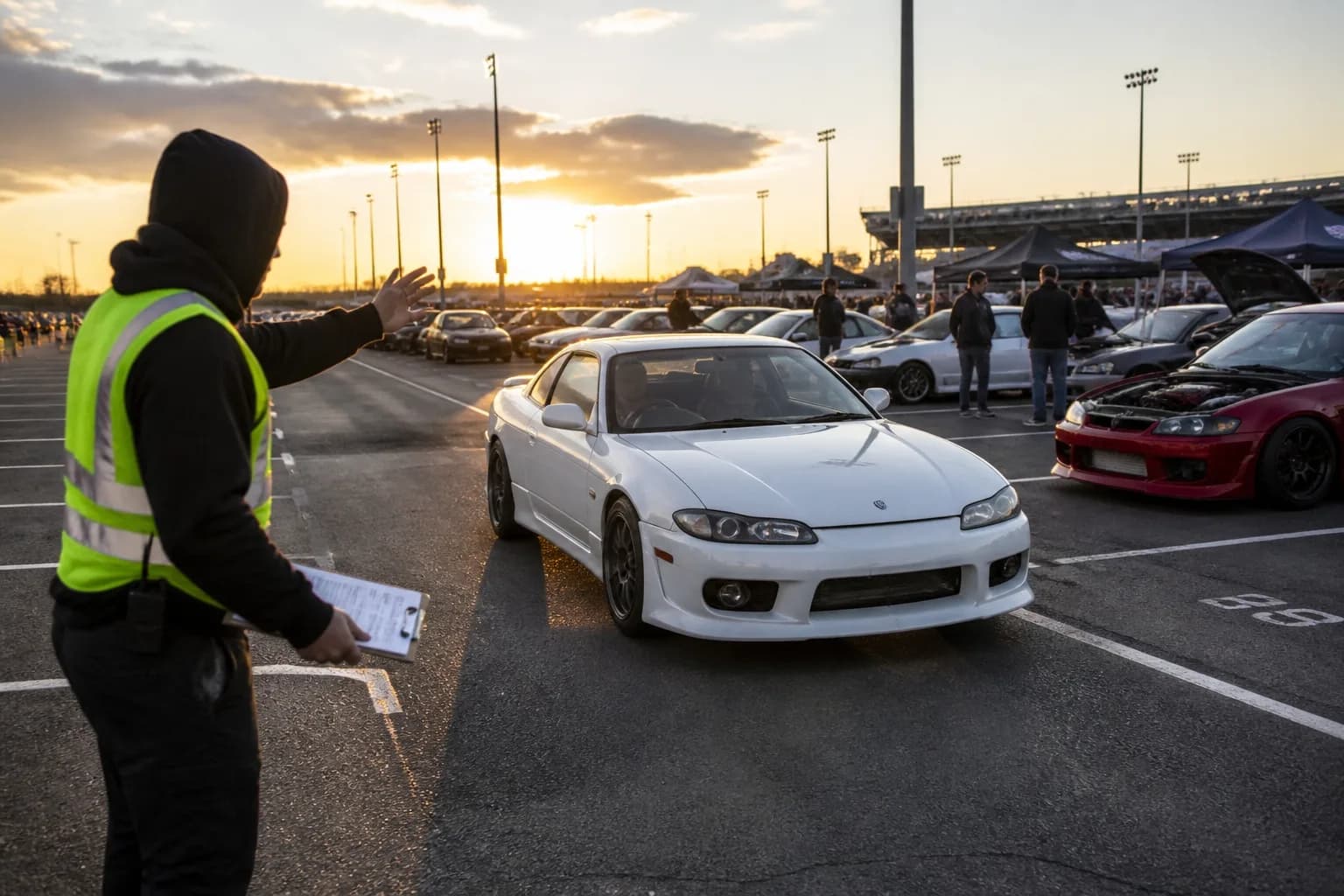
Building an annual event that draws hundreds of builds from across the state is not an overnight job. It takes years of consistent execution, honest communication with local town boards, and a crew willing to show up at 5:00 AM with clipboards, safety vests, and brooms.
The payoff is worth every single headache.
When you stand at the main entrance at 10:00 AM and watch hundreds of spotless builds roll in through the gate, knowing the venue is secure, the permits are signed, and nobody is getting kicked out, you realize what real grassroots organizing actually looks like.
Join CarCultureHQ
Claim your free digital garage
Build your ride profile, log modifications, join a crew, and get your build in front of thousands of enthusiasts.
Create your free garageFrequently asked questions
How do I get permission to host a car meet in a private parking lot?
Locate the property management company or landlord through public tax records or on-site leasing signs. Schedule a face-to-face meeting, provide a site layout map with entry and exit routes, and show proof of event liability insurance.
What type of insurance do I need for a sanctioned car show?
You need a commercial general liability policy for special events. Most venues require a minimum of one million to two million dollars in general liability coverage naming the property owner as an additional insured party.
How far in advance should I start planning a permitted car show?
Start planning at least three to six months ahead. Municipal event permits, venue contracts, insurance certificates, and local crew promotions require several weeks of processing time.
How do organizers stop burnouts and reckless driving at exits?
Station dedicated volunteers with high-visibility gear and two-way radios at all exit ramps. Announce clear zero-tolerance rules beforehand and coordinate with local traffic officers to monitor public roads right outside the venue.

Comments
Join the conversation on From Parking Lot Hangout to Sanctioned Show: The Hard Work of Building a Legit Event. Keep it civil — admins moderate reports.
Loading comments…