JDM vs USDM vs KDM: Beyond the Internet Tribe Wars
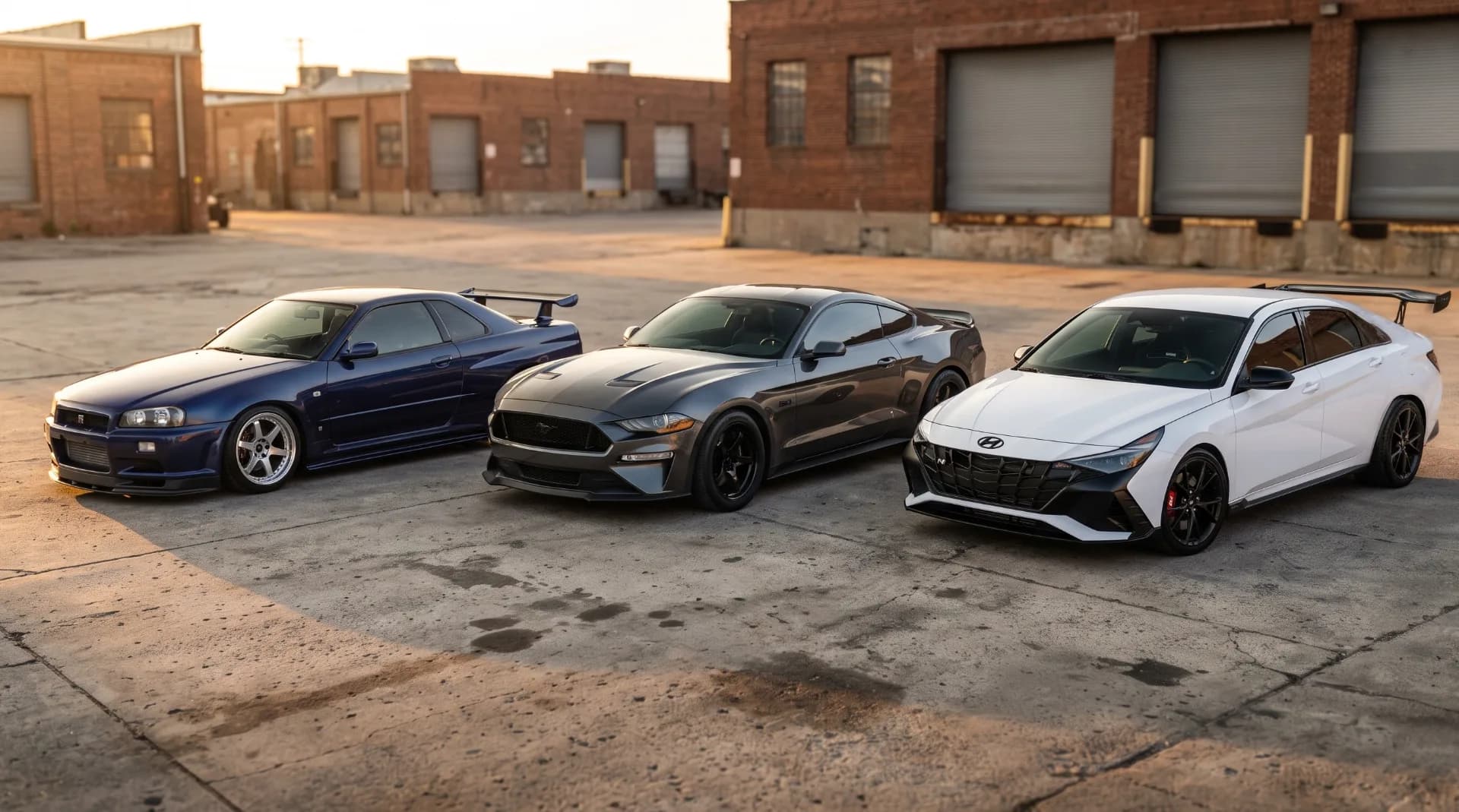
The internet loves turning JDM, USDM, and KDM into tribal warfare. This breakdown cuts through the forum loyalty and spec sheet posturing to look at how Japanese, American, and Korean platforms actually feel to wrench on, drive hard, and modify in a real garage.
JDM vs USDM vs KDM: Beyond the Internet Tribe Wars
If you spend five minutes on car forums or social feeds, you know the drill. JDM purists will tell you that true driving soul died in 1999 somewhere along the Shuto Expressway. Domestic diehards will laugh off anything without eight cylinders and tell you displacement cures all sins. Meanwhile, the KDM crowd is holding down corners with modern turbocharged four-bangers, daring anyone to check their lap times against cars twice the price.
Online, it is a tribal war. In a real garage with a breaker bar in your hand, none of that noise matters.
Every scene was shaped by the pavement it was built for, the rules of its home country, and the specific headaches it gives you on jack stands. If you want to know where to drop your money and your late nights, you need to understand the real character of each platform when the hype gets stripped away.
Join CarCultureHQ
Claim your free digital garage
Build your ride profile, log modifications, join a crew, and get your build in front of thousands of enthusiasts.
Create your free garage1. JDM: Precision, Weight Savings, and the Tax of Nostalgia
The Japanese Domestic Market was never about straight-line dominance from the factory. Japanese roads are tight, mountain touges demand quick rotation, and strict tax brackets historically penalized engine displacement. That forced Japanese engineers to do more with less.
They gave us high-revving naturally aspirated engines like Honda's B and K series, twin-turbo inline-six powerhouses like the 2JZ and RB26, and lightweight platforms that rotated on a dime. When you get behind the wheel of a proper 1990s Japanese coupe, the steering communicates everything. The pedals are spaced for heel-toe downshifts, and the chassis tells you exactly when the rear tires are starting to give up grip.
The downside today is reality.
Between the 25-year import rule and hype culture, buying a clean JDM chassis now requires serious cash. You are paying top dollar for a vehicle that often comes with brittle wiring, dry-rotted rubber bushings, and hard-to-find replacement trim pieces. You do not build a classic JDM car today just for speed; you build it because you respect the engineering ethos and the analog connection.
2. USDM: Raw Grunt, Iron Blocks, and Endless Spares
American muscle and domestic performance vehicles come from an entirely different philosophy. America has endless open highways, wide grid roads, and cheap fuel.
That bred an engineering culture focused on displacement, low-end torque, and rugged simplicity. An LS V8 or a Coyote 5.0 does not need complex twin-scroll turbo setups to plant you in the back of the seat. Step on the gas at 2,000 RPM in third gear, and the car simply moves.
For garage mechanics, USDM offers advantages that are hard to beat:
Parts Everywhere: You can break an alternator or a water pump on a Friday night and find a replacement at an auto parts store in almost any town by Saturday morning.
Cheap Power: Getting 450 to 500 reliable wheel horsepower out of a domestic platform is standard procedure and rarely breaks the bank.
Chassis Evolution: Modern USDM platforms like the Mustang with independent rear suspension and the Alpha-platform Camaro shed the straight-line-only stigma long ago; they set blistering road-course times right out of the box.
The trade-off is footprint. Domestic cars are wide, heavy, and eat consumables like brake pads and wide tires at a fast pace.
3. KDM: The Underdog That Stopped Asking for Permission
Twenty years ago, nobody at a track day looked twice at a Korean badge. Today, laughing off KDM is an easy way to lose a highway roll or get passed on the outside of a hairpin.
Hyundai, Kia, and Genesis stopped trying to make boring commuter boxes and hired the engineers who built European performance divisions. Platforms like the Genesis Coupe laid the rear-wheel-drive tuner groundwork, but the modern N cars and twin-turbo V6 sedans completely changed the conversation.
KDM platforms come packed with factory electronic limited-slip differentials, aggressive exhaust crackles, stiff chassis bracing, and factory big brakes that do not fade on lap three. They offer a tuning scene that feels like JDM in the early 2000s: young, hungry, creative, and completely unconcerned with traditional gatekeeping.
You get modern safety, sharp interiors, and direct-injected turbo torque for the price of a thirty-year-old unpainted hatch.
4. The Garage Reality: Working on Them
A car's personality is only half the story. The other half is what happens when it is up on stands in your garage.
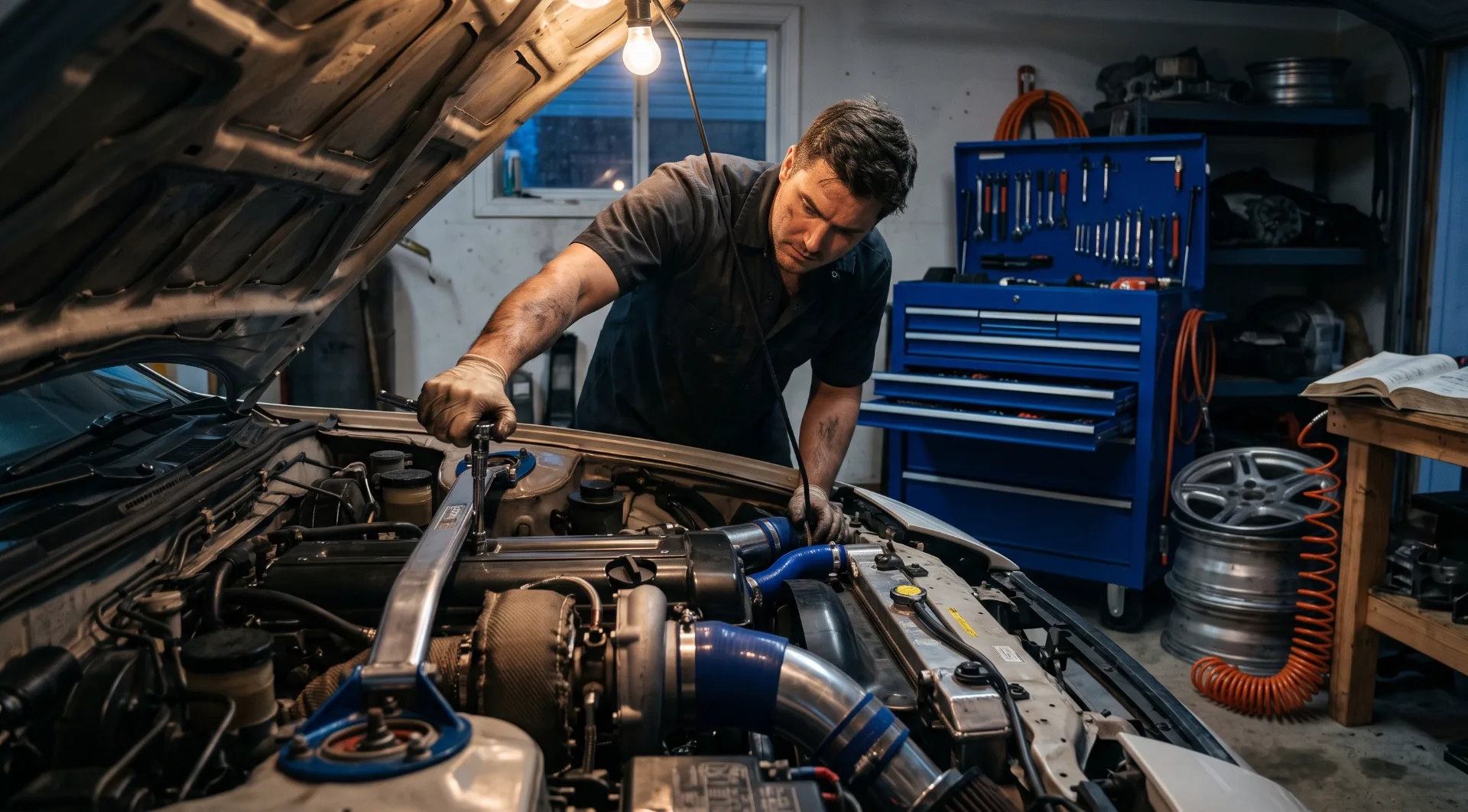
Working on JDM: Clean, logical bolt patterns (10mm, 12mm, 14mm, 17mm will tear down 90% of the car). Packaging is often tight, especially in mid-engine setups or twin-turbo bays, but everything fits together like a puzzle once you know the sequence.
Working on USDM: Generous engine bays with plenty of swinging room for long ratchets. Heavy components that require a floor jack and a buddy to pull, but simple wiring looms and straightforward mechanical layouts.
Working on KDM: Modern sensor architecture and tight packaging. Bolt-on performance like downpipes, intercoolers, and ECU flashes yield huge gains quickly, but you need modern diagnostic scanners and patience with tight clips and plastic undertrays.
5. Picking Your Lane
At the end of the day, loyalty to a three-letter acronym is childish.
If you want the razor-sharp mechanical feedback of an era when cars weighed under 2,800 pounds and engines sang to 8,000 RPM, pay the entry fee and dive into JDM. If you want a brutal V8 roar, cheap horsepower, and parts you can buy anywhere, go USDM. If you want modern track capabilities, turbo punch, and daily-driver reliability without taking out a second mortgage, look at KDM.
Car culture is not about where the steel was stamped. It is about what you do with the keys once it is sitting in your driveway.
Frequently asked questions
Is JDM better than USDM for track days?
Neither is universally better. JDM cars are generally lighter on tires and brakes, making them nimble through technical corners. USDM sports cars bring massive torque and wide track widths, allowing them to pull hard on straightaways and sweepers.
Why did KDM become popular so quickly?
Korean manufacturers invested heavily in performance leadership, recruiting top engineers from European divisions. By offering factory-tuned track packages, limited-slip differentials, and aggressive turbo powertrains at accessible prices, they captured enthusiasts priced out of older markets.
Are domestic cars cheaper to maintain than Japanese imports?
Generally, yes. Domestic parts for Ford, GM, and Dodge platforms are widely stocked across local parts stores and wrecking yards. Vintage JDM components frequently require overseas shipping, specialized import vendors, and premium prices for NOS (new old stock) hardware.
Can a modern KDM platform compete with classic JDM legends?
On a pure performance and lap-time basis, modern KDM platforms like the Elantra N easily out-brake, out-turn, and out-accelerate stock 1990s Japanese icons. However, classic JDM legends offer an analog steering feel and mechanical simplicity that modern computer-managed cars cannot replicate.


Comments
Join the conversation on JDM vs USDM vs KDM: Beyond the Internet Tribe Wars. Keep it civil — admins moderate reports.
Loading comments…