Why Do We Modify Our Cars? The Real Psychology Behind the Build
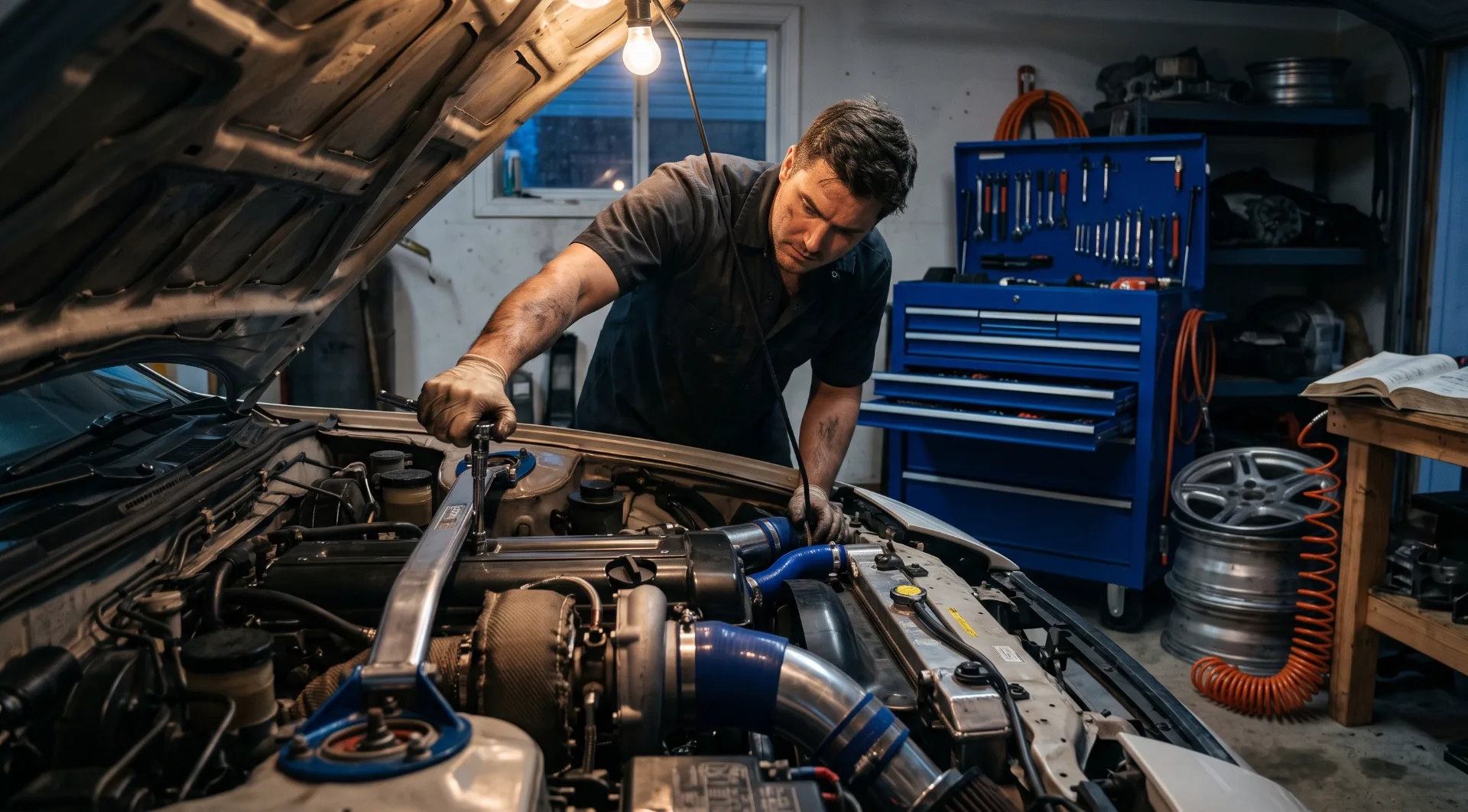
We pour thousands of dollars, scraped knuckles, and late garage nights into cars that rarely make financial sense. This deep dive unpacks the raw psychology behind car modification, exploring why real enthusiasts modify their vehicles, the emotional payoff of building over buying, and the shared identity forged in the automotive community.
Why Do We Modify Our Cars? The Real Psychology Behind the Build
Ask someone outside car culture why you spent three grand on suspension for a daily driver, and they will give you a blank stare. To them, a car is an appliance. It gets you to work, hauls groceries, and sits in traffic.
To us, keeping a car bone stock feels like leaving a house painted landlord white.
Nobody who modifies cars does it because it is an efficient investment. If you wanted a solid return on capital, you would buy index funds, not a set of coilovers and a standalone ECU. We take perfectly functional machines, rip them apart on jack stands at two in the morning, bleed through our knuckles, and chase vacuum leaks until our eyes burn.
There is real psychology at play here. It is not just about going fast or getting attention at a local meet. It comes down to control, identity, tangible achievement, and the need to leave an imprint on something physical in an increasingly digital world.
Join CarCultureHQ
Claim your free digital garage
Build your ride profile, log modifications, join a crew, and get your build in front of thousands of enthusiasts.
Create your free garage1. Escaping the Assembly Line Mentality
Every year, auto manufacturers churn out millions of identical sedans, coupes, and trucks. They are engineered to appease the widest possible demographic, smooth over every edge, and keep warranty claims low.
When you leave a car stock, you drive a committee decision.
The moment you swap wheels, drop the ride height an inch, or bolt on an exhaust that lets the engine actually speak, you break that mold. You take something anonymous and make it personal. Psychologists call this psychological ownership: the transition from simply possessing an object to making it a reflection of your self-concept.
A modified car speaks before you do. Whether it is a track-focused JDM build stripped of sound deadening or a clean domestic restomod, the setup tells everyone what you value, how you drive, and how much patience you possess.
2. The Thirst for Tangible Competence
Most of our modern lives happen on flat screens. We send emails, shuffle spreadsheets, and manipulate pixels. At the end of an eight-hour shift, what can you actually point to and say, "I made that work with my hands"?
Building cars fixes that deficit.
Torquing a head bolt, wiring a harness, or dialing in camber angles gives immediate, unfiltered feedback. If you do it right, the engine roars to life, the car grips through the corner, and the stance sits flush. If you cut corners, a belt snaps or a tire rubs the fender liner.
The garage is an honest environment. Metal does not care about your excuses, your status, or your mood. Overcoming mechanical resistance builds genuine competence, and that feeling is addictive.
3. The Ritual of "Built, Not Bought"
The old debate of "built versus bought" often gets toxic, but underneath the gatekeeping lies a simple psychological truth: we value what demands sacrifice.
Anyone with good credit can walk into a dealership and finance 500 horsepower. That car will be fast, reliable, and come with a warranty. But it does not carry a story.
When you build a car:
You know which bolt on the downpipe is stripped and requires a stubby wrench.
You remember the midnight you spent bleeding the clutch cylinder before a Saturday cruise.
You understand the cadence of the motor because you dialed the timing yourself.
The pride comes from overcoming the struggle. When you park, walk away, and find yourself looking back over your shoulder, you are not admiring factory sheet metal. You are admiring your own resilience and vision sitting on four tires.
4. The Counterculture and the Garage Tribe
Cars are naturally isolating pods. You sit in your lane with the windows rolled up, separated from the rest of the world.
Modifying punches through that bubble.
A modified car serves as a rolling beacon to other enthusiasts. It sparks conversations at gas pumps, starts debates in parking lots, and bridges gaps between people who would never otherwise speak. You can spot an enthusiast across four lanes of traffic simply by the way their car sits on its rubber or the tone of their downshift.
Platforms like Car Culture HQ exist because of this dynamic. We do not just build in a vacuum; we log our specs, share time slips, organize shop meets, and trade spare parts because the human need for community is baked into the lifestyle. Documenting a build in a digital garage is modern car culture: preserving the build log, teaching the next kid how to clear a code, and sharing the win when an engine finally turns over.
5. Therapy That Runs on 93 Octane
People who do not wrench often call car modification stressful. They see the blown budgets, delayed part shipments, and occasional breakdowns on the shoulder.
What they miss is the mindfulness of it.
When you are deep in an engine bay chasing an oil leak, you cannot worry about work emails, rent, or relationship drama. Your world shrinks down to an eight-millimeter socket and a clearance gap. That intense, hyper-focused state pulls you directly into the present moment.
Then comes the payoff: turning the key, backing down the driveway, finding an empty backroad, and running through third gear. The sound, the vibrations through the steering rack, and the lateral G-forces wake your nervous system up. It is mechanical therapy.
Frequently asked questions
Why do people spend money on modifying cheap cars?
Value to an enthusiast is rarely about Kelly Blue Book. A cheap platform offers a clean canvas with low financial risk, allowing the builder to experiment, make mistakes, and push mechanical limits without worrying about ruining a collector car.
Is modifying cars bad for reliability?
It depends entirely on the parts, planning, and execution. Poorly researched eBay parts and rushed installations lead to breakdowns. Thoughtful builds using high-grade components, supporting mods, and proper maintenance can easily match or exceed factory durability.
What is the psychology behind "staring back" at your car after parking?
It is a classic sign of psychological ownership. When you look back at your build, your brain registers the machine as a visual statement of your work, your time, and your creative vision rather than an anonymous hunk of steel.
How do beginners start modifying without getting overwhelmed?
Start with the basics that improve your daily driving experience: quality tires, fresh brake pads, suspension bushings, and basic fluids. Documenting your build plan and connecting with a local or online crew helps keep you accountable and prevents you from tearing the car apart without a roadmap.



Comments
Join the conversation on Why Do We Modify Our Cars? The Real Psychology Behind the Build. Keep it civil — admins moderate reports.
Loading comments…