Why Car Clubs Matter: Forget "Likes," You Need This Community
Written and reviewed by the CarCultureHQ Editorial Team. See our Editorial Policy for sourcing and corrections.
Estimated Read Time: 9 minutes
Summary: Car culture isn't dead, but the digital algorithms are killing the fun. If your automotive social life is limited to Instagram feeds, you are missing the entire point. Forget the empty validation of online "likes" and discover why real, structured car clubs, the kind that meet in person, in the real world, are more essential than ever for finding genuine community, expert knowledge, and properly organized road trips.
Car Culture is Stagnating in a Digital Fishbowl
If you're reading this, you’ve felt it. Your "car community" consists of endlessly scrolling through perfect, filtered photos of builds you’ll never see, reading comments from people you’ll never meet, and feeling vaguely unsatisfied. You know everything about a build in California, but you have zero idea who is wrenching on an interesting project two miles down the road in your own town.
Digital platforms have done one thing very well: they democratized access. Everyone can see the craziest widebodies, the rarest exotics, and the tightest drift lines instantly. But in doing so, they also destroyed the core necessity of the hobby: genuine human connection, in person.
Car culture needs grounding. It needs the reality of local people doing real things with cars, together.
We are told we live in a "connected" world, but the algorithm optimizing your feed doesn't care about community. It cares about engagement. That usually means conflict, hype, or superficial validation. It certainly isn’t optimizing for a healthy automotive social life that gets you away from your phone and into your garage. This is precisely why structured car clubs, the real, physical kind, have never been more important.
Join CarCultureHQ
Claim your free digital garage
Build your ride profile, log modifications, join a crew, and get your build in front of thousands of enthusiasts.
Create your free garageAlgorithms Optimize for Conflict, Not Connection
The internet promised community, but it delivered echo chambers. If you post a controversial build, you are immediately rewarded with comments from total strangers telling you why your wheel offset is wrong, your suspension choice is amateur, and your car is a disgrace. The people validating your choices are often just as distant.
A physical car club operates on completely different physics. Mutual respect is the currency, not anonymity.
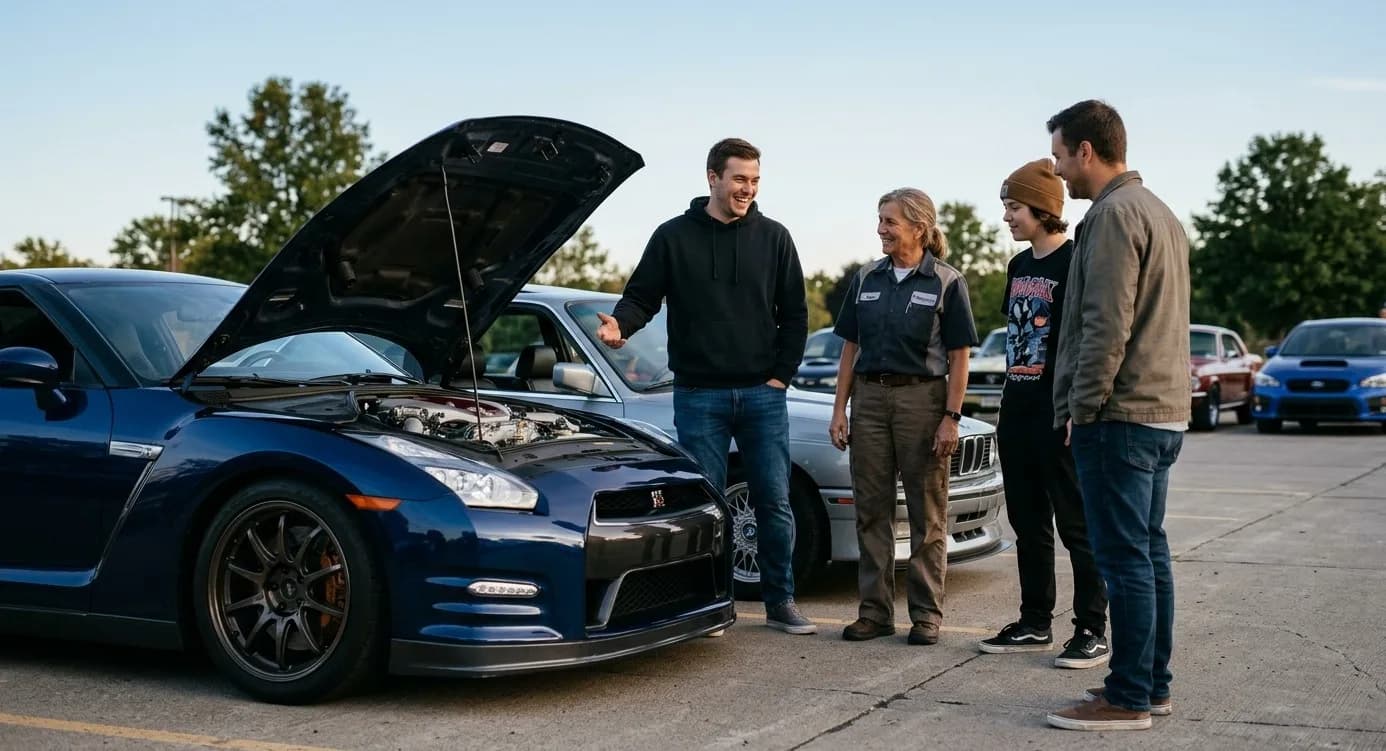
When you walk into a garage night with a local car club, you’re not "LikesForMods." You’re John, the guy who owns that S2000 that needs an alignment. The critiques aren’t anonymous roasts; they are discussions based on experience. Members share parts. They offer to lend tools. If you’re a complete novice, they help you avoid expensive mistakes. Real-world car clubs create accountability and foster a genuine network of support. The digital algorithms divide; the physical club unites.
The Essential Logistics: Organization Over Chaos
Here is the inconvenient truth about most successful car events: somebody had to do the hard, boring work.
The internet can organize a massive spontaneous meet, but it is awful at sustained logistics. Digital platforms create massive noise, but car clubs create structured signals.
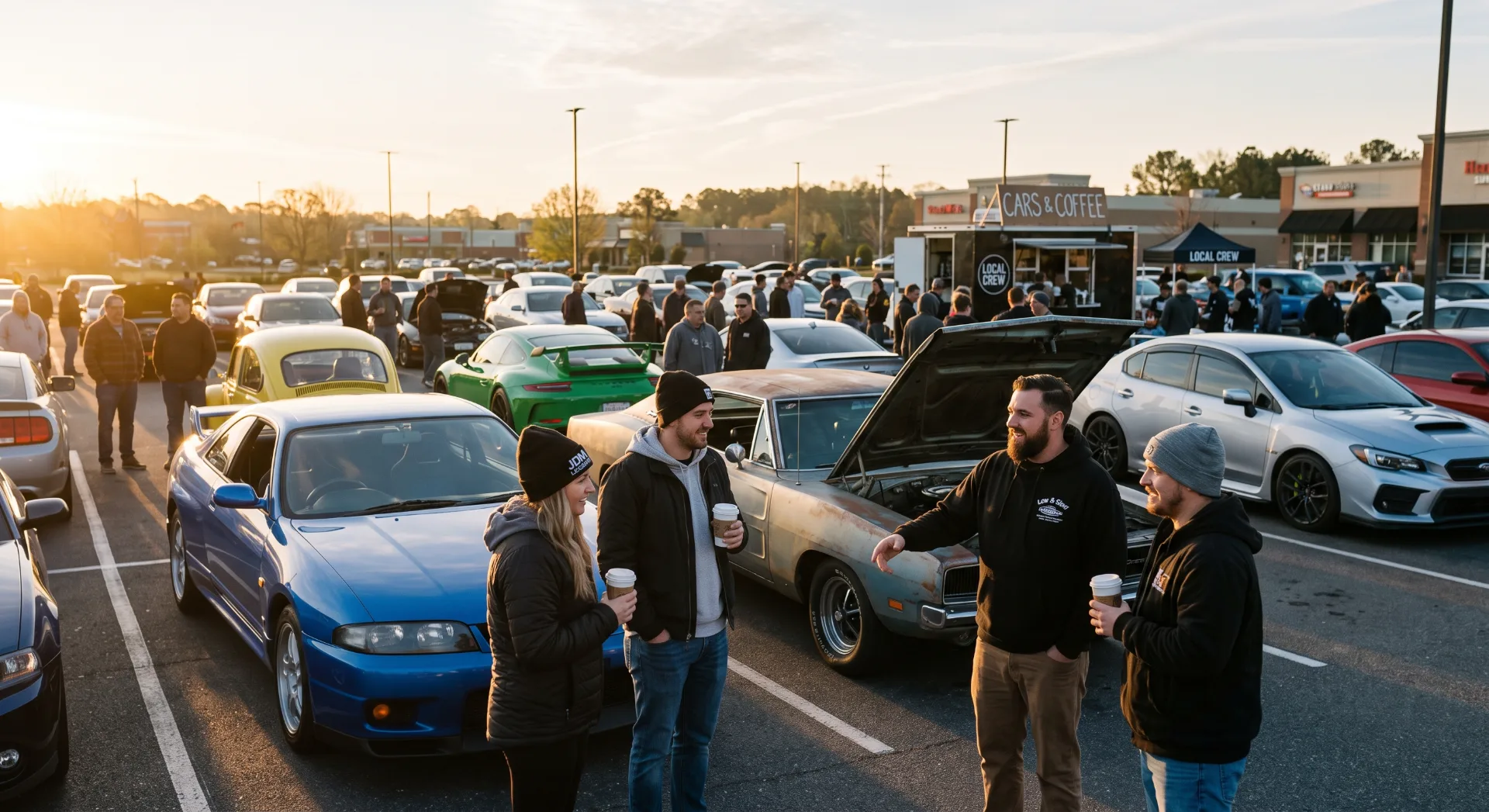
Cruises don't just happen. Someone has to scout the route, manage bathroom stops, communicate the plan, negotiate with venues for parking, and enforce basic safety rules. A club of dedicated members handles this logistics burden. This is what transforms a random group of cars clogging up an intersection, a recipe for spot burnouts and police intervention, into a properly managed, multi-stop driving tour that property owners actually welcome back.
Similarly, organized track days require groups of trained marshals, defined run groups, and clear communication, all of which often rely on established car clubs to provide volunteers and consistent standards. Structured organizations take chaos and create a sustainable, safe environment where performance cars can actually be driven.
You Can't Learn TIG Welding from an Algorithm
There is no substitute for physical knowledge transfer. Digital resources are great for tutorials on changing spark plugs, but they are disastrous for learning nuance, fabrication, or real technical problem-solving.
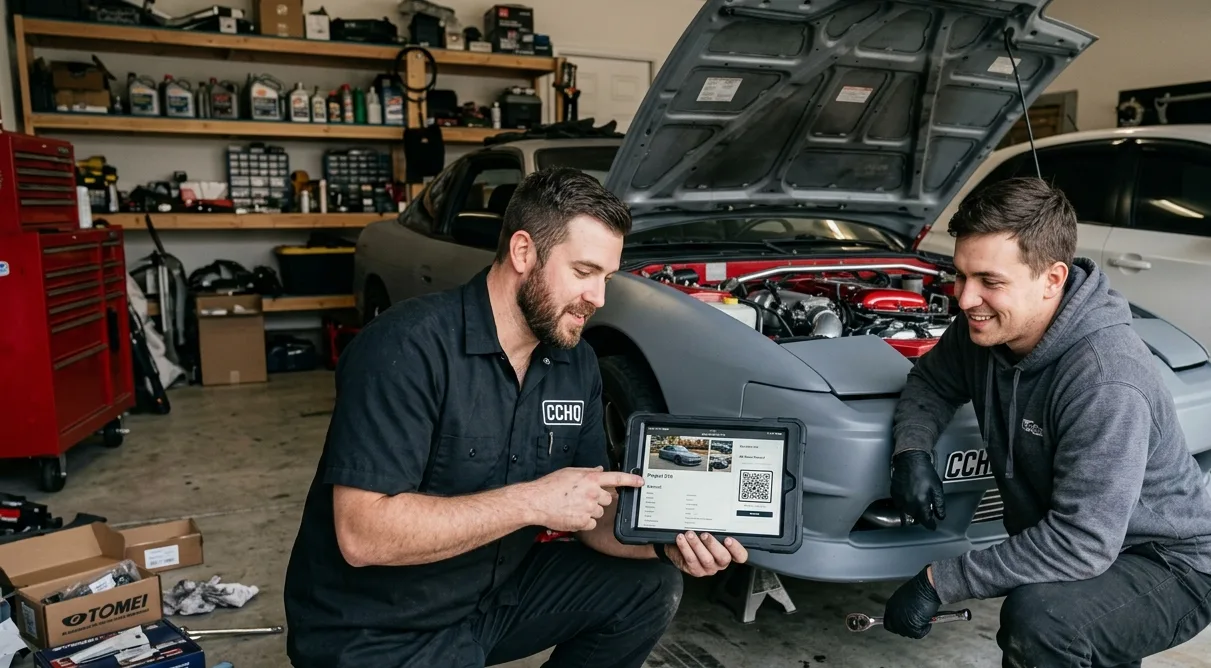
In a physical car club, the exchange of knowledge is tactile and direct. You can't learn how to properly TIG weld a stainless manifold or precisely dial in suspension geometry from a filtered photo. You learn it by watching an experienced club member do it, asking them questions in the moment, and then having them watch you attempt it.
Car clubs are massive, collective repositories of technical expertise. They have "the guy" who knows how to reconstruct an antique wiring harness. They have "the girl" who is a master of fiberglass fabrication. They have multiple members who have done the specific turbo swap you’re dreaming about. You can pull deep into that local knowledge base, getting honest, unbiased advice from builders who actually care about your progress, not their follower count. This mentoring dynamic is completely absent in most digital spaces.
The Undeniable Emotional Payoff of Reality
No emoji, no perfectly composed shot, and no quantity of "likes" can replicate the immediate visceral feedback of being present. Digital "engagement" feels hollow because it is abstract. In-person engagement is concrete.
Sharing a winding back road at speed. The sensory overload of a garage night where four members are solving a coolant leak together. The collective groan when someone realizes they installed a component backward. The genuine laughter over a terrible lunch stop during a 300-mile road trip. These are all real, shared moments that build identity, community, and lasting relationships.
Shared suffering creates the deepest bonds in car culture. If you are broken down on the side of a highway 100 miles from home, the internet will offer "thoughts and prayers" and armchair diagnostics. The members of your local car club will show up. They will bring a trailer, a toolbox, and a pizza. That is a real community, and it's one you will only find in a structured, real-world organization.
Find Your Local Network (Car Culture HQ Can Help)
If your automotive life is limited to a screen, you aren't living it. You're spectating it. It is time to step up. Real car clubs ground your hobby in reality, turning abstract passion into tangible, shared memories. They force you away from the digital clutter and introduce you to the messy, difficult, and profoundly rewarding reality of wrenching, driving, and connecting in person.
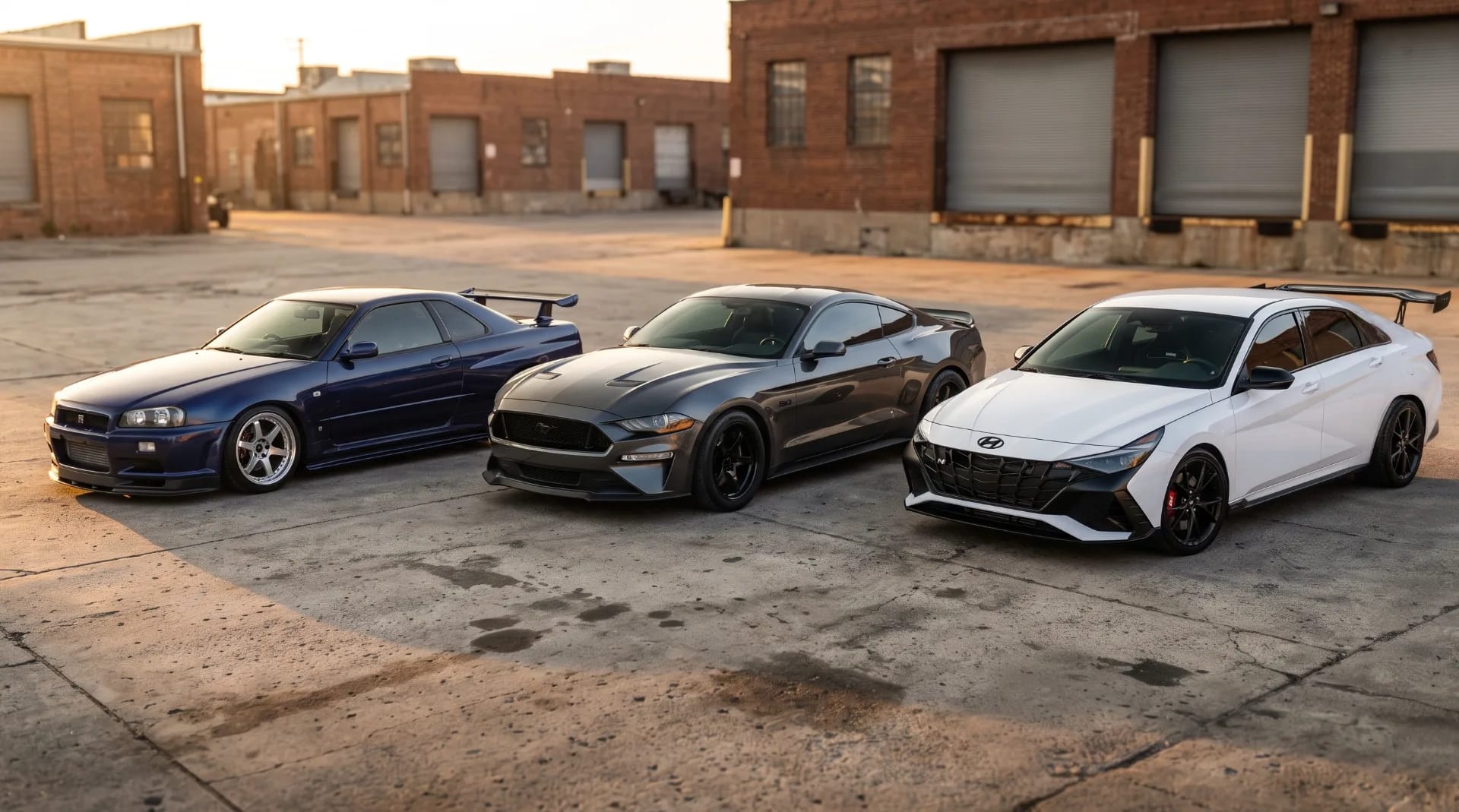
In a city with a robust automotive history, there are clubs for every niche: classic American muscle, Japanese performance imports (JDM), European grand tourers, dedicated track groups, and specialized fabrication circles. You are guaranteed to find your people.
Get off the forums. Stop doomscrolling. Find a local club. Go to an event. Introduce yourself. We’re Car Culture HQ, and this is exactly what we are about. We can help connect you to the local scene, whether you're looking for a specific club or just want to know where people are actually gathering in person. The real automotive world is out there, and it's a lot more fun than the one on your phone.
Join CarCultureHQ
Claim your free digital garage
Build your ride profile, log modifications, join a crew, and get your build in front of thousands of enthusiasts.
Create your free garageFrequently asked questions
What if my area doesn't have a structured car club for my niche?
It happens. You might have to broaden your definition. Look for generalized automotive enthusiast communities or clubs defined by driving style rather than specific vehicles. Alternatively, start your own. It only takes four or five dedicated people and a consistent meeting time, like the same Saturday morning garage every month, to form the basis of a club. Focus on structure, rules and consistency, from day one.
Aren't traditional car clubs full of drama and cliquishness?
Some are, yes. Poorly managed clubs mirror the worst parts of high school. But that’s true of any group. The benefit of structured organizations is that they can put formal rules and codes of conduct in place. When you look for a club, look for clear leadership, explicit safety policies, and a visible culture of respect.
How do I find reputable local car clubs?
Start at CCHQ. We maintain connections throughout the local automotive community in New York. You can also visit local independent mechanic shops that specialize in your car platform. Talk to vendors at structured automotive events, the kind that require registration, not just park and chill. They are usually plugged into the active, organized club scene.
I'm a novice builder. Won't I feel out of place in a serious car club?
No. In fact, a real car club is the best place for a novice. An authentic automotive enthusiast community wants to see more interesting builds on the road, not fewer. They will respect your passion more than your current skill level. Be upfront about being new, show a willingness to learn, and respect other members' time, and you will find an unparalleled network of mentors.



Comments
Join the conversation on Why Car Clubs Matter: Forget "Likes," You Need This Community. Keep it civil — admins moderate reports.
Loading comments…