Why The Fast and the Furious Didn't Create Car Culture, but It Saved It
Written and reviewed by the CarCultureHQ Editorial Team. See our Editorial Policy for sourcing and corrections.
Read Time: 7 minutes
Summary: Most people think The Fast and the Furious created modern car culture. It didn't. It just shine a massive, NOS-powered spotlight on a scene that was already thriving, changing the game from dedicated niche to mainstream phenomenon. Here’s why that still matters.
Why The Fast and the Furious Didn't Create Car Culture, but It Saved It
Look, we all know the meme. The 10-second car, the tuna on white (no crust), Granny shifting, not double clutching like you should. It’s easy, twenty-plus years later, to pick that first movie apart. The dialogue was corny. The physics were non-existent. The tech was often laughably wrong. If you write about cars online, this is the easiest article to write.
But here is the real truth, the one you only get if you were actually there, smelling the race gas at 2 AM in a strip mall parking lot before the movie hit theaters. That scene, the one they "exposed," was already massive. It was a secret society that didn’t want to be found. And that movie changed everything. It didn’t just show us cars, it built a roadmap for how car culture survives.
Join CarCultureHQ
Claim your free digital garage
Build your ride profile, log modifications, join a crew, and get your build in front of thousands of enthusiasts.
Create your free garageSpotting the Secret Scene
Before Brian Spilner (sorry, Earl) ever tried to buy a nitrous kit at The Racer’s Edge, a lot of us were already deep in it. This wasn’t just a localized LA thing. It was happening all over. You just had to know where to look.
If you were a "car guy" in the 90s, the world was dominated by two things: restoration of 60s muscle cars or the decaying remnants of the 80s V8 scene. Import cars were for economy. They were appliances. But then, imports started changing.
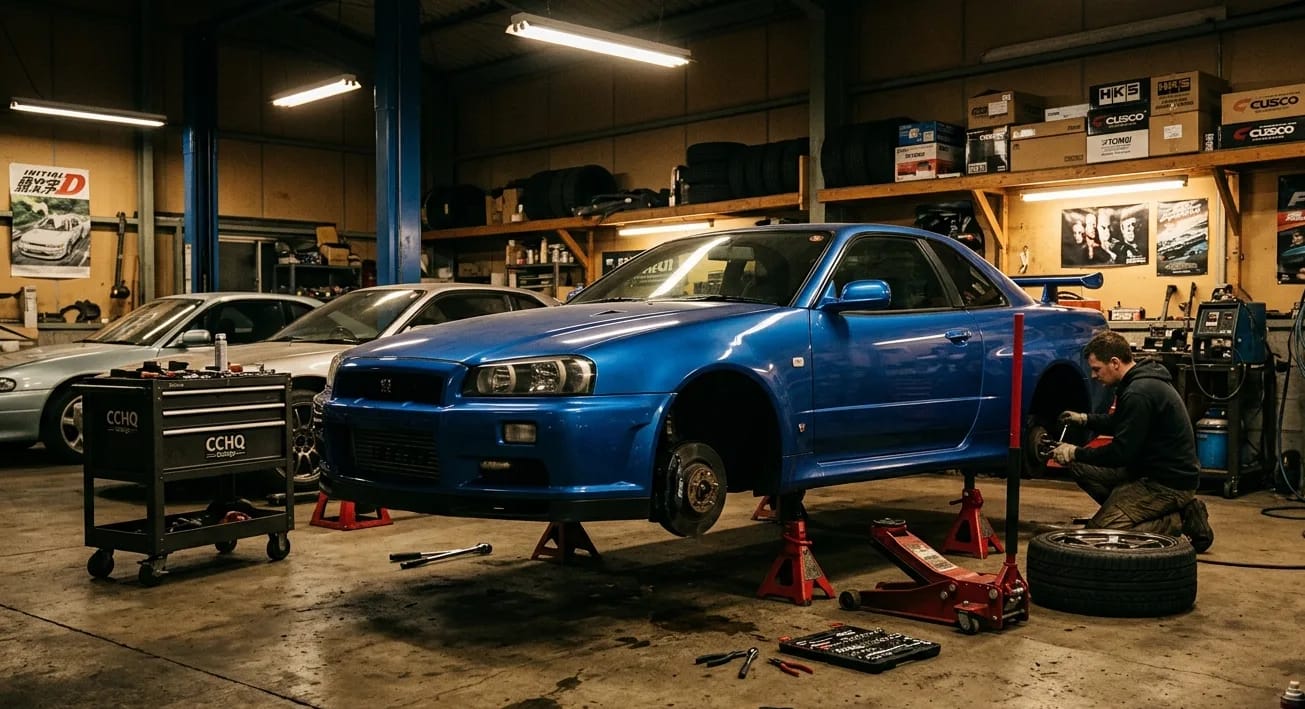
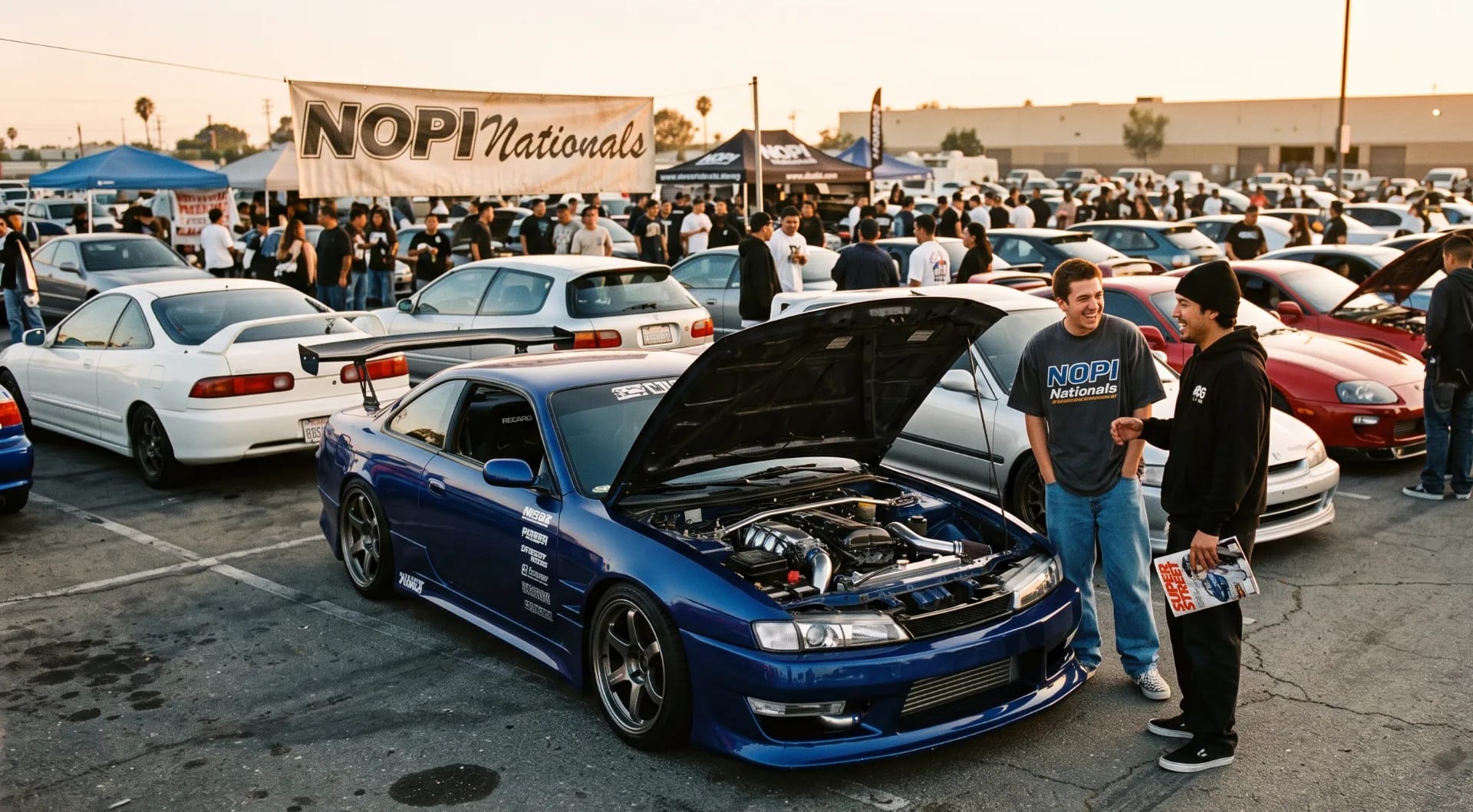
In certain pockets, kids who couldn’t afford a 1969 Camaro were buying reliable, cheap Civics, Integras, and 240SXs. And they were realizing they could make them fast. The technology was different, focusing on efficiency, light weight, and forced induction over raw cubic inches.
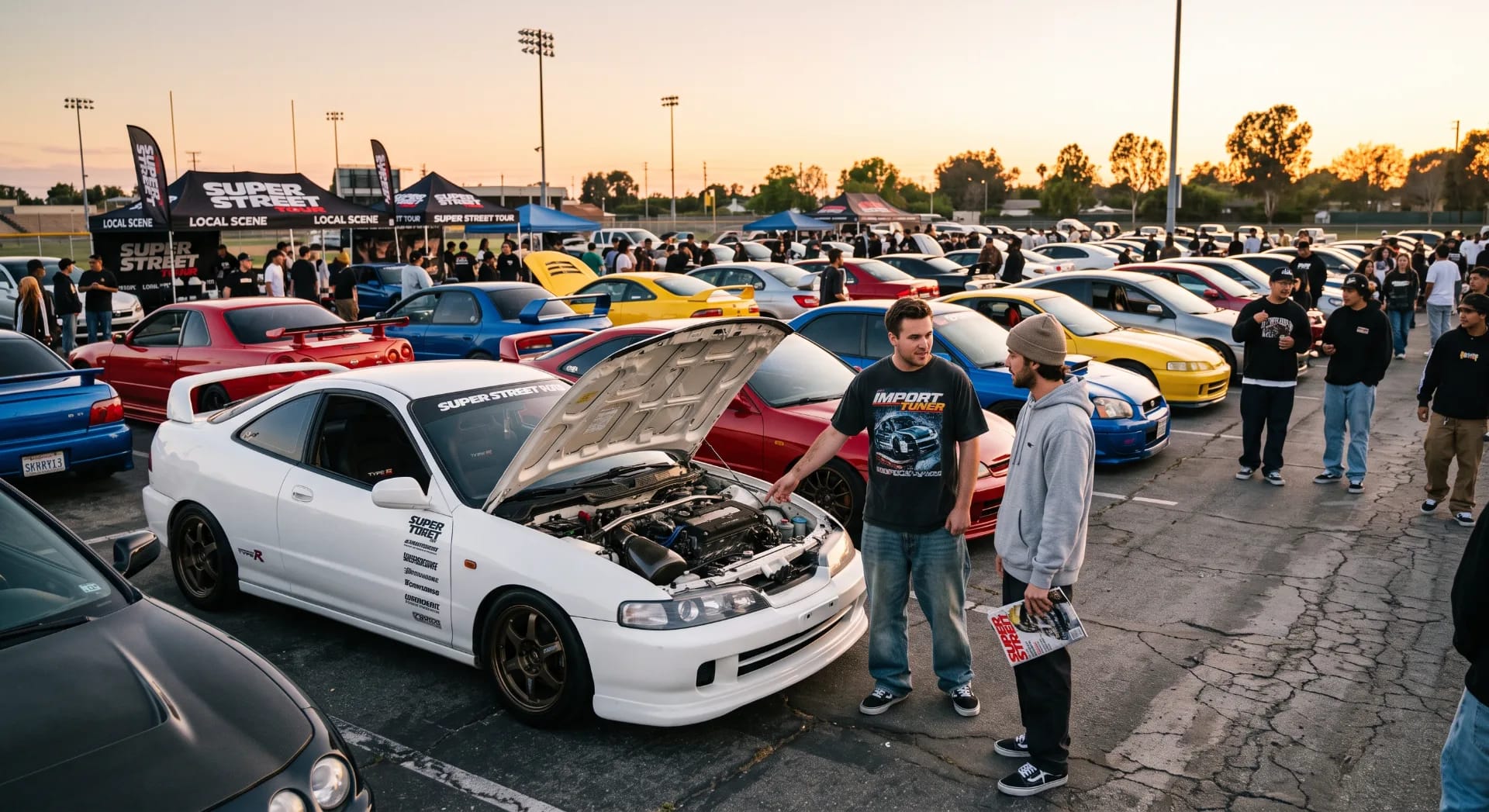
This community was completely underground. Information didn’t exist on YouTube; it came in quarterly print magazines like Super Street or Import Tuner, which you hoarded like sacred texts. You learned parts names and tuning theories by hanging out at the one local speed shop that actually stocked HKS or GReddy parts. You didn’t have GPS for the meet spots; you called a pager or a friend who knew the directions.
This pre-movie scene was dedicated, knowledgeable, and intense. The Fast and the Furious didn’t create that dedication. It found it.
The Genius of Getting It Wrong
This is the main complaint we hear, right? The technical errors. Why is the Eclipse driver "winning" until he punches the nitrous and his floor pan pops off? Why do they talk about "15,000 RPM" on a domestic pushrod engine?
As car people, we notice this. As an editor, I spot these "constructed" errors instantly. They feel rehearsed, built by a writer trying to sound "impressive" to outsiders. But from a marketing and storytelling perspective? That movie’s genius was in the "constructed" parts.
The directors weren't making a documentary for us. They were making a film for everyone else.
They took the import scene, which was complex and filled with actual engineering hurdles, and they simplified it into visual metaphors. Nitrous wasn't just gas that added oxygen; it was a magic blue light that gave you lightspeed. They didn’t explain the math of compression ratios; they gave you a "10-second car" as a universal unit of measurement.
The movie distilled the scene into a vibe. It captured the energy of the meet, the tension of the street race, and the idea that your crew was your family. The specifics were wrong, but the feeling was right. By simplifying the tech, they made the culture accessible.
That’s a branding lesson we still use today: don’t bury the emotion in the details.
Changing the Definition of Cool
Before that movie, if a kid said they liked cars, they meant a Mustang or a Camaro. After the movie, they meant a Supra.
This was a seismic shift. The movie single-handedly killed the dominance of domestic muscle as the only cool path for a car enthusiast. It validated Japanese engineering for a mainstream Western audience.
Suddenly, those appliances were cool. Your mom’s Civic? It was a potential race car. Your dad’s reliable Nissan truck? A source for parts.
This gave an entire generation permission to obsess over inline-fours, rotaries, and twin-turbos. It shifted the center of the car universe toward efficiency, power-to-weight, and reliability. This change is why we have the massive, diverse landscape of meets and shows today. It broke the mono-culture.
The Day the Paddock Got Flooded
Of course, popularity has a cost. When The Fast and the Furious hit, the underground scene died. It was immediate.
The first major result? Prices. Good luck buying a clean, unmolested 240SX or a Twin Turbo Supra for a reasonable price after 2001. The movie created artificial scarcity, turning cheap tuner cars into collectors' items overnight.
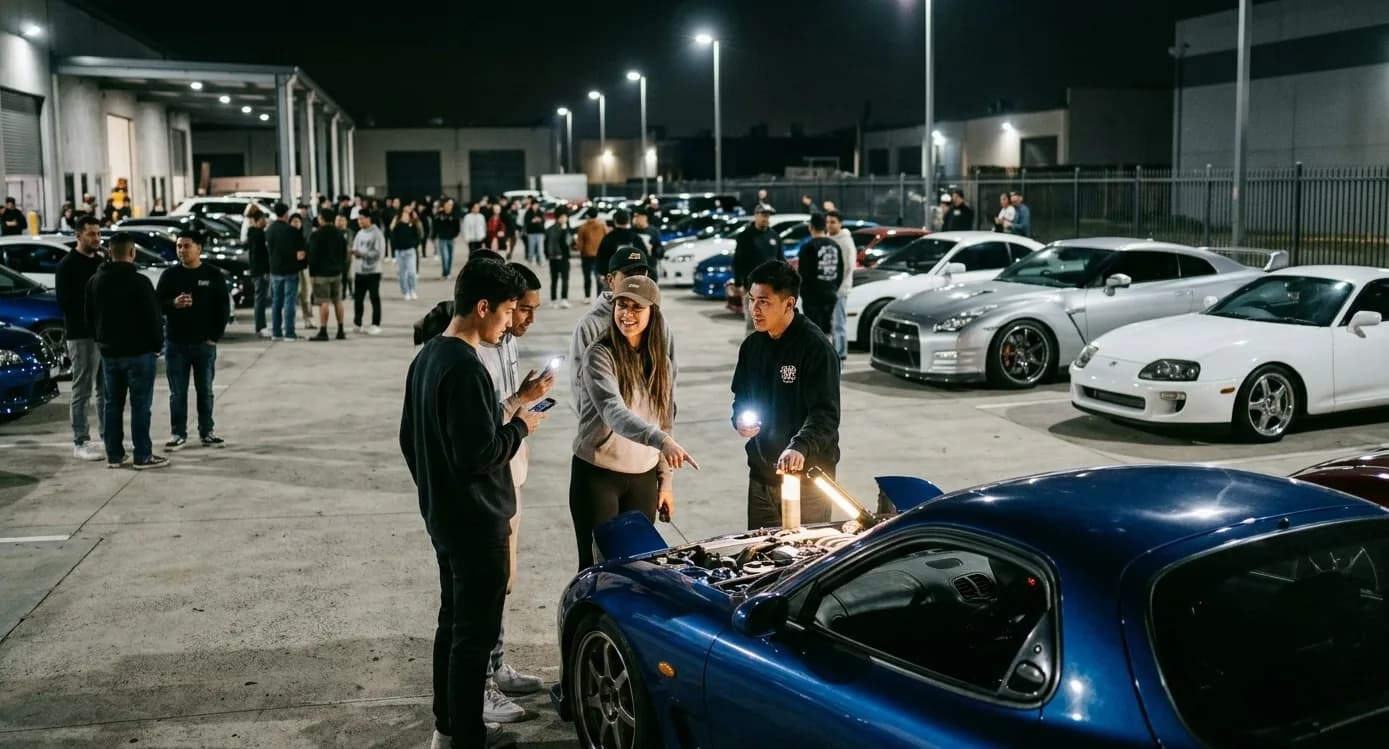
The second result was the "culture." The quiet meets in the industrial parks were replaced by hundreds of kids who just wanted to see a burnout, mimicking what they saw on screen, usually in cars they couldn't control. The cops, who previously didn't even know what an import meet was, now had a movie detailing exactly what to look for, leading to crackdowns and harassment of everyone, not just the street racers.
It ruined the purity of the underground, yes. But it forced the scene to grow up.
It accelerated the professionalization of import tuning. It made events like HIN (Hot Import Nights) massive. It created the demand for companies to develop parts for cars that were previously ignored. In marketing, we call this market validation. The movie validated our hobby to the outside world, and that brought resources and innovation we still enjoy.
The Vibe Remains
So yes, the technical advice in that movie is garbage. You probably shouldn’t use it as a blueprint for your build. We specialize in the technical side of car culture here, so we get it. We want people to understand the engineering.
But as enthusiasts, as people who love this, we have to respect what that movie did. It took a scene that was passionate but isolated, and it opened the doors. It gave us a new vocabulary, a new pantheon of car heroes, and a visual language that a whole generation understood.
You don’t have to like the movie. But if you have a modern aftermarket parts company, a polished YouTube channel, or a local cars and coffee that feels organized and respected, you are operating in the world that The Fast and the Furious built. It took the culture I loved as a rough, hidden gem, and turned it into the platform we all stand on today. And that is why it will always matter.
Join CarCultureHQ
Claim your free digital garage
Build your ride profile, log modifications, join a crew, and get your build in front of thousands of enthusiasts.
Create your free garageFrequently asked questions
Was the "NOS" in the movie realistic?
Not at all. It doesn’t create a blue light or make the car feel like it’s warping. It’s just nitrous oxide, an oxidant that adds power. Think of it more as a big boost of supercharged air, not a warp drive.
Did the movie cause people to street race?
Street racing already existed. The movie glorifying it certainly didn’t help reduce it, especially with inexperienced drivers, but it didn't create the problem.
What is a "10-second car" actually?
In the world of drag racing, it’s a car that completes the quarter-mile in exactly 10 seconds. In the context of the movie, they basically meant "a really fast, dedicated race car."
Is the Supra from the movie still the best tuner car?
The MkIV Supra is a legend, but car culture moves on. Today, cars like the Nissan GT-R, the modern Supra, or even highly tuned EVs like a Model S Plaid deliver performance that makes the movie cars look slow.
Comments
Join the conversation on Why The Fast and the Furious Didn't Create Car Culture, but It Saved It. Keep it civil — admins moderate reports.
Loading comments…