Before SEMA: Why NOPI and Super Street Were Must-See Events
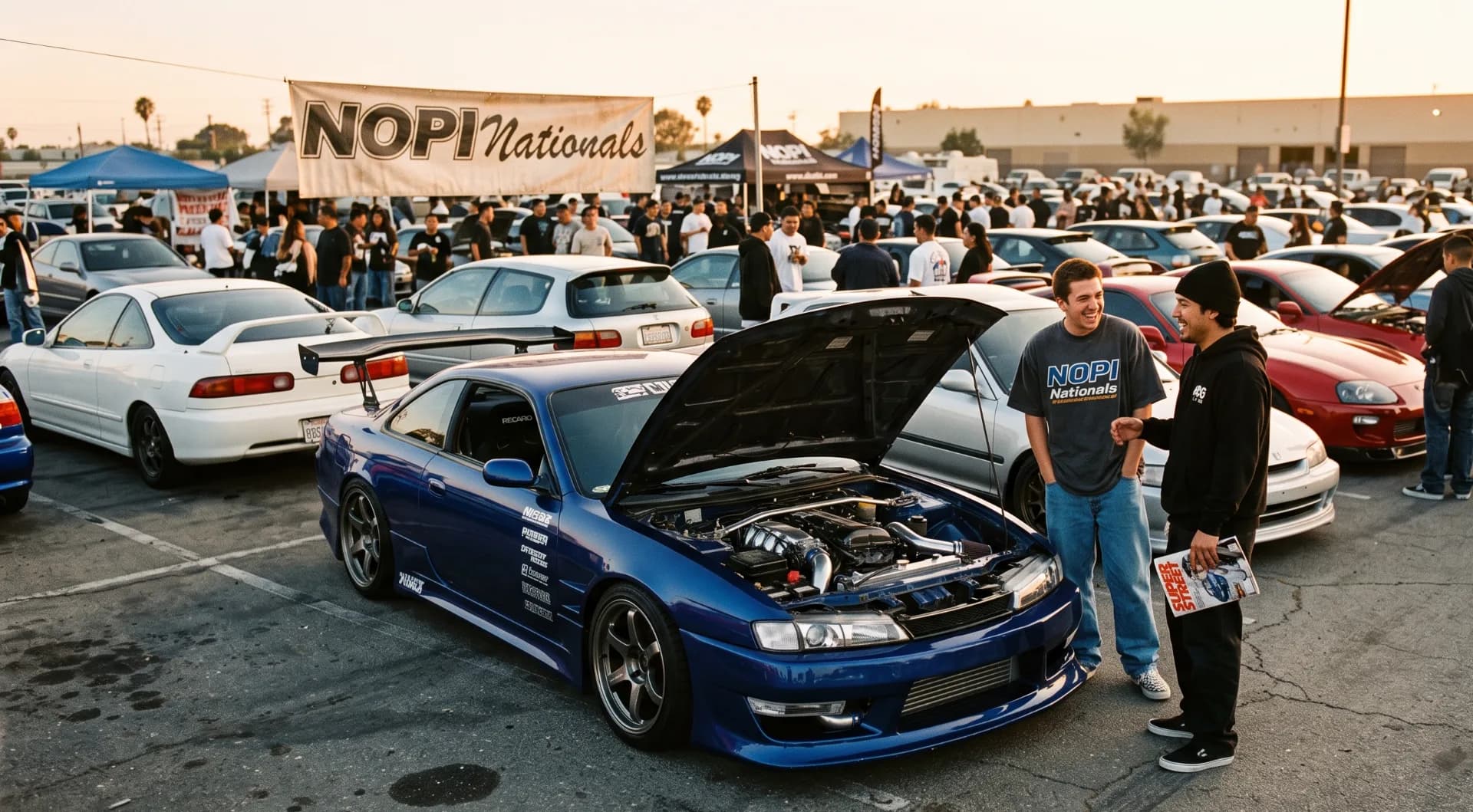
Long before SEMA became a corporate circus full of influencer builds and pristine show queens, tuner culture was forged in asphalt parking lots at NOPI Nationals and documented on crumpled newsstand pages in Super Street magazine. This post looks at why those early events and print magazines held a level of grit, community, and raw authenticity that modern mega-shows just cannot replicate.
Before SEMA Took Over: Why NOPI and Super Street Owned the Street Scene
If you go to a major automotive trade show today, you know the drill. Polished concrete floors, velvet ropes around quarter-million-dollar builds, and corporate reps in branded polo shirts handing out brochures. It is clean, impressive, and completely detached from how most of us actually experience cars.
It was not always like this.
Back in the late nineties and early two-thousands, nobody was waiting for an invitation to an indoor convention center. The real heart of import and tuner culture was happening out in the heat at Atlanta Dragway for NOPI Nationals, or being flipped through under the fluorescent lights of a grocery store magazine rack in the pages of Super Street.
Those were not just events or publications. They were the lifelines for a whole generation of builders who got told their cars were useless compacts.
Join CarCultureHQ
Claim your free digital garage
Build your ride profile, log modifications, join a crew, and get your build in front of thousands of enthusiasts.
Create your free garageNOPI: The Raw Energy of the Parking Lot Era
NOPI was loud, messy, and unapologetic. You walked into the grounds and immediately got hit with a wall of noise: high-rpm engine revs, bass rattling trunk lids, and announcers screaming over PA systems.
There were no velvet ropes. You could walk right up to a Honda Civic running custom body graphics, lean over the fender, and talk to the guy who spent his entire summer saving up for a set of aftermarket wheels.
People drove their project cars hundreds of miles to get there, crossed their fingers that nothing broke on the highway, and parked them right on the grass or hot asphalt. If a car leaked a little oil on the pavement, nobody called security. You threw down a shop towel, pulled out a socket set, and fixed it right there in front of everyone.
That accessibility was the point. NOPI did not care if your paint job was perfect or if your engine bay had visible wiring. If you built it and you showed up, you were part of the scene.
Super Street: The Gospel on Newsstand Paper
Before video feeds and instant social media updates, you had to wait thirty days to see what other people were building across the country. When a fresh issue of Super Street hit the shelves, you grabbed it immediately.
The magazine worked because it talked like the people reading it. The writers were not stiff journalists trying to sound like engineering professors. They were guys who spent their own weekends covered in grease, breaking bolts, and staying up until 3:00 AM to get a car running for a weekend cruise.
They covered the real stuff: budget engine swaps, garage-painted body kits, and track test days where cars actually got driven hard. Seeing a car built by a guy in his home garage featured on a full magazine cover showed every teenager with a set of wrenches that their work mattered.
What SEMA Lost Along the Way
There is no denying that modern trade shows are huge. The engineering is incredible, and the build quality on display is higher than it has ever been. But in trade-off for all that polish, something real got lost.
SEMA is built for industry insiders, buyers, and media outlets. NOPI and Super Street were built for the people who actually bought the parts, bled the brakes, and drove the cars home.
When everything gets sanitized for corporate sponsors and camera crews, you lose the grit that made the culture exciting in the first place. You lose the trial-and-error spirit that made a budget build feel like a triumph.
Keeping the Original Spirit Alive Today
You cannot bring back 2002, and nobody wants to go back to ordering parts out of paper catalogs with a three-week shipping delay. But the core spirit of that era does not have to stay dead.
That same energy exists whenever people gather at local night meets, track days, and crew hangouts. It lives in digital spaces where real builders log their build progress, trade spare parts, and verify track times without needing a corporate sponsor to validate their work.
Car culture was never supposed to be a spectator sport behind a barricade. It was built on hands-on effort, local crews, and sharing the passion with anyone who pulls up next to you.
Join CarCultureHQ
Claim your free digital garage
Build your ride profile, log modifications, join a crew, and get your build in front of thousands of enthusiasts.
Create your free garageFrequently asked questions
What was NOPI Nationals?
NOPI (Number One Parts Inc.) Nationals was a massive automotive event held annually, famous for bringing import, tuner, and custom car culture into the mainstream spotlight with car shows, drag racing, and music.
Why was Super Street magazine so influential?
Super Street spoke directly to grassroots builders in an honest, casual tone. It focused on accessible import cars and garage modifications at a time when conventional car magazines ignored them.
How does modern SEMA differ from early tuner shows?
SEMA is an industry trade show focused on manufacturers, media, and high-end professional builds. Early tuner events like NOPI were open to the public and centered on grassroots enthusiasts showing off their personal daily drivers and track builds.
Where can I find that classic tuner community spirit today?
Look for active local car crews, regional track days, grass-roots meets, and dedicated community platforms like Car Culture HQ where builders track real project progress rather than just chasing social media clout.
Comments
Join the conversation on Before SEMA: Why NOPI and Super Street Were Must-See Events. Keep it civil — admins moderate reports.
Loading comments…