Why You Need Fall Ceramic Coating Before Winter Hits Hard
Written and reviewed by the CarCultureHQ Editorial Team. See our Editorial Policy for sourcing and corrections.
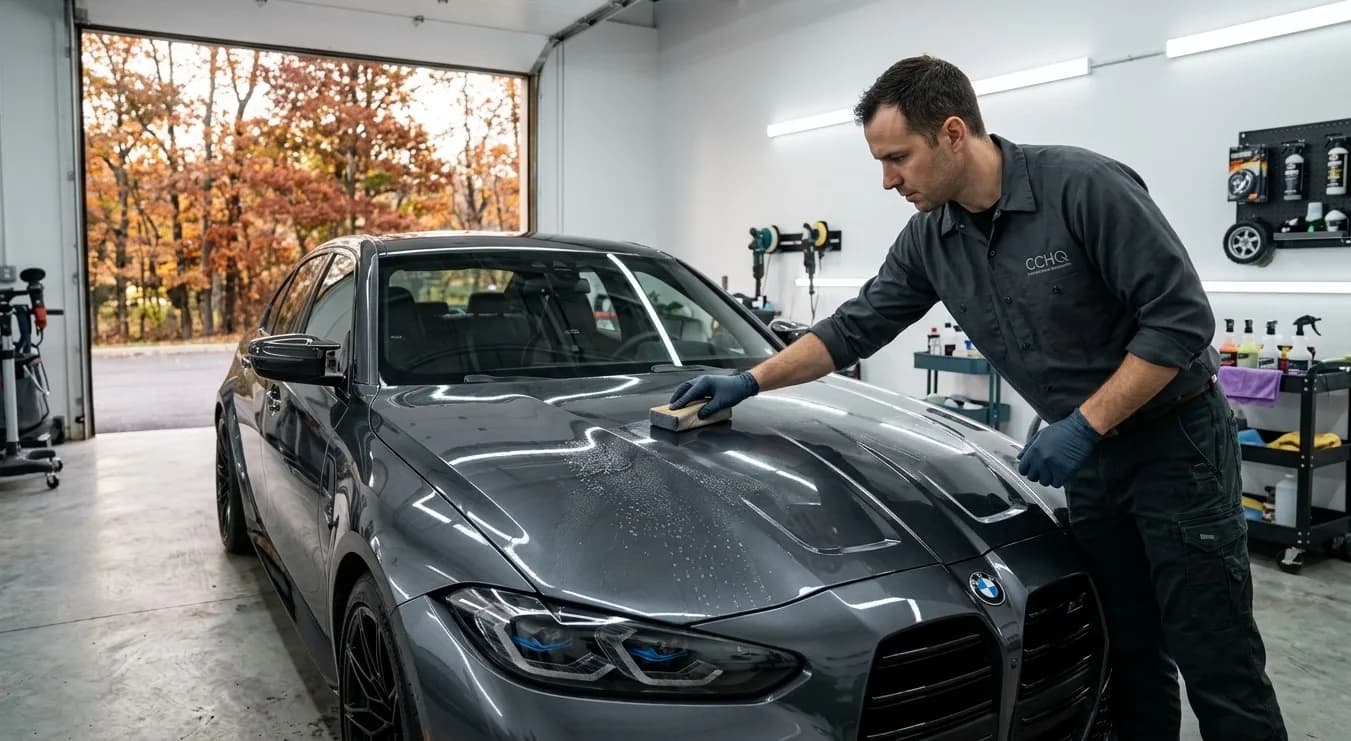
Summary: Preparing your car for winter isn't just about putting on snow tires and topping off windshield washer fluid. Cold weather, road salt, chemical de-icers, and slush create a destructive combination for clear coat finishes. Applying a ceramic coating in the fall builds a sacrificial hydrophobic layer that stops corrosive contaminants from bonding to paint, making winter cleanings faster and preserving long-term resale value.
The Winter Paint Problem Most Drivers Ignore
Every year around October, car owners handle the standard checklist. Swapping out summer tires, checking antifreeze concentrations, putting emergency gear in the trunk. Yet most people completely ignore their vehicle's paint until spring arrives, only to find dull clear coats, chemical etching, and early rust specks embedded in lower door panels.
Winter is brutally hard on paint. Transportation departments don't just dump raw rock salt on highways anymore; they pre-treat asphalt with liquid magnesium chloride and calcium chloride brines. These liquid de-icers stick to tires, atomize into aerosolized mist at highway speeds, and cover every square inch of your car's exterior.
When those chemicals sit on bare clear coat, they go to work immediately:
Chemical Etching: Brine mixtures are highly corrosive. As moisture evaporates in sun or garage warmth, concentrated salt residues eat into clear coat layers.
Microscopic Trapping: Factory paint finishes look smooth to the eye, but under magnification, clear coats contain microscopic peaks and valleys. Salt, brake dust, and road grime lodge inside these pores.
Freeze-Thaw Expansion: Water trapped inside raw paint pores freezes, expands, and creates micro-fissures over time, accelerating surface degradation.
If you rely on a standard paste wax applied in summer, winter road chemicals will strip it off in three to four highway drives.
Join CarCultureHQ
Claim your free digital garage
Build your ride profile, log modifications, join a crew, and get your build in front of thousands of enthusiasts.
Create your free garageWhy Fall Is the Ideal Window for Coating
Timing determines whether a ceramic protection job lasts three years or fails in three weeks.
Ceramic coatings are liquid polymer formulas containing Silicon Dioxide (SiO2) or Silicon Carbide (SiC). When applied to clean paint, the liquid cures into a hard, glass-like layer. That curing process demands specific environmental conditions.
Applying a coating during mid-to-late fall gives you stable humidity and moderate temperatures. This environment allows the chemistry to cross-link properly with your factory paint before freezing conditions set in.
What a Ceramic Coating Actually Does (And What It Can't)
Marketing claims surrounding ceramic coatings often get out of control. To make a smart investment, you need to separate real material science from sales hype.
What It Does Exceptionally Well
Creates Superhydrophobic Repellency: Water angles hit higher surface tension thresholds (often exceeding 110 degrees). Water, slush, and muddy brine roll off rather than sticking.
Provides Chemical Resistance: Quality ceramic coatings handle a wide pH range (typically pH 2 to pH 12). Road salt and acidic grime won't break down the protective layer.
Prevents Contaminant Staining: Tree sap, bird droppings, and industrial fallout stay on top of the coating layer instead of etching directly into factory paint.
Simplifies Maintenance: Because grime cannot grip the sealed surface, a touchless pressure wash removes the bulk of winter slush without heavy scrubbing.
What It Will Not Do
Stop Rock Chips: Ceramic coatings add a thin layer measured in microns. They cannot stop stone impacts at highway speeds. For impact protection, look into Paint Protection Film (PPF).
Eliminate Washing Entirely: Dirt still settles on the car. The coating simply makes cleaning easier and safer.
Cover Up Damaged Paint: Ceramic coatings act like a magnifying glass over your clear coat. Swirl marks, deep scratches, and oxidation must be corrected before application.
Decision Framework: DIY vs. Professional Application
Choosing between doing it yourself in your garage or hiring a professional shop comes down to budget, time, and the current condition of your vehicle's paint.
Option A: Professional Detailing Studio
Cost: $800 – $2,500+
Process: Multi-stage paint correction, surface de-greasing, multi-layer professional-grade coating, IR lamp curing.
Best For: New cars, high-end daily drivers, performance vehicles, or owners who lack time and machine polishing equipment.
Option B: DIY SiO2 Coating Kit
Cost: $60 – $150
Process: Hand wash, iron decontamination, clay bar treatment, single-stage light polish, panel wipe prep, slow hand application.
Best For: Enthusiasts comfortable working with dual-action polishers, older daily drivers, or owners working within a modest budget.
Step-by-Step Fall Ceramic Application Workflow
If you decide to apply a ceramic coating yourself this autumn, step order is everything. Skipping surface preparation ruins coating adhesion.
Chemical Decontamination Wash: Wash the car using a high-pH strip shampoo to remove old wax and road oils. Follow with a dedicated iron remover spray to dissolve embedded brake dust particles.
Mechanical Clay Treatment: Run a synthetic clay mitt or clay bar over panels using light lubricant to lift stubborn surface roughness.
Paint Correction Pass: Machine polish the paint using a dual-action polisher and medium pad to remove minor swirl marks and micro-scratches.
Isopropyl Alcohol (IPA) Panel Wipe: Spray every panel with an IPA wipe solution to strip residual polishing oils. The clear coat must be completely bare.
Cross-Hatch Coating Application: Work in small sections (roughly 2 feet by 2 feet). Apply 4 to 5 drops of ceramic liquid to your applicator block. Wipe in straight horizontal lines, then cross over in straight vertical lines to ensure even coverage.
Flash & Leveling: Watch for the coating to "flash" (it will look like an oil-slick effect on the surface, usually taking 1 to 3 minutes depending on room temperature). Wipe gently with a clean microfiber towel to level the surface, then buff off residue with a second dry towel.
Cure Period: Keep the vehicle indoors and dry for at least 24 hours. Avoid using harsh chemical soaps for the first seven days.
Protect Your Investment Before the Weather Turns
Leaving clear coat bare during winter guarantees extra restoration work come spring. A proper fall ceramic coating creates a clear, durable chemical barrier that stops de-icers, salt, and slush from etching into paint.
Whether you book a professional multi-stage detailing service or spend a weekend prepping the car in your own garage, completing the work before freezing temperatures arrive preserves paint clarity, maintains vehicle value, and saves hours of scrubbing in cold weather.
Join CarCultureHQ
Claim your free digital garage
Build your ride profile, log modifications, join a crew, and get your build in front of thousands of enthusiasts.
Create your free garageFrequently asked questions
Can I apply a ceramic coating outside in cold weather?
It is not recommended. Applying a coating below 50°F (10°C) slows down the evaporation of solvent carriers, leading to high spots, uneven curing, and streakiness. Ideally, work inside a climate-controlled garage between 55°F and 75°F.
Will road salt damage a freshly applied ceramic coating?
No, provided the coating has completed its initial 24-to-48-hour cure time. Ceramic coatings offer high chemical resistance against salt, calcium chloride, and magnesium chloride. However, avoid washing the vehicle with heavy detergents during its full 7-day cure window.
How often should I wash a ceramic-coated car during winter?
Rinse your car every 1 to 2 weeks using a touchless pressure washer to remove salt buildup. Perform a full two-bucket hand wash or gentle foam wash every 3 to 4 weeks using a pH-neutral shampoo designed for ceramic finishes.
Is a ceramic spray wax enough for winter protection?
A modern ceramic spray coating containing SiO2 offers decent short-term protection (typically 3 to 6 months). While not as hard or long-lasting as a true glass-vial ceramic coating, a quality ceramic spray applied in late autumn provides far better winter defense than traditional carnauba wax.

Comments
Join the conversation on Why You Need Fall Ceramic Coating Before Winter Hits Hard. Keep it civil — admins moderate reports.
Loading comments…