Best Brake Pads & Fluid for Beginner Track Days
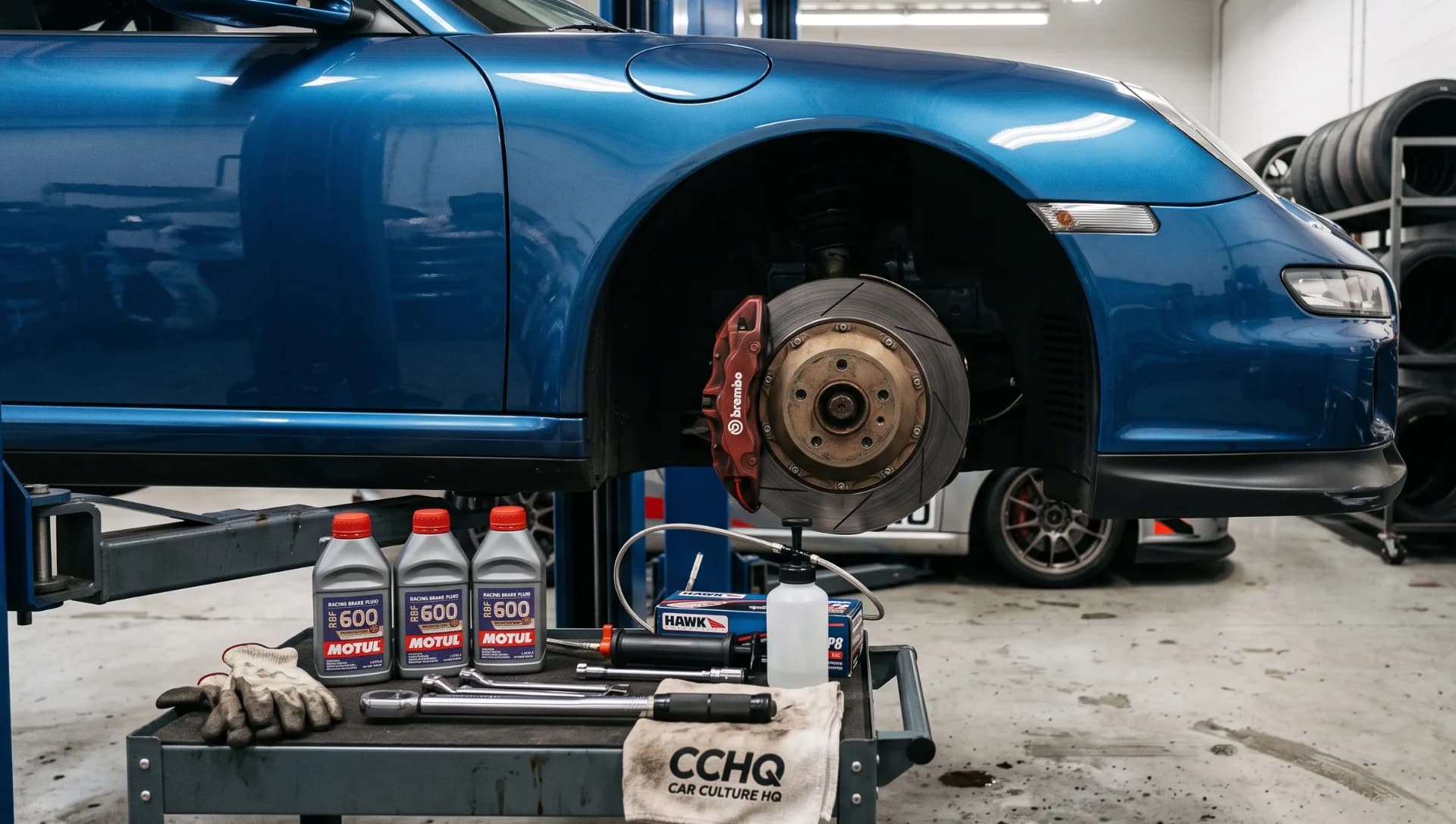
If you are taking your street car to your first track day or HPDE event, your factory brake fluid and street pads are the weakest link. We broke down the exact pad compounds and high-temp fluids experienced drivers run so you can stay out on track all day without boiling your pedal to the floor.
The Soft Pedal Shock: What Happens on Track
Your first session always feels great for about three laps. Then you hit the heavy braking zone at the end of the straightaway, press down on the pedal, and feel it sink straight to the floorboard.
That sinking sensation is fluid boil, and it happens to almost everyone who brings a daily driver to their first track weekend on factory setup.
Street brakes are designed for quiet stops at low temperatures. Track driving generates sustained temperatures above 1,000 degrees Fahrenheit. If you do not prepare your braking system before tech inspection, your day will end in the paddock early.
High-Temperature Brake Fluids: Non-Negotiable Step One
Brake fluid is hygroscopic, meaning it absorbs moisture right through the rubber lines in your car. As water content rises, the boiling point drops rapidly. On track, that trapped water turns into gas bubbles, giving you a soft, sponge-like pedal.
Motul RBF 600 delivers a high 594 degree dry boiling point, making it the standard entry fluid for drivers stepping onto the track.
Motul RBF 600: The go-to starting point for novice drivers. It offers a 594 degree dry boiling point at an affordable price per bottle.
Motul RBF 660: Handles higher heat for heavier cars or drivers braking harder into corners, raising the dry boiling threshold to 622 degrees.
Castrol SRF: The gold standard for track enthusiasts. Its massive 518 degree wet boiling point means absorbed moisture will not boil during a weekend event, allowing you to run it through an entire season without constant bleeding.
Brake Pads: Street vs. Dedicated Track Compounds
Street pads rely on resin binders that break down under hard heat. When those binders melt, they outgas, creating a slick cushion between your pad friction material and the rotor face. This is called pad fade.
Dual-Duty Street/Track Options
If you are driving your car to the track and do not want to swap pads in the garage, intermediate pads work well for your first few events.
Hawk HP Plus: A classic entry pad that offers aggressive cold bite and holds up through novice track heat. The tradeoff is squeal on street drives and heavy dust.
PowerStop Track Day Pads: Formulated for entry-level HPDE participants who need predictable pedal feel without burning through a $300 set of race pads in one afternoon.
Full Track Compounds
Once you start carrying real speed into corner entries, you will want dedicated pads like Carbotech XP8 or G-Lok R8. They squeal loudly at stoplights, but they bite consistently at 1,200 degrees.
Rotors: Stick to Cheap Smooth Blanks
Do not buy drilled rotors for track use. Drilling holes in a rotor creates stress points where heat cycles form spider cracks. Slotted rotors help sweep away gas and dust, but basic smooth blank rotors are cheap, durable, and perform exceptionally well. Buy standard replacement blanks, run good pads, and treat rotors as replaceable consumables.
Frequently asked questions
Can I run track brake pads on the street daily?
You can, but dedicated track pads make noise, generate heavy dust, and wear down rotors faster when cold. Intermediate options like Hawk HP Plus or PowerStop Track Day Pads work on the street, but most drivers swap back to quiet OEM pads after track days.
How often should I flush my track brake fluid?
If you run high-temp fluids like Motul RBF 600, perform a quick caliper bleed before every event and a complete flush once a season. Premium fluids like Castrol SRF can usually go a full season without a complete system flush.
Why do my brakes squeal after a track day?
Track pads use aggressive metallic and ceramic compounds designed to operate at extreme temperatures. At low street speeds, those hard friction compounds vibrate against the rotor face, creating high-pitched squeal.
Will upgraded brake pads damage my stock rotors?
Aggressive track compounds wear rotors down faster than street pads, especially when cold. Using standard smooth iron blank replacement rotors keeps maintenance costs low when pads inevitably wear the metal down over time.
Comments
Join the conversation on Best Brake Pads & Fluid for Beginner Track Days. Keep it civil — admins moderate reports.
Loading comments…