The First 10 Mods Most Enthusiasts Consider: The Realistic Order of Operations
Written and reviewed by the CarCultureHQ Editorial Team. See our Editorial Policy for sourcing and corrections.
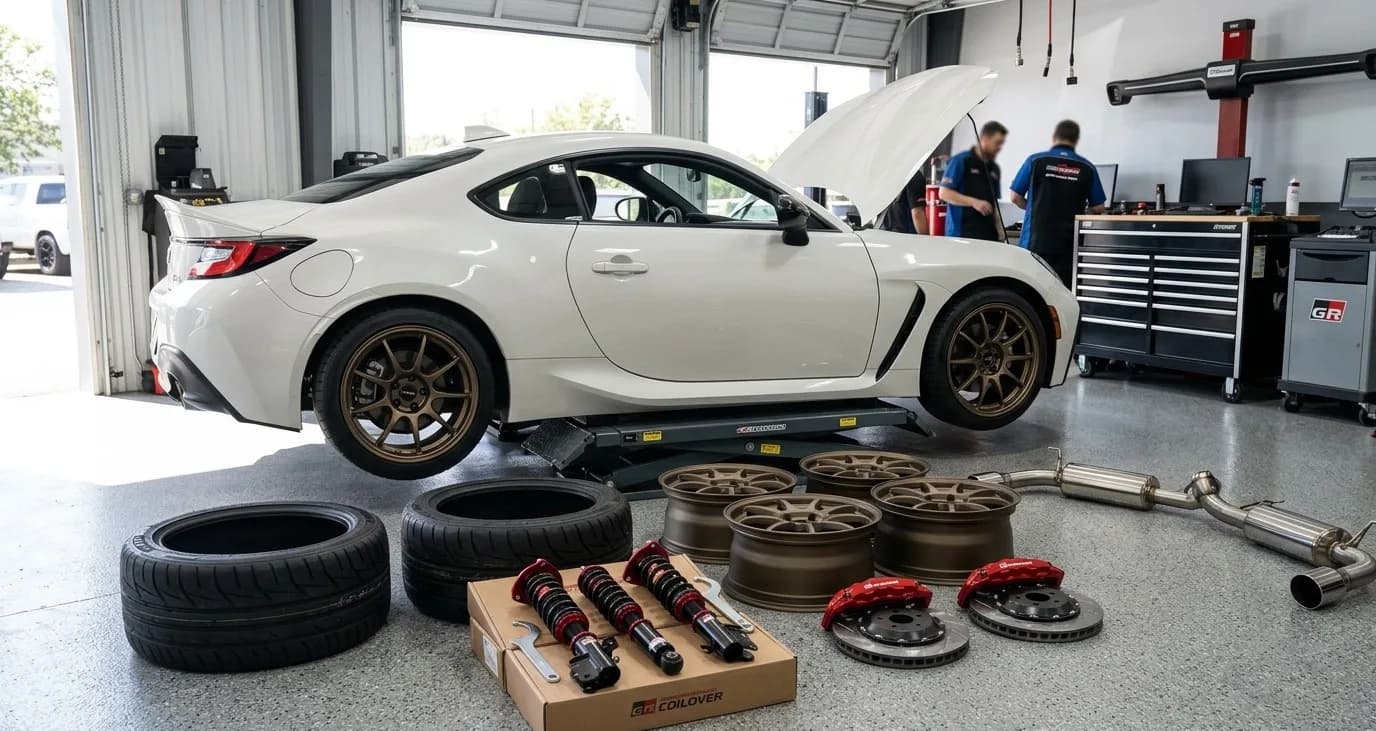
Stop Wasting Money on Your First 10 Car Mods: The Realistic Order of Operations
Read time: 8 minutes
Summary: Most enthusiasts build cars backward. They buy cheap bolt-ons for noise and clout before touching the mechanical foundation that actually makes a vehicle fast, stable, and rewarding to drive. Here is the realistic modification hierarchy from someone who has wasted the money so you do not have to.
The Modding Trap: Why Most Builds Feel Worse Than Stock
Walk through any local meets parking lot on a Friday night, and you will see the exact same pattern: a two-year-old sports coupe sitting on bottom-tier coilovers, wearing budget all-season tires, equipped with an open-element air filter sucking hot engine bay air, and screaming through a straight-piped exhaust.
The owner spent $3,000 to make the car slower, harsher, louder, and harder to drive.
It is easy to understand how this happens. When you buy a enthusiast car, the internet bombards you with generic lists of "must-have initial upgrades." You see shiny parts on social media, listen to sound clips on short-form video apps, and end up buying modifications based on instant gratification rather than mechanical synergy.
The problem is that modern production cars are tightly integrated systems. When you alter one variable without accounting for the downstream effects, you degrade the driver feedback loop. Building a car that actually performs requires an intentional order of operations.
Join CarCultureHQ
Claim your free digital garage
Build your ride profile, log modifications, join a crew, and get your build in front of thousands of enthusiasts.
Create your free garagePhase 1: The Foundation (Mods 1 to 3)
Before adding a single horsepower or changing a body panel, address the mechanical baseline. A well-maintained stock car on great tires will out-lap a modified car riding on trash rubber every single time.
1. Baseline Maintenance and Fluid Flush
It sounds boring, but fresh synthetic fluids, new spark plugs, and fresh filters represent "Mod Zero." Replacing sticky stock rubber suspension bushings with new OEM or stiffened polyurethane units restores the factory geometry that age stole from your chassis.
The Goal: Eliminate mechanical variables. You cannot tune around a misfire, a sticking brake caliper, or worn ball joints.
Real-World Impact: Immediate steering precision recovery and predictable throttle response.
2. High-Performance Tires
Tires are the single most important component on any vehicle. They represent the sole contact patch between your chassis and the asphalt. Putting top-tier 200-treadwear or high-category performance rubber on stock wheels transforms turn-in speed, braking distance, and power delivery far more than any engine bolt-on.
Decision Criteria: If your car is a daily driver, select a premium max-performance summer tire. If it sees track time or autocross, look into aggressive endurance category 200 TW options.
Outcome: Shorter stopping distances and massive increases in lateral cornering grip.
3. Track-Ready Brake Pads and High-Temp Fluid
Stock brake pads are designed to operate silently at low city speeds without generating dust. On a twisty backroad or track session, they quickly overheat, gas out, and fade, sending the brake pedal straight to the floorboard.
Do not waste money on oversized big brake kits right away. Swap in high-friction street/track pads, fresh high-boiling-point DOT 4 fluid, and stainless steel braided lines.
Phase 2: Chassis and Control (Mods 4 to 7)
Once your car stops predictably and grips the road, you can begin refining how the chassis reacts to driver inputs.
4. Suspension Alignment and Corner Geometry
You do not always need new coilovers to make a car handle. A custom wheel alignment tailored to your driving goals changes turn-in response dramatically. Adding slight static negative camber up front protects tire shoulders during cornering and sharpens steering feedback.
5. Upgraded Sway Bars (Anti-Roll Bars)
If body roll is ruining your cornering confidence, an upgraded rear or front sway bar offers the highest handling returns per dollar spent. A stiffer rear sway bar on front-wheel-drive or all-wheel-drive cars reduces mid-corner push (understeer) and helps the chassis rotate smoothly.
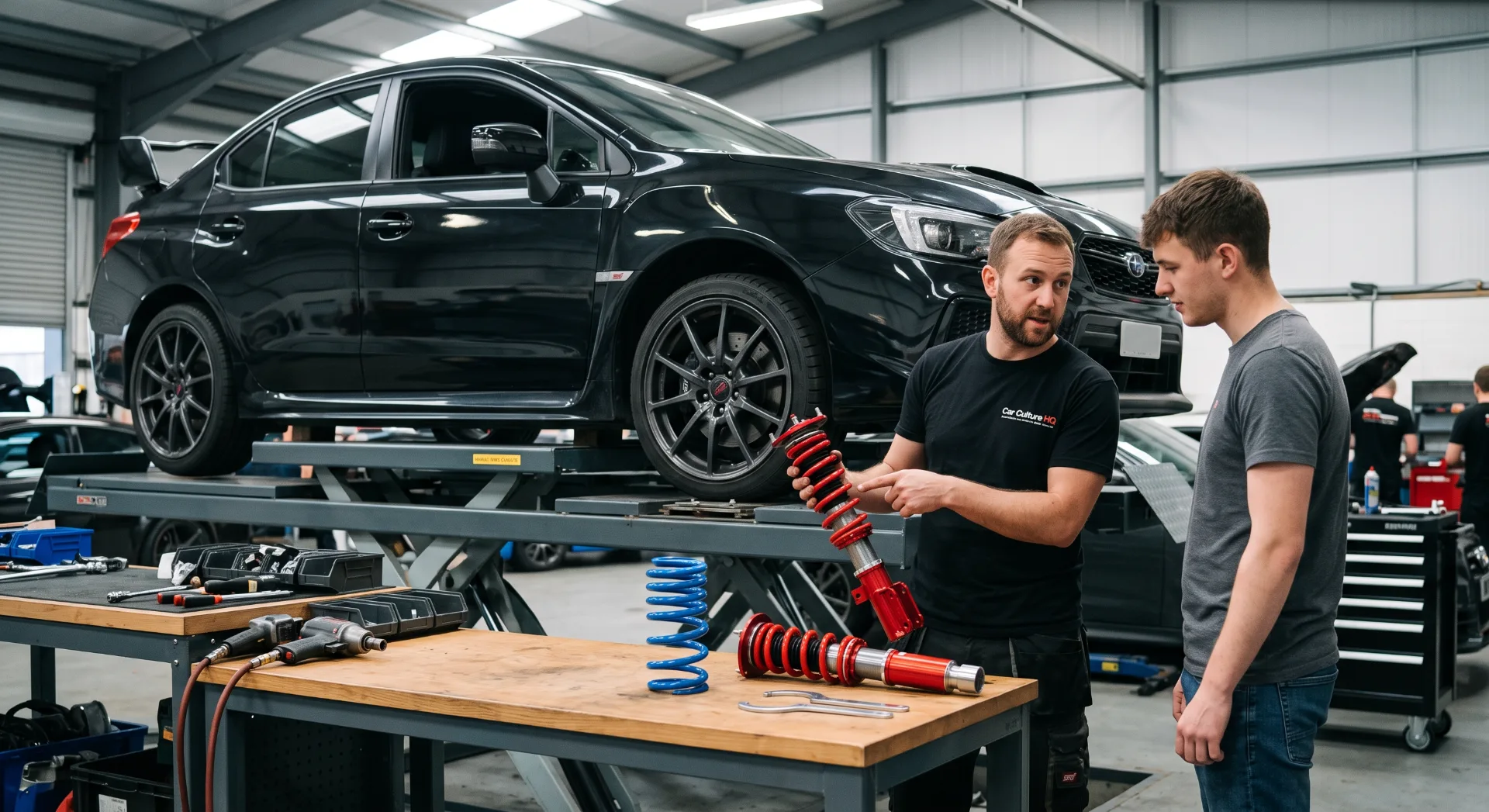
6. Quality Dampers or Coilovers
Cheap coilovers use poorly valved shock absorbers that bounce over pavement bumps, reducing tire contact and ruining ride quality. If you lower the car, invest in name-brand height-and-damping adjustable coilovers or high-performance fixed dampers paired with matched lowering springs.
7. Wheel Fitment and Unsprung Weight Reduction
Lightweight aftermarket alloy wheels do more than look good. Dropping four to five pounds of unsprung rotating mass per corner allows the suspension to react faster to road imperfections, improving acceleration response and damper control.
Phase 3: Engine Efficiency and Sound (Mods 8 to 10)
Only after the chassis, brakes, and tires are capable of managing additional speed should you turn your attention to the engine bay.
8. Free-Flowing Intake System
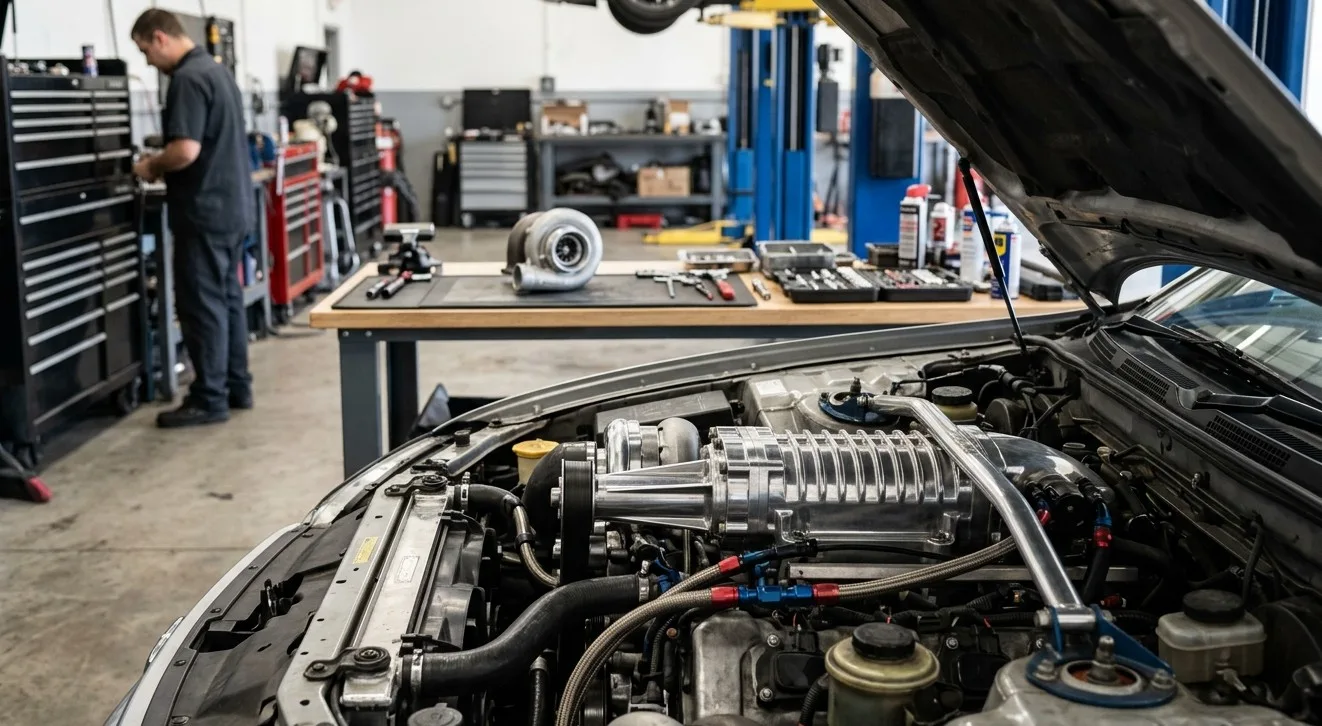
On modern turbocharged engines, a well-designed intake reduces inlet restriction and lowers intake air temperatures. On naturally aspirated cars, an intake is primarily a sound generator, giving you clear induction noise under heavy throttle without adding huge horsepower numbers on its own.
9. Performance Exhaust and High-Flow Catalytic Converter
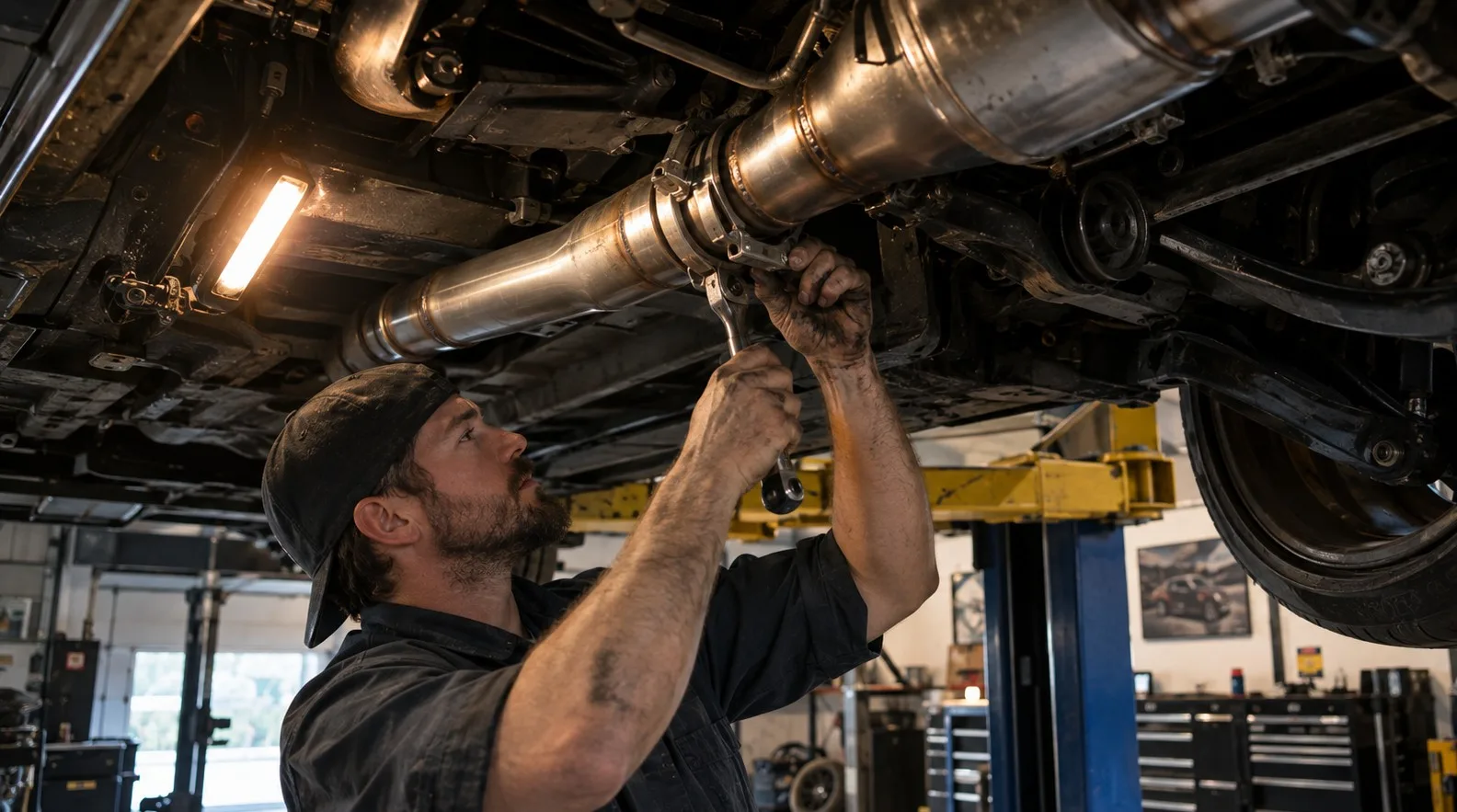
A restrictive factory exhaust stifles engine sound and traps exhaust gas heat. Upgrading to a properly sized cat-back or axle-back exhaust adds deep tone without highway drone. For turbocharged platforms, a high-flow downpipe reduces backpressure behind the turbine, letting the turbo spool faster.
10. Engine Management and Custom ECU Calibration
An ECU flash ties all your hardware modifications together. By remapping ignition timing, fueling targets, and boost pressures, a quality software calibration optimizes power delivery across the entire RPM band.
Caution: Always use a reputable tuner or proven off-the-shelf map developed specifically for your exact hardware combination. Generic eBay chips or aggressive unverified tunes risk engine detonation and severe mechanical damage.
Practical Checklist: Before Buying Your First Mod
Before adding parts to your online shopping cart, run through this practical sanity check:
[ ] Is the car mechanically sound? Resolve all oil leaks, check engine lights, and suspension clunks first.
[ ] What is the primary usage model? Do not install track-spec metallic brake pads if the car spends 95% of its life in stop-and-go highway traffic.
[ ] Did you budget for supporting hardware? Lowering a car often requires adjustable sway bar end links and camber arms to fix broken geometry.
[ ] Are you buying quality over clout? One high-end Japanese or European suspension component will outlast three cheap replica parts.
[ ] Have you tested the car stock on track or backroads? Learn the factory limits before trying to engineer past them.
Join CarCultureHQ
Claim your free digital garage
Build your ride profile, log modifications, join a crew, and get your build in front of thousands of enthusiasts.
Create your free garageFrequently asked questions
Will modifying my car void the factory warranty?
Legally, a dealership cannot void your entire warranty simply because an aftermarket part is present. Under federal law, the manufacturer must prove that the specific aftermarket component caused or contributed to the failure. However, if an aggressive engine tune causes a engine failure, expect the dealer to deny warranty coverage for that repair.
Should I buy coilovers or lowering springs first?
If your stock shock absorbers are in good condition and you only want a modest drop (0.8 to 1.2 inches) for street driving, lowering springs work fine. If you want adjustable ride height, custom corner balancing, and precise damper control for performance driving, buy proper coilovers.
Why do cheap mods ruin how a car drives?
Cheap modifications compromise on valving, metallurgy, and testing. Bargain coilovers often lack sufficient suspension travel, forcing the chassis to ride on hard rubber bump stops. This creates harsh ride characteristics and sudden loss of tire grip on uneven road surfaces.
Comments
Join the conversation on The First 10 Mods Most Enthusiasts Consider: The Realistic Order of Operations. Keep it civil — admins moderate reports.
Loading comments…