DIY vs Professional Car Mods: What to Wrench and What to Outsource
Written and reviewed by the CarCultureHQ Editorial Team. See our Editorial Policy for sourcing and corrections.

Estimated Read Time: 8 minutes
Summary: Choosing between installing aftermarket parts yourself or paying a shop comes down to more than just labor rates. Here is a realistic look at DIY vs professional car mods, covering skill thresholds, hidden costs, and how to decide which jobs belong in your garage.
The Driveway Realignment: Why Mod Choice Matters
Every enthusiast reaches the same crossroad. You order a new set of coilovers or a higher-flowing exhaust, it sits in a box by your front door for three days, and then you face the decision: clear your Saturday schedule and pull out the socket set, or hand the keys and a stack of cash over to a local speed shop.
There is a genuine sense of accomplishment that comes from unbolting factory parts, fitting aftermarket hardware, and torqueing every fastener yourself. But there is also a distinct pain in spending six hours on your back on cold concrete, fighting a seized oxygen sensor while your weekend disappears.
Deciding between DIY wrenching and professional installation isn't about proving how tough you are in the garage. It is a practical calculation involving tools, time, safety, and what happens if something snaps mid-install.
Join CarCultureHQ
Claim your free digital garage
Build your ride profile, log modifications, join a crew, and get your build in front of thousands of enthusiasts.
Create your free garageDIY vs Professional Car Mods: Quick Comparison
Upgrade Category | Average DIY Time | Average Shop Labor Cost | Skill Level Required | Best Approach |
Cold Air Intake | 1 - 2 hours | $100 - $200 | Beginner | DIY |
Cat-Back Exhaust | 2 - 4 hours | $200 - $400 | Beginner / Intermediate | DIY |
Lowering Springs / Coilovers | 4 - 8 hours | $400 - $900 | Intermediate | Hybrid (DIY install, Shop align) |
Brake Rotors & Pads | 2 - 4 hours | $250 - $500 | Intermediate | DIY |
Custom ECU Tuning / Dyno | N/A | $500 - $1,200 | Advanced | Professional |
Clutch Replacement | 8 - 14 hours | $800 - $1,800 | Advanced | Professional |
The Low-Risk DIY Tier: Beginner Garage Projects
Some modifications are designed from the factory for straightforward home installation. These parts usually require standard hand tools, basic mechanical logic, and minimal disassembly.
Cold Air Intakes and Cabin Air Upgrades
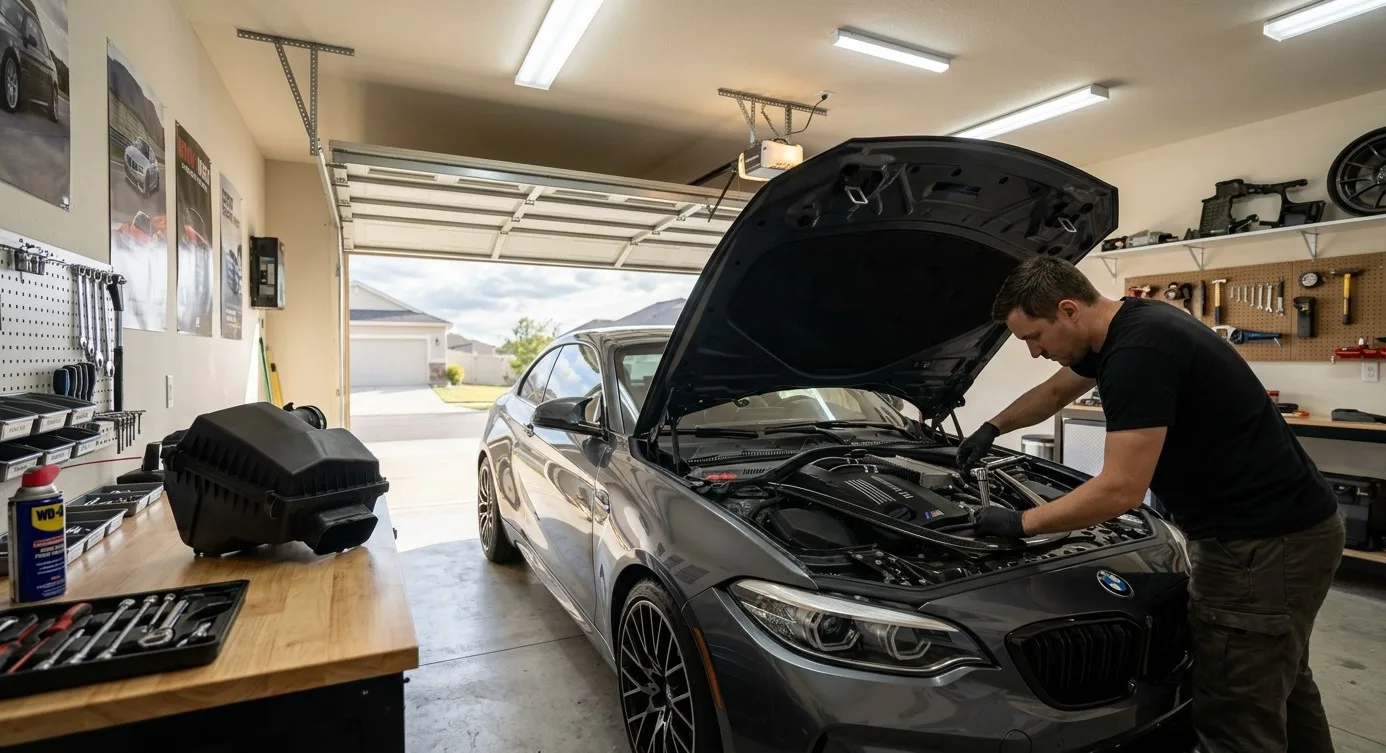
Upgrading an intake system requires little more than a screwdriver set, a socket set, and patience with plastic trim clips. Factory airboxes unbolt cleanly, and aftermarket silicone hitches attach directly to stock throttle bodies.
Why it works at home: Zero risk of structural damage or fluid leaks. If a hose clamp sits loose, the engine simply runs slightly rough until you tighten it down.
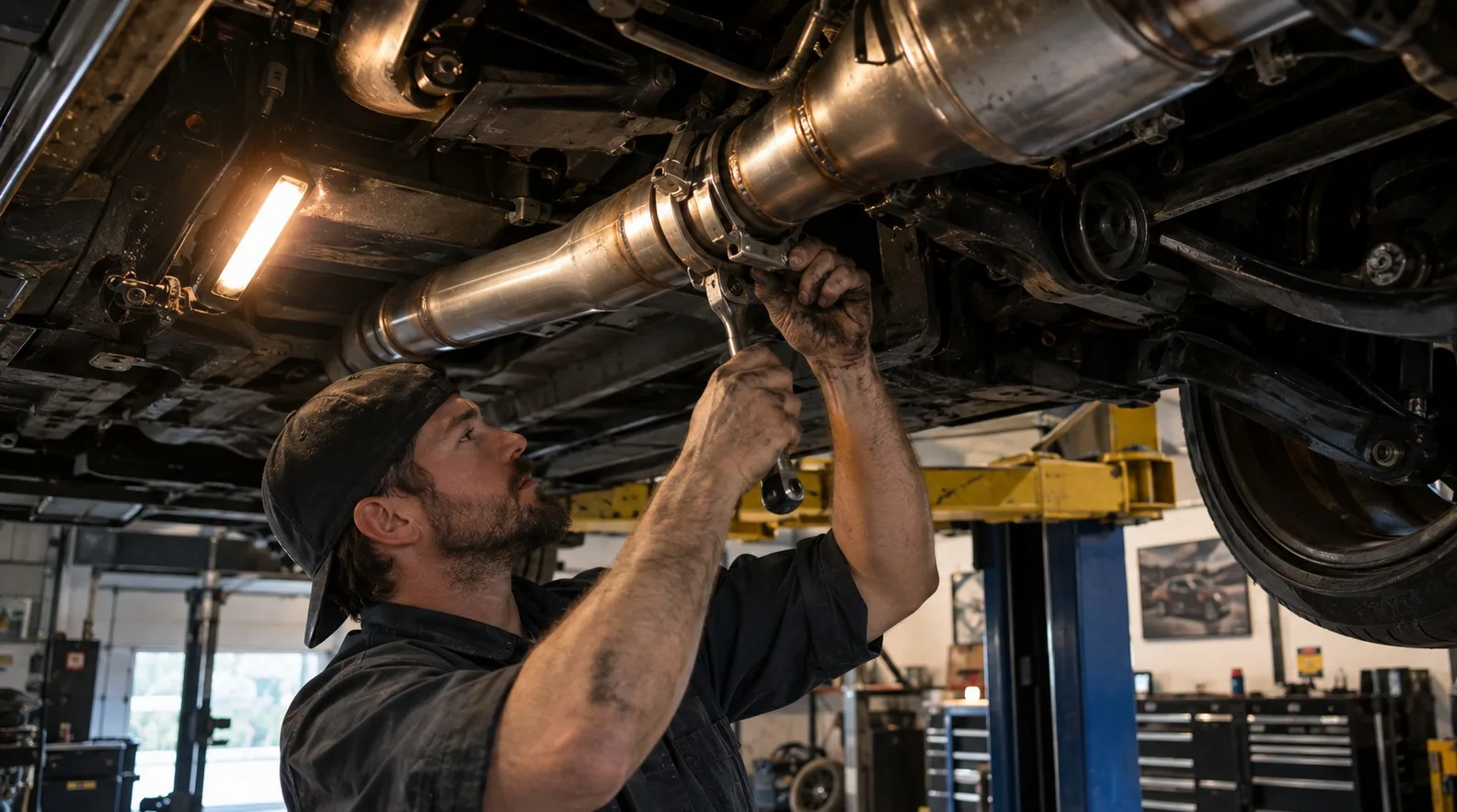
Bolt-On Cat-Back Exhaust Systems
If your vehicle lives in a dry climate without heavy underbody rust, replacing a cat-back exhaust is one of the most satisfying Saturday garage projects you can tackle.
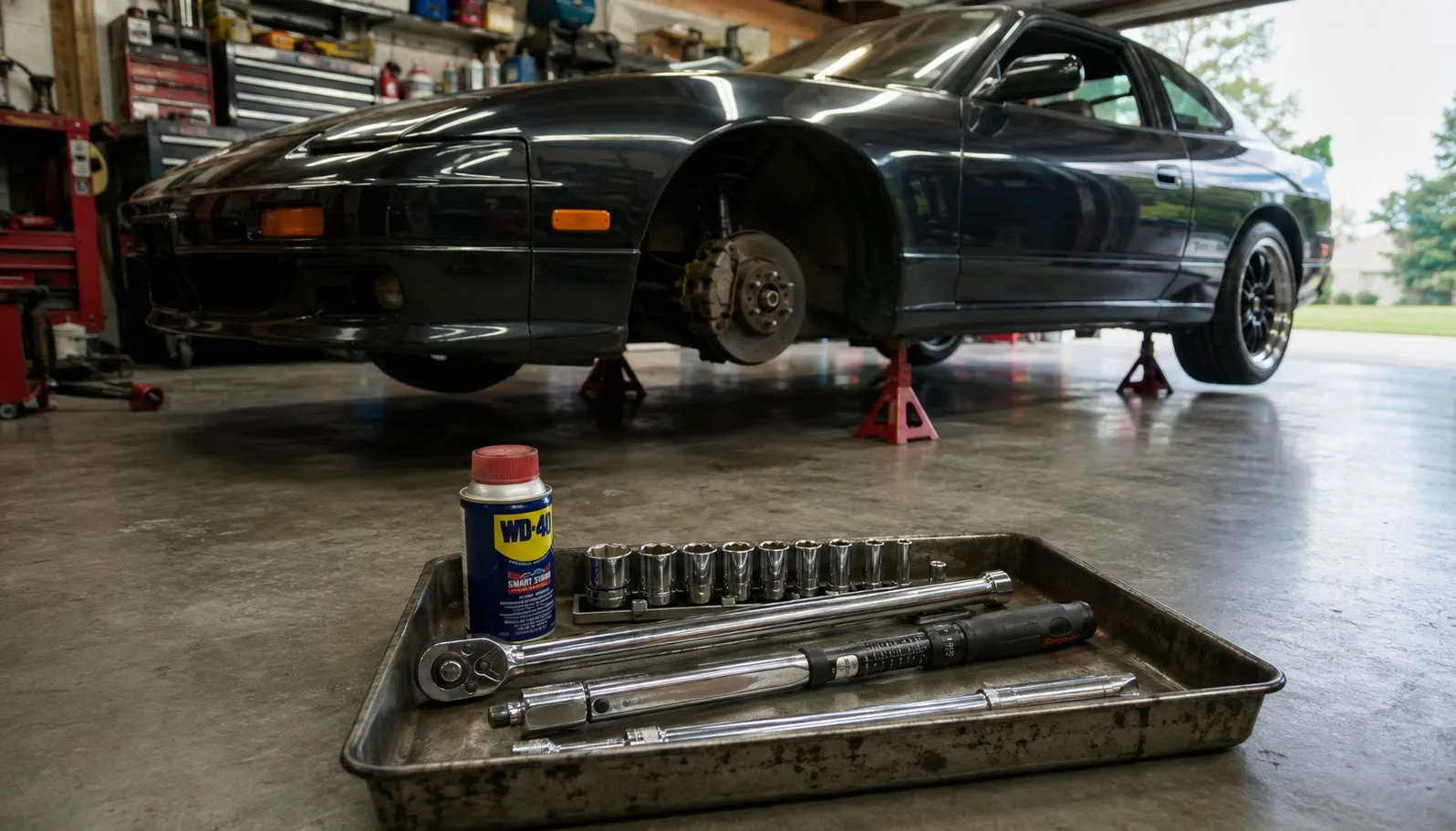
Tools needed: Jack stands, a floor jack, penetrant spray, an exhaust hanger removal tool, and a standard socket set.
The caveat: If your car has spent five winters in upstate New York or the Midwest, rusted exhaust studs can shear off instantly. If those manifold studs look like solid orange lumps, let a shop with an acetylene torch handle the teardown.
The Hybrid Tier: DIY Assembly with Professional Calibration
Certain modifications fall directly in the middle. You can handle eighty percent of the physical wrenching at home, but final adjustments require specialized commercial machinery.
Suspension Upgrades (Coilovers and Sway Bars)
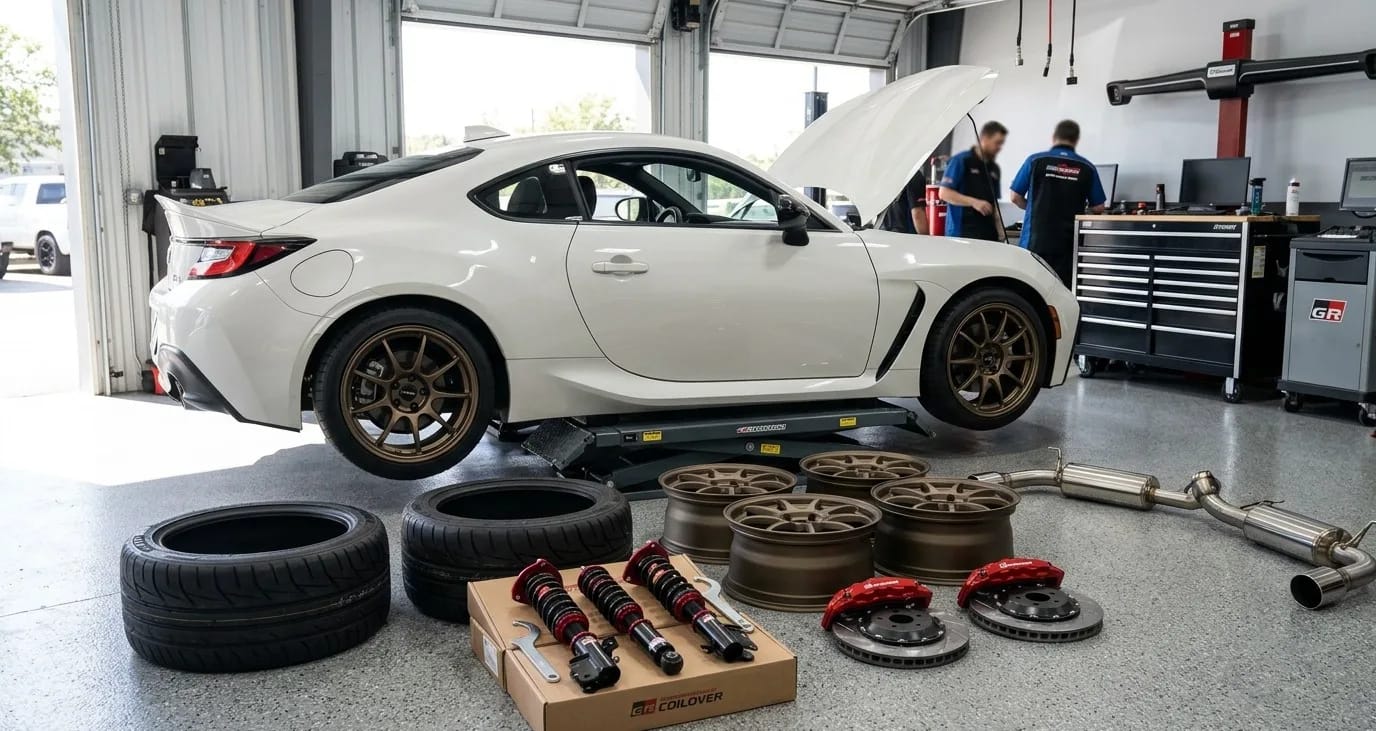
Installing a set of height-adjustable coilovers in a home garage is completely manageable with a good jack, floor stands, and a torque wrench. However, unbolting factory struts alters your vehicle's camber, toe, and caster angles immediately.
Never skip the professional alignment after a suspension job. Driving a lowered car even fifty miles with scrubbed toe angles will permanently ruin a fresh set of performance tires.
The Professional-Only Tier: When to Hand Over the Keys
When a modification involves internal engine tolerances, high fluid pressures, or high-tension mechanical components, paying for professional labor is cheap insurance.
1. Internal Engine and Forced Induction Installs
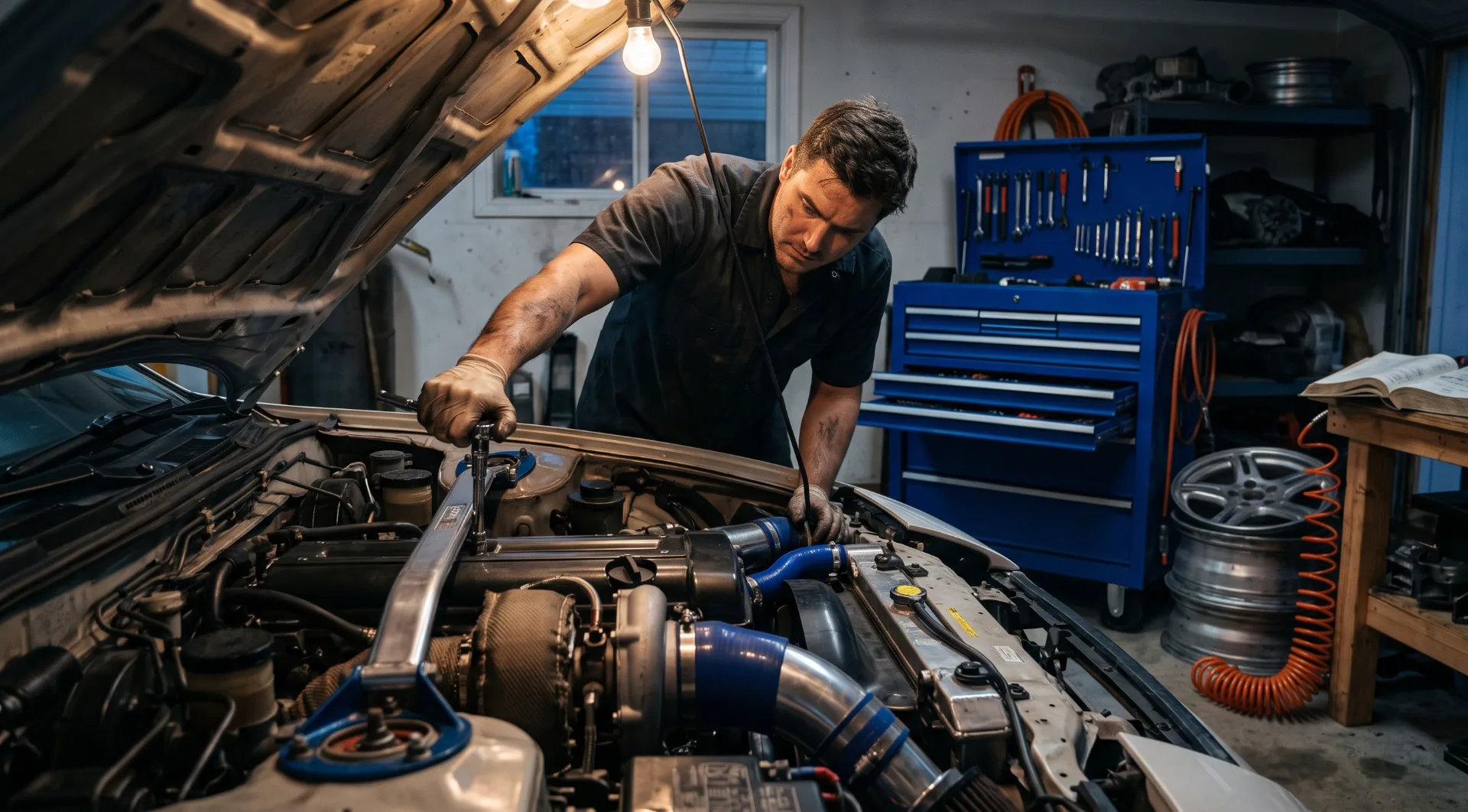
Fitting a custom turbocharger kit, replacing camshafts, or upgrading fuel injectors leaves zero margin for error. A single misplaced vacuum line or an improperly torqued head bolt can destroy an engine block in seconds.
Professional shops bring calibrated tools, smoke testers for vacuum leaks, and immediate access to diagnostic software to verify oil pressure and fuel trims before turning the key.
2. Custom ECU Tuning and Dyno Calibration
Flash tunes downloaded straight to a handheld programmer are easy enough for home use, but custom engine mapping on a chassis dynamometer requires years of specialized calibration experience.
A professional tuner monitors knock sensors, air-fuel ratios, exhaust gas temperatures, and ignition timing across the entire powerband. Trying to guess those parameters on an open highway is a fast track to melted pistons.
Calculating the True Cost of DIY Wrenching
Before you decide to save $500 on shop labor, run through this basic decision framework:
Tool Inventory: Do you own a calibrated torque wrench, heavy-duty jack stands, and specialty socket sets? Purchasing these items new can swallow your immediate labor savings.
Time Commitment: A shop technician with a hydraulic lift and air tools can complete a job in two hours. On jack stands in a home garage, that same job often takes six. Ask yourself what your free time is worth.
Safety Factors: Working beneath a two-ton vehicle supported on stands requires strict adherence to safety protocols. If a job feels beyond your comfort zone, stop immediately.
Fallback Options: Do you have a secondary vehicle to drive to the auto parts store if a bolt snaps or a seal leaks on Sunday afternoon?
How to Work with an Independent Speed Shop
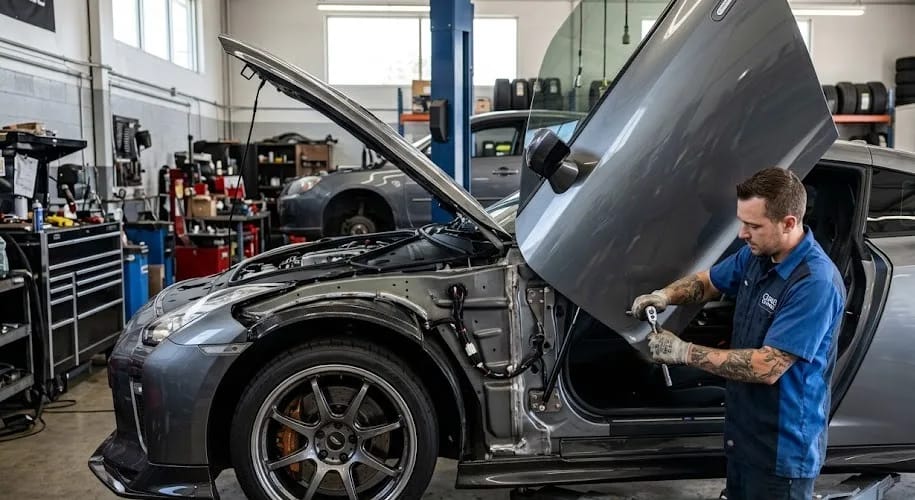
If you decide to outsource an installation, picking the right facility is critical. Not all general repair garages understand aftermarket performance hardware.
Find specialists: Look for independent shops that concentrate specifically on your platform, whether that is European performance, Japanese tuners, or American muscle.
Ask about labor warranties: Reputable installation facilities back their work with a written warranty covering labor errors for at least 12 months or 12,000 miles.
Clarify parts sourcing: Some shops refuse to install customer-supplied parts due to liability concerns. Always ask about their customer-parts policy before ordering hardware online.
Join CarCultureHQ
Claim your free digital garage
Build your ride profile, log modifications, join a crew, and get your build in front of thousands of enthusiasts.
Create your free garageFrequently asked questions
Can I supply my own aftermarket parts to a professional shop?
It depends on the facility. Many specialized performance shops prefer to source parts directly so they can guarantee fitment and manage warranty claims easily. Shops that do allow customer-supplied parts often charge a slightly higher hourly labor rate or decline to offer a labor warranty on the installation.
What tools are essential for starting DIY car modifications at home?
Start with a high-quality 3/8-inch and 1/2-inch drive metric socket set, a set of combination wrenches, a hydraulic floor jack rated for at least two tons, four heavy-duty jack stands, wheel chocks, and a calibrated click-type torque wrench.
Will DIY modifications void my vehicle's manufacturer warranty?
Under the Magnuson-Moss Warranty Act, a manufacturer cannot void your entire vehicle warranty simply because you installed aftermarket parts yourself. However, if a part you installed incorrectly causes a mechanical failure, the dealer can legally deny coverage for that specific repair.
How do I know if a home garage repair is unsafe to attempt?
Avoid jobs involving compressed strut springs without proper commercial spring tools, working under a car supported only by a hydraulic jack, or opening pressurized air conditioning lines without proper refrigerant recovery equipment.
Comments
Join the conversation on DIY vs Professional Car Mods: What to Wrench and What to Outsource. Keep it civil — admins moderate reports.
Loading comments…