Supercharged vs Turbocharged: How to Pick the Right Power Adder
Written and reviewed by the CarCultureHQ Editorial Team. See our Editorial Policy for sourcing and corrections.
Supercharged vs Turbocharged: How to Pick the Right Power Adder
Estimated Read Time: 7 minutes
Summary: Peak horsepower figures on a spec sheet do not tell the whole story. Deciding between a supercharger and a turbocharger comes down to mechanical engagement, thermal control, and how the engine delivers torque across the RPM band. This guide breaks down the real-world trade-offs of both forced induction systems so you can make an informed build decision.
The Real Difference Comes Down to Driving Feel
Dyno sheets lie by omission. A sheet shows you peak numbers at wide-open throttle, but it will not tell you what happens when you roll onto the gas out of a tight apex on a Saturday morning backroad.
Forced induction boils down to one simple job: shoving more air into the combustion chamber so you can burn more fuel and make a bigger explosion. How you drive that air into the engine changes the entire personality of the car.
A supercharger acts like a bigger, naturally aspirated engine. A turbocharger feels like a second engine waking up halfway through the rev range. Choosing between them is not about which system is objectively superior. It is about how you want your car to feel when you step on the pedal.
Join CarCultureHQ
Claim your free digital garage
Build your ride profile, log modifications, join a crew, and get your build in front of thousands of enthusiasts.
Create your free garageSuperchargers: Instant Response, Belt-Driven Torque
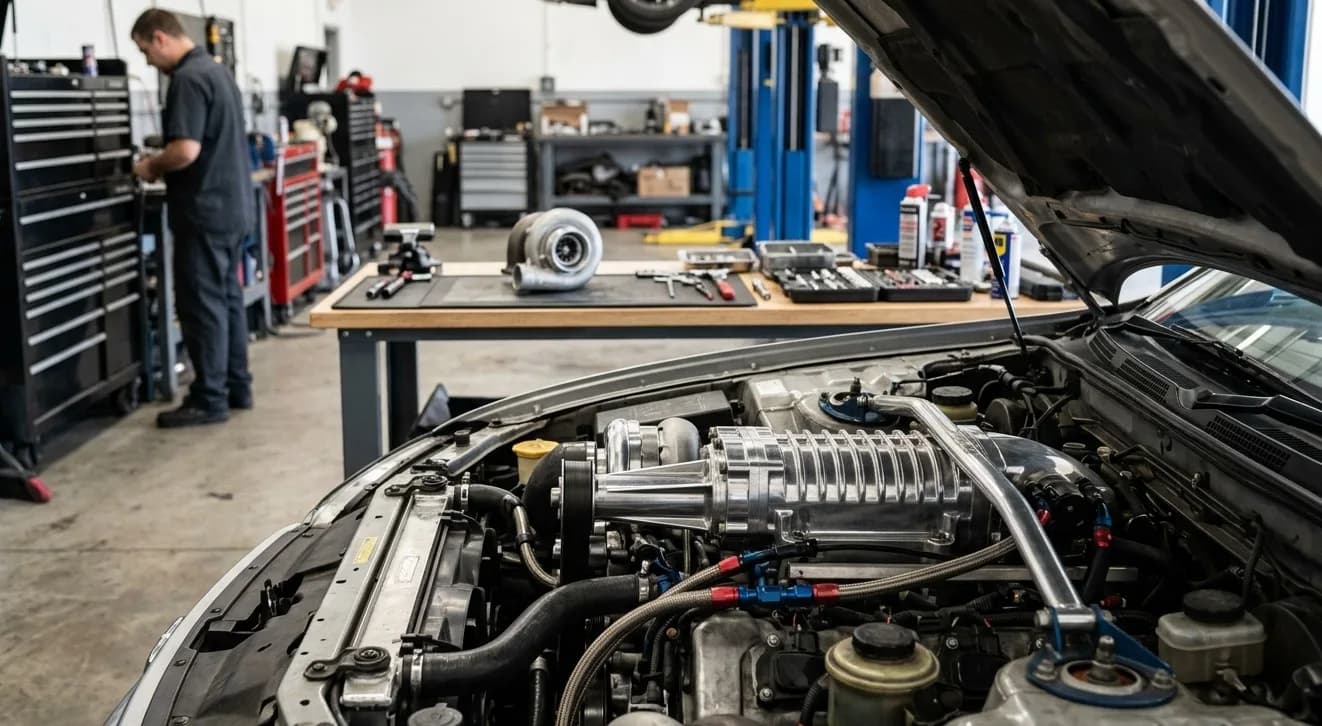
A supercharger is a belt-driven air pump connected directly to the engine crankshaft. The moment the crank turns, the blowers turn. There is no waiting for pressure to build in the exhaust system.
The Three Main Types
Roots Blowers: The classic top-mount setup. They push massive volumes of air into the manifold quickly. They offer brutal low-end torque, but they generate substantial heat at higher RPMs.
Twin-Screw: Similar appearance to a Roots, but compresses the air inside the housing before discharging it. They operate cooler and more efficiently than Roots blowers while preserving instant response.
Centrifugal: Looks like a turbocharger compressor housing, but runs off a belt. Power builds linearly with engine RPM, making them easier on traction and drivetrain components.
What Makes Supercharging Great
Zero Lag: Step on the gas at 2,000 RPM and the boost is right there.
Linear Power Curve: The power climbs steadily alongside engine speed, making power delivery extremely predictable on track.
Simpler Exhaust Routing: You keep your existing headers and exhaust setup intact without needing complex turbo manifolds.
The Trade-Offs
Parasitic Drag: It takes horsepower to make horsepower. The engine works physically harder to spin the supercharger, which saps fuel economy and costs power at high RPMs.
Packaging Overhead: Large Roots or Twin-Screw units demand hood clearance, shifting weight higher up in the chassis.
Real-World Experience: Installing a supercharger on a track car means you can meter your throttle out of turns with surgical precision. But if you push hard for twenty-minute sessions without upgrading your cooling stack, heat soak will slowly bleed away your horsepower.
Turbochargers: High-Efficiency Exhaust-Driven Power
Turbochargers harness waste heat and kinetic energy moving through the exhaust manifold. That energy spins a turbine wheel, which drives a compressor wheel on the opposite side to force pressurized air back into the intake.
Navigating Boost Lag
Because the system relies on exhaust gas volume, there is a delay between stepping on the pedal and feeling the boost build. Modern twin-scroll housings, lighter wheel materials, and variable-geometry setups have reduced this delay significantly, but mechanical lag still exists compared to a belt-driven blower.
What Makes Turbocharging Great
High Efficiency: You are reusing energy that would otherwise exit out the tailpipe, making turbos far more efficient than belt-driven systems.
Scalable Boost Control: With an electronic wastegate or boost controller, you can adjust your boost target on the fly based on gear, vehicle speed, or fuel grade.
Massive Top-End Potential: A properly sized turbo will pull violently all the way to redline once it hits its efficiency window.
The Trade-Offs
Extreme Heat: Turbos operate at high exhaust gas temperatures. Under-hood wiring, brake lines, and plastics need serious heat shielding.
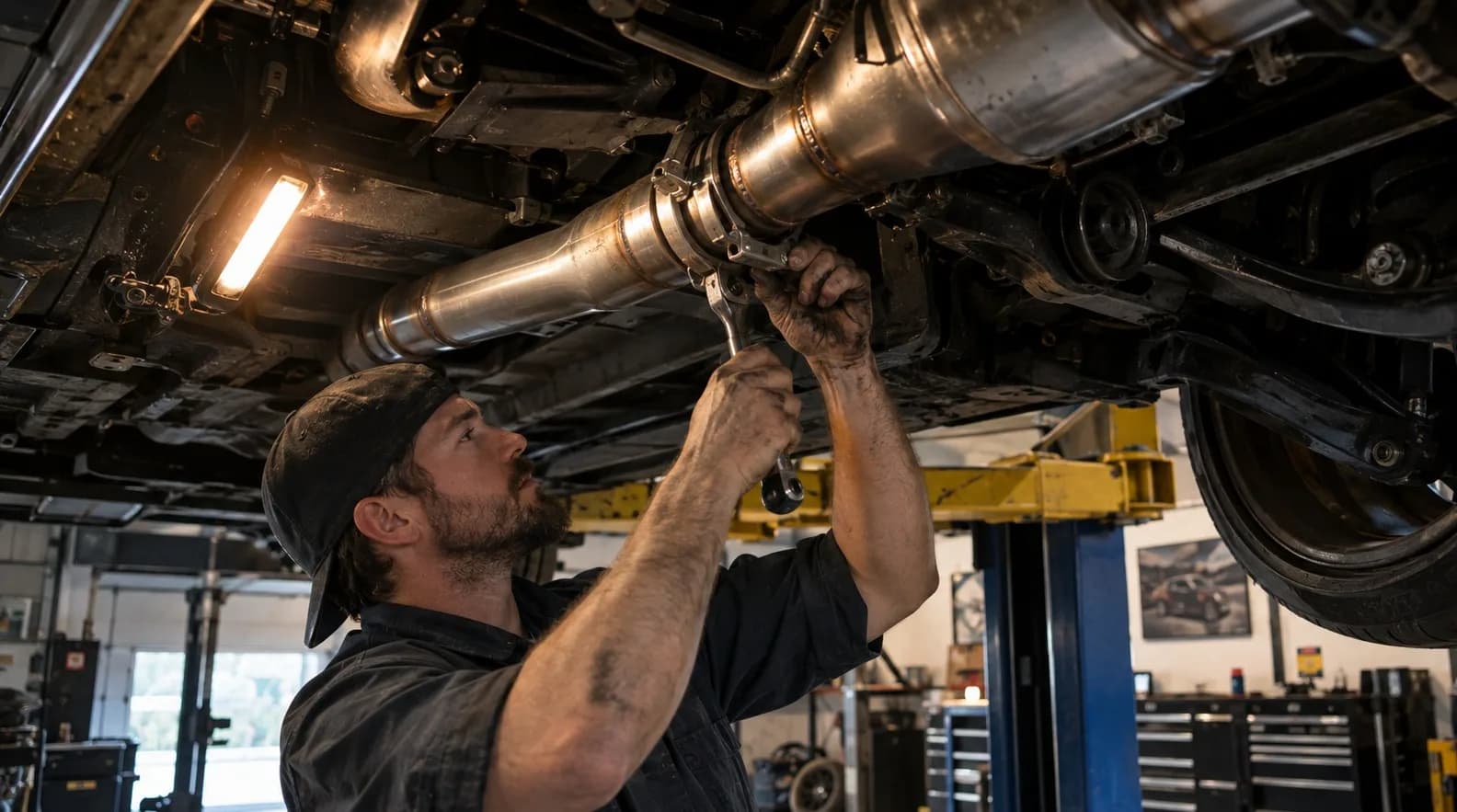
Plumbing Complexity: You must route exhaust manifolds, downpipes, intercooler piping, intake tubing, oil feed lines, and often coolant lines into a tight engine bay.
Choose a Supercharger If:
You drive a heavy vehicle or a V-8 platform where low-end torque moves the car effortlessly off the line.
You do autocross or tight road-course driving where precise, predictable throttle modulation mid-corner is essential.
You prefer a straightforward bolt-on installation without modifying your entire exhaust system.
Choose a Turbocharger If:
You run a smaller displacement four- or six-cylinder engine that needs help building top-end power.
You want the ability to run multiple boost maps for street driving, track days, or ethanol fuels.
You are chasing maximum quarter-mile trap speeds or highway roll-racing performance where peak horsepower wins.
Making the Call
Stop shopping solely by peak numbers. Figure out where you spend most of your time on the rev counter and how you want the chassis to react when you squeeze the gas pedal.
If you value immediate response, simple installation, and a continuous wall of low-end torque, go supercharged. If you want high efficiency, flexible power settings, and relentless top-end pull, go turbocharged. Choose the system that fits how you actually drive, back it up with adequate cooling and fuel systems, and get the car out on the road.
Join CarCultureHQ
Claim your free digital garage
Build your ride profile, log modifications, join a crew, and get your build in front of thousands of enthusiasts.
Create your free garageFrequently asked questions
Which system is more reliable for a daily driver?
Both systems are reliable when engineered correctly. Factory supercharged or turbocharged engines last hundreds of thousands of miles with regular maintenance. For aftermarket installs, superchargers generally present fewer plumbing failure points, while turbo setups require vigilance around exhaust leaks and oil feed fittings.
Can you put both a supercharger and a turbocharger on the same engine?
Yes, this configuration is called twincharging. A supercharger supplies boost at low engine speeds to eliminate lag, while a bypass valve routes air to a larger turbocharger as engine speed climbs. While functionally impressive, the mechanical complexity and tuning requirements make it rare outside specialized custom builds.
Why do turbos make more overall power than superchargers?
Turbos draw energy from waste heat in the exhaust, meaning they do not leach direct mechanical power from the engine's crankshaft. A supercharger might consume 50 to 100 horsepower just to operate at high boost levels, whereas a turbocharger operates with significantly lower parasitic loss.
Do I need internal engine modifications before adding forced induction?
It depends on your baseline engine compression and your power target. Running low boost (4 to 6 PSI) on a stock engine with high-quality fuel and a solid tune is often fine. High boost levels (10+ PSI) require forged pistons, stronger connecting rods, upgraded head studs, and enhanced fuel delivery systems.
Comments
Join the conversation on Supercharged vs Turbocharged: How to Pick the Right Power Adder. Keep it civil — admins moderate reports.
Loading comments…