Is Nitrous Safe for Your Street Car? The Real Facts Explained
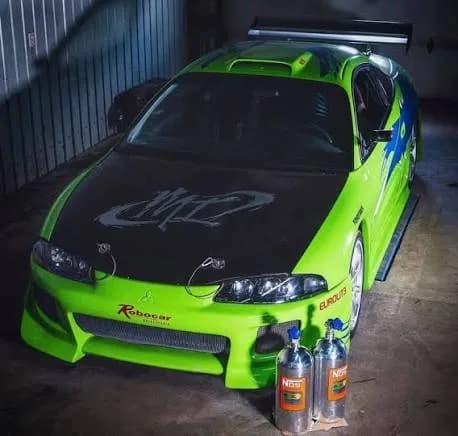
Nitrous oxide has a wild reputation thanks to movies and exploded engine memes. The reality is much simpler: bottle power is remarkably safe when you treat fuel delivery, ignition timing, and bottle pressure with respect, but careless shortcuts will turn your pistons into ash.
Is Nitrous Safe for My Street Car? The Real Truth Behind the Bottle
Mention nitrous to casual car folks, and half of them picture floorboards falling out of cars like an early 2000s street racing flick. The other half picture an engine block splitting in two on a dyno.
Movies and internet memes gave nitrous oxide a reputation for being an unstable bomb waiting to destroy your daily driver.
The truth is much less dramatic. Nitrous is simply chemical supercharging. It delivers dense oxygen and cold intake temperatures into your combustion chambers on demand. When installed with proper fuel support and dialed timing, it is one of the most reliable horsepower upgrades per dollar you can buy.
When installed lazily without basic safeguards, it will ventilate your crankcase faster than you can lift off the pedal.
Join CarCultureHQ
Claim your free digital garage
Build your ride profile, log modifications, join a crew, and get your build in front of thousands of enthusiasts.
Create your free garageNITROUS ON THE STREET: MYTH VS. REALITY
THE MYTH | THE MECHANICAL REALITY |
|---|---|
Highly explosive and unstable gas | Non-flammable oxidizer gas |
How Nitrous Actually Works in Your Engine
Nitrous oxide is two parts nitrogen and one part oxygen ($N_2O$). Under combustion heat (around 575 degrees Fahrenheit), the molecule breaks apart.
The extra oxygen lets your engine burn significantly more fuel during the power stroke.
The nitrogen dampens the violent combustion process and cools the intake charge dramatically as the liquid turns into a gas.
More oxygen plus more fuel equals bigger cylinder pressure and instant torque. Because the power hits the moment the solenoid opens, there is no turbo lag or mechanical supercharger drag.
What Actually Blows Up Nitrous Engines?
Engines do not grenade because nitrous is bad. They fail because the person setting it up cut corners on three critical elements:
1. Running Lean
When you add massive amounts of oxygen without matching fuel, your air-fuel ratio spikes lean. Cylinder temperatures skyrocket in milliseconds, melting spark plug ground straps and burning holes through aluminum piston tops.
2. Excessive Ignition Timing
Because nitrous burns rapidly and builds cylinder pressure quickly, your factory spark timing will detonate the mixture too early. You have to pull ignition timing (generally two degrees of timing retard for every 50 horsepower of nitrous) to prevent severe knock.
3. Spraying at Low RPM
Activating a nitrous kit at low engine speeds (under 3,000 RPM) creates massive cylinder pressure because the engine is rotating too slowly to sweep the expanding gases out. That instant torque spike will bend connecting rods immediately.
Wet Kit vs. Dry Kit: Which Belongs on a Street Build?
For modern street cars, the kit choice matters:
Dry Kits: Inject only nitrous into the intake tract, relying on your factory fuel injectors and ECU tune to dump extra fuel. They are simpler to plumb, but if your fuel injectors max out, you risk a lean spike.
Wet Kits: Inject both nitrous and raw fuel simultaneously through a shared nozzle into the intake. Wet kits provide their own dedicated fuel supply, making them safer and more versatile for street applications running 75 to 150 horsepower shots.
Non-Negotiable Safety Gear for Street Nitrous
If you want your engine to live a long, happy life on the bottle, never wire a nitrous kit to a simple handheld button. You need automated safety controls:
Wide-Open Throttle (WOT) Switch: Ensures the nitrous system only triggers when your foot is pinned to the floor.
RPM Window Switch: Prevents the solenoids from opening below 3,000 RPM or within 500 RPM of your redline fuel cut.
Fuel Pressure Safety Switch: Cuts power to the nitrous solenoid instantly if your fuel pump pressure drops below safe operating levels.
Purge Valve: Clears trapped vapor and air pockets out of the feed lines so you get a clean, predictable hit of liquid nitrous every time.
Frequently asked questions
Can a stock factory engine handle nitrous safely?
Yes. Most modern stock engines with healthy compression and a sound fuel system can easily handle a conservative 50 to 75 horsepower shot on 4-cylinder engines, or a 100 to 150 horsepower shot on V8s, provided ignition timing is properly retarded.
How long does a standard 10-pound nitrous bottle last?
A 10-pound bottle provides approximately seven to ten full quarter-mile passes on a 100-horsepower shot. Bottle duration depends entirely on your jet size, bottle pressure, and how long you hold wide-open throttle.
Is nitrous legal to use on street roads?
In most jurisdictions, carrying a connected or open nitrous bottle while driving on public highways is illegal. Nitrous systems are meant for closed courses, track events, and sanctioned drag strips; the main bottle valve should remain closed during daily road commutes.
What bottle pressure should I maintain for safe operation?
Optimal bottle pressure ranges between 900 and 1,050 PSI. Low bottle pressure causes rich, sluggish runs, while excessively high pressure causes lean conditions that can damage engine internals.

Comments
Join the conversation on Is Nitrous Safe for Your Street Car? The Real Facts Explained. Keep it civil — admins moderate reports.
Loading comments…