Forget the Manual: Buy a $1,500 Beater and Get Your PhD in Rust and Reality
Written and reviewed by the CarCultureHQ Editorial Team. See our Editorial Policy for sourcing and corrections.
Read Time: 7 minutes
Summary: Forget glossy magazines; the real automotive education starts with a $1,500 rust bucket. A cheap project car forces you to learn invaluable mechanical skills, resourceful problem-solving, and emotional resilience through a series of inevitable breakdowns. It’s a painful, rewarding, and necessary rite of passage for every true car enthusiast.
Forget the Manual: Buy a $1,500 Beater and Get Your PhD in Rust and Reality
Every automotive publication loves the story about the glossy, ground-up restoration. The car that emerged from a flawless, climate-controlled shop, built with an open checkbook. It’s inspirational. It’s nice. It is also completely irrelevant to most of us starting out.
If you want to actually understand how cars work, you don't read manuals, and you definitely don't start with a clean platform. You start at the bottom. You buy the $1,500 beater. The rust-prone, oil-leaking, questionable-electrical-system disaster that smells faintly of crayons.
That car will be the worst investment you ever make. It will break your heart. It will cost you three times its value in parts you didn't know existed. And it will be the best teacher you ever have.
A cheap project car doesn’t offer gentle advice. It forces mandatory, hands-on, problem-solving education. And that education starts before you even get it home.
Join CarCultureHQ
Claim your free digital garage
Build your ride profile, log modifications, join a crew, and get your build in front of thousands of enthusiasts.
Create your free garageThe Brutal First Lesson: Reality Doesn’t Care About Your Budget
Let’s be honest about the "$1,500" car. In today's market, that number is tight. What you are really buying is someone else's abandoned problem, missing several keys, with a title that has questionable provenance.
Your first lesson isn’t mechanical; it’s an exercise in humility. You realize your optimism about "just needing a new carburetor" is delusional. The car breaks immediately. Perhaps on the test drive, or worse, two miles from the seller's house. You will find yourself on the side of a busy road, in the dark, wondering what that smell is.
That is the moment the education begins.
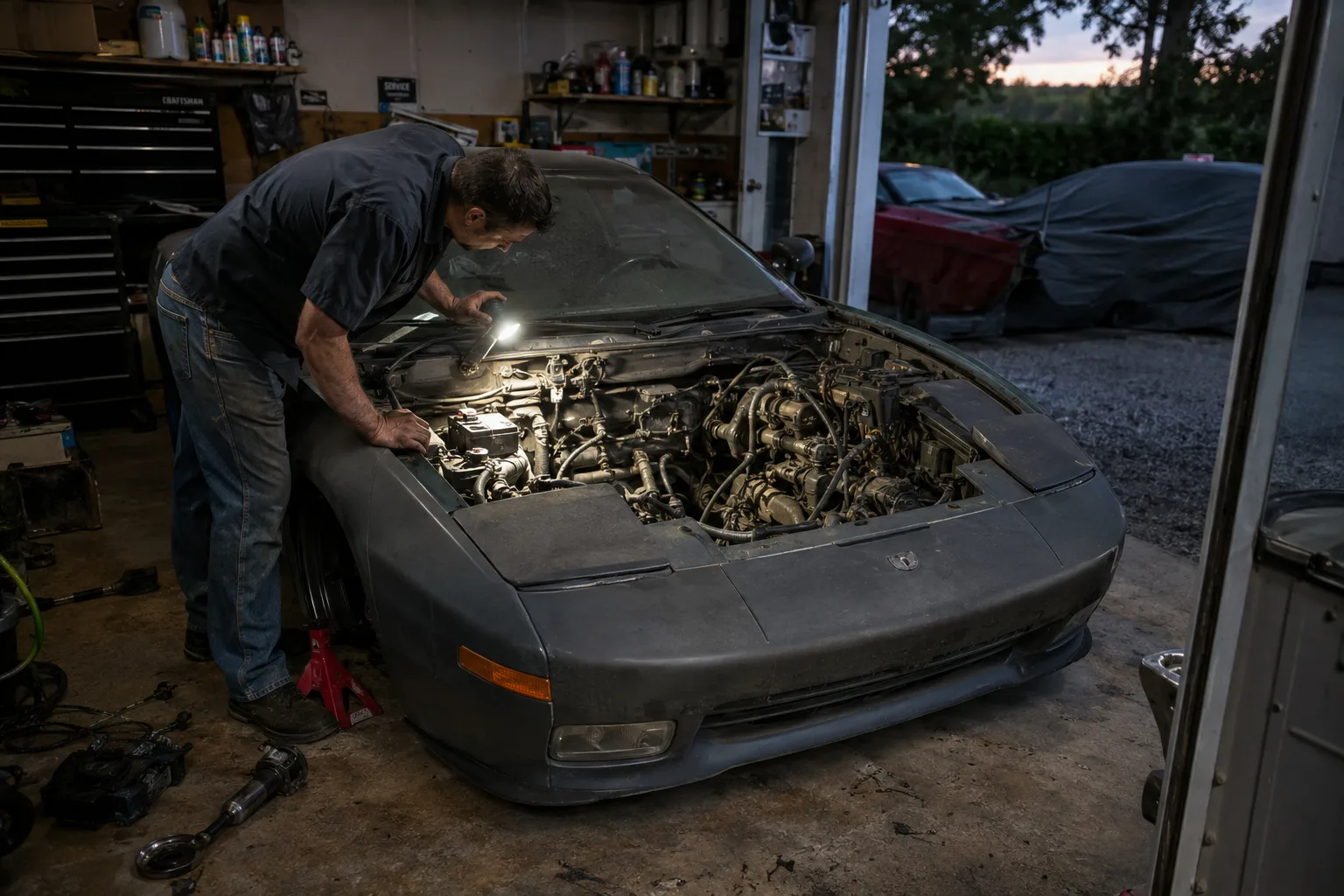
In a clean build, you are improving known systems. In the beater, you are forensic investigators. You are figuring out why it died. Was it the electrical system the previous owner "fixed" with household wiring nuts? Is it the fuel pump that looks older than the car itself?
You learn resilience here. You learn not to panic. You learn to make decisions under pressure. Okay, I don't have a fuel gauge, do I have pressure at the rail? Yes? No? A clean project is theoretical. A broken beater is immediate and demanding.
Developing Your Resourceful Mechanic's Eye
You cannot afford a full toolbox when your car cost less than the tools themselves. The $1,500 beater teaches you essential resourcefulness that no instruction manual could.
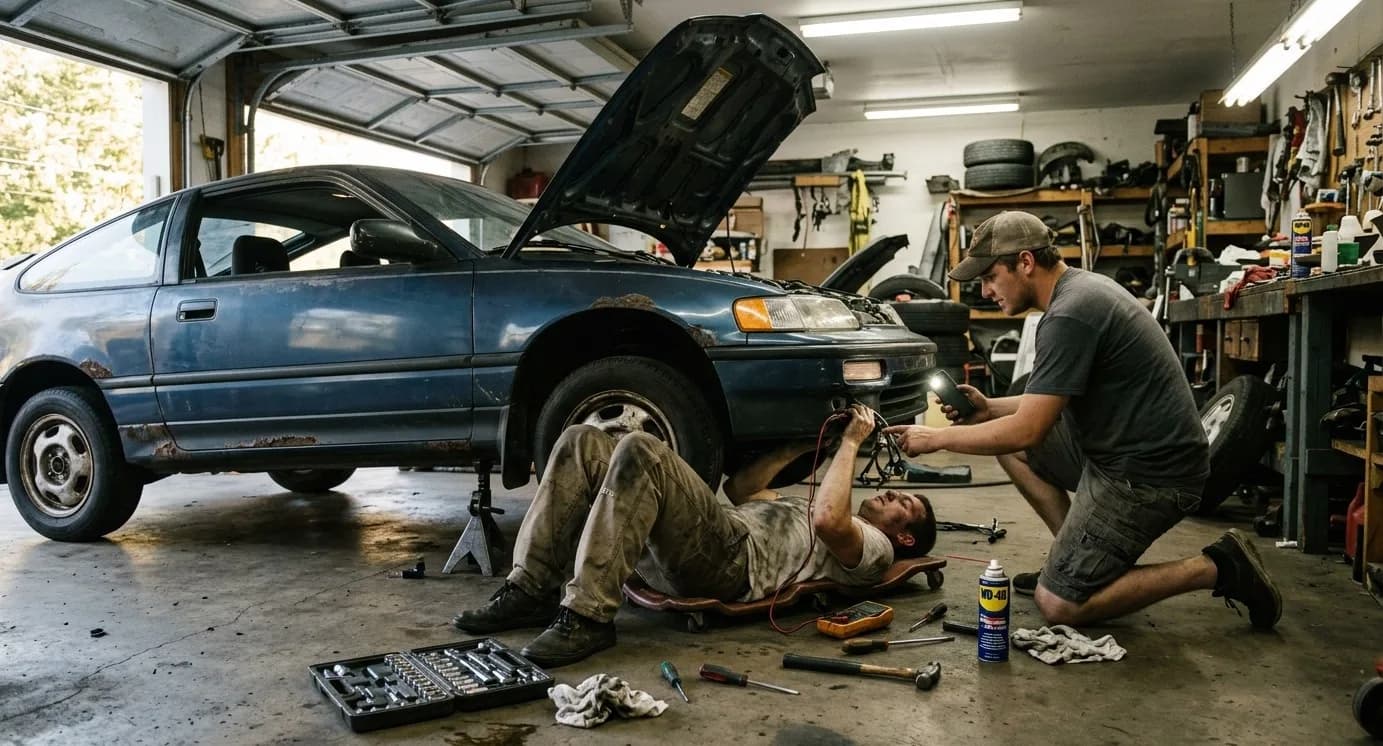
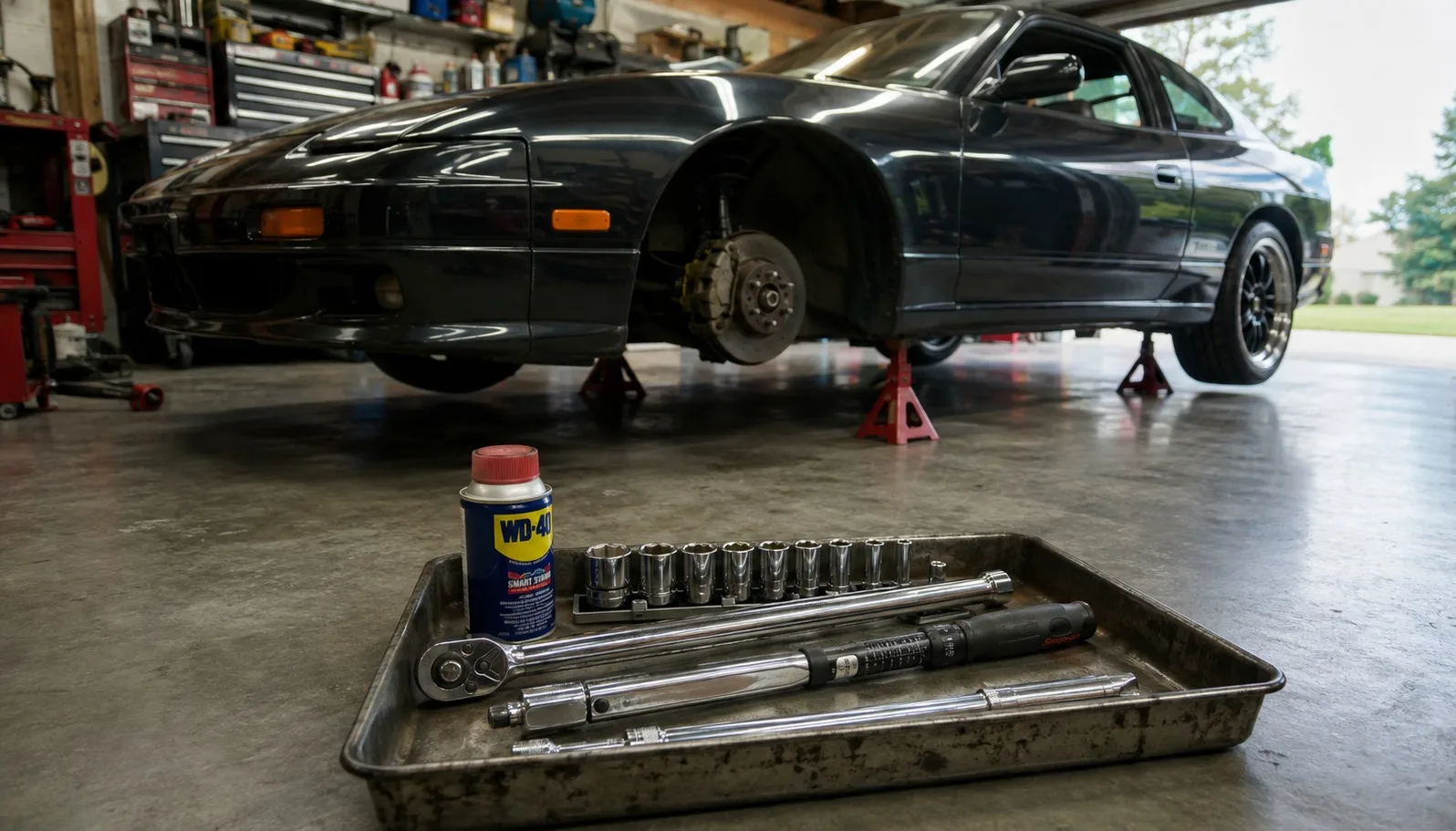
You quickly identify your mandatory toolbox. It’s not a full set of polished sockets. It’s the metric combination wrenches (the one that fits 10mm/12mm will become your best friend), a socket set where the 10mm is guaranteed to be missing, two types of vice grips, and whatever weird reverse-torx bit that manufacturer used on every critical bolt.
More importantly, you learn which tools are indispensable, regardless of brand.
A Breaker Bar (and a Cheater Pipe): Because every bolt has been fused to the engine block by decades of road salt and heat cycles. You learn to apply controlled force right before the moment the bolt head snaps (a skill only learned by snapping many bolt heads).
Multimeter: If your beater was built in the 80s or 90s, the electrical gremlins are real. You learn to trace voltage, ground, and continuity because you cannot just replace the entire wiring harness (which is what a full restoration would do).
Hammer: For the specific moment when physics and logic fail, and a sharp, percussive impact is the only mechanical vocabulary the car understands.
You also learn the invaluable skill of the Junkyard Crawl. When you need a rare vacuum switch or an obscure sensor that is NLA (No Longer Available) from the dealer, you don't buy new. You drive to the local pick-and-pull. You spend hours searching rows of rotting vehicles to find the one car that has that part intact. You remove it, often breaking your own tools in the process, and feel a victory that no one-click-buy on an aftermarket website can provide.
The Emotional Education: Patience, Panic, and the Victory of the First Start
The real lesson the cheap beater offers is emotional intelligence.
There will be the inevitable moment of peak frustration. You are three hours into what should have been a thirty-minute brake job. The bleeder screw is seized. The rust has turned the caliper bolts into smooth nubs. You cannot find the proper-sized wrench. And it starts to rain.
That is when the construct of "I love cars" breaks. You hate cars. You hate this car. You hate yourself.
But you don't have a choice. This is your car. You cannot tow it (no money). You have to fix it. This is where real patience is built. You learn when to stop, walk away, have a sandwich, and come back. You learn when to ask a friend (a real, invaluable mechanical friend) for help.
And then comes the victory.
The moment you finish the wiring, the time you install that junkyard component, or the day you finally solve the fuel delivery problem. You cross your fingers, you pump the gas (the car, and your adrenaline), and you turn the key.
And it starts.
The noise is terrible. It blows blue smoke. One headlight is out. But it runs. That moment of raw, hard-won success is something you cannot buy. You made that happen. You are a mechanic. The $1,500 beater doesn't give you a car; it gives you the absolute, undeniable proof that you are capable of solving complex problems under stress.
Why a Beater is Still the Right Move
Yes, it will rust. Yes, it will leak fluids in your driveway. No, you will never get your money back. In marketing, that sounds like a failure. For a true automotive enthusiast, it is mandatory tuition.
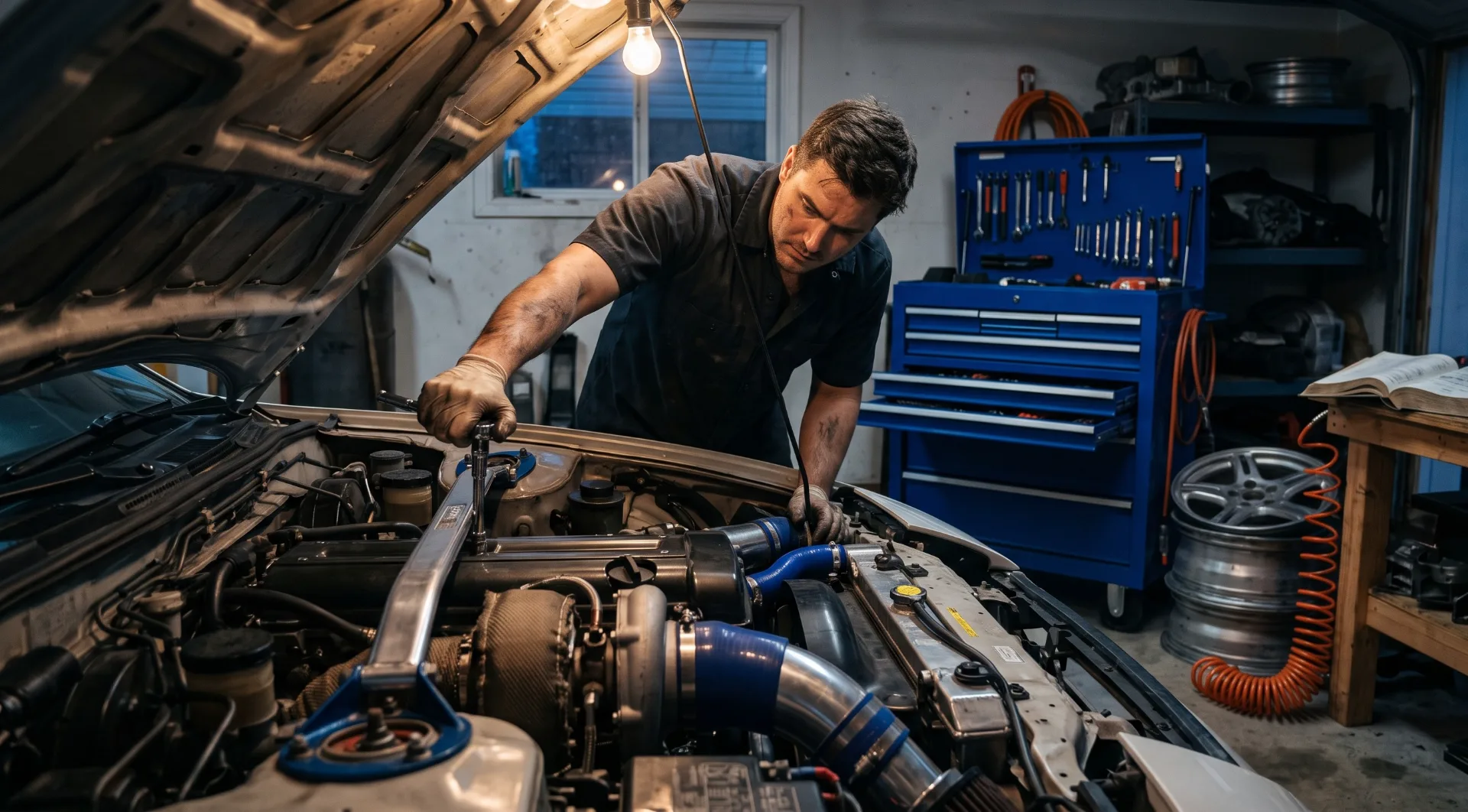
When you eventually graduate to that nicer platform, you will operate with a confidence that others lack. You will know exactly what an electrical ground fault actually looks like. You will understand how vital preventive maintenance is. Most importantly, you will not fear when something breaks. You have done this before. You know you can fix it.
A cheap project car isn't about the car. It’s about building a better enthusiast.
Join CarCultureHQ
Claim your free digital garage
Build your ride profile, log modifications, join a crew, and get your build in front of thousands of enthusiasts.
Create your free garageFrequently asked questions
But where can I actually find a $1,500 car that runs?
In today's market, you probably can't. That "$1,500" car is either non-running (needing a major system) or requires immediate, mandatory repairs (like a clutch, fuel pump, or major oil leaks). This article focuses on that initial "abandoned problem" phase. Budget for $2,500 to $3,500 to get a "running beater" reliably home.
Isn’t that much work frustrating? Why not just buy something nicer?
You can, but you buy the result, not the education. Nicer platforms buffer you from the essential, gritty problem-solving that defines true mechanical competence. The frustration is the tuition.
Can a $1,500 car be a reliable daily driver?
No. Absolutely not. If you are starting out, do not rely on your beater project car to get you to work on Monday. It is your teacher, not your reliable transportation. You need a stable vehicle as your primary driver.


Comments
Join the conversation on Forget the Manual: Buy a $1,500 Beater and Get Your PhD in Rust and Reality. Keep it civil — admins moderate reports.
Loading comments…