Reps vs. Real: The True Safety and Status Cost of Cutting Corners on Wheels
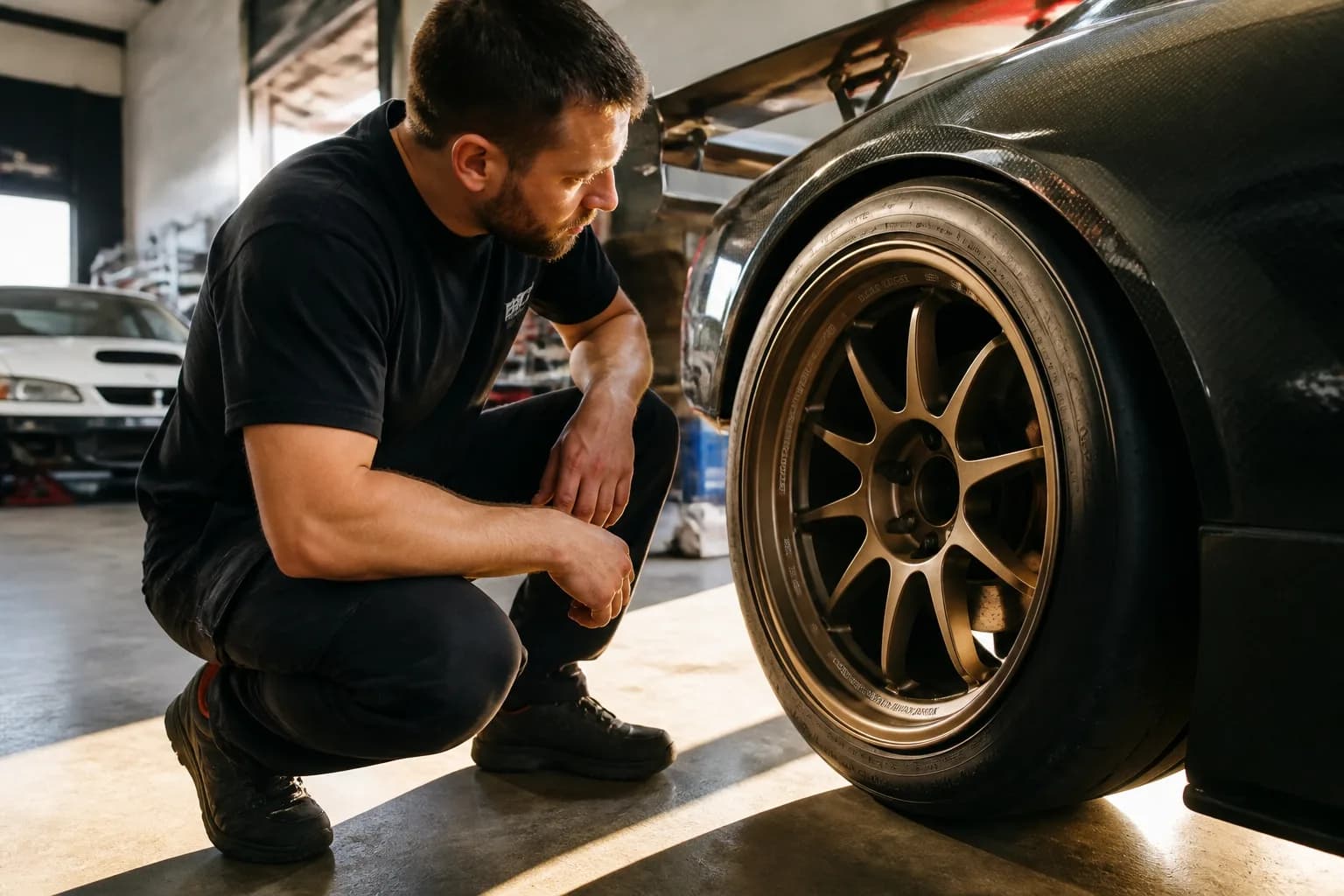
The debate between authentic forged wheels and cheap cast replicas has divided the car community for decades. While reps offer an easy visual shortcut on a tight budget, the hidden costs show up when you hit your first deep pothole on the highway or push hard into a track apex. This post cuts through the internet elitism and breaks down the real engineering differences, structural safety hazards, and financial math behind buying authentic versus replica wheels.
Reps vs. Real: The True Safety and Status Cost of Cutting Corners on Wheels
Open any local car group comment section and you will find someone getting roasted for running replica wheels.
The purists call them fake, the budget builders call the purists gatekeepers, and the argument goes around in circles until everyone gets angry. Most people frame the whole debate around status, branding, and clout.
That completely misses the point.
The wheel is literally the only component connecting your suspension, brakes, and tires to the asphalt. When you are rolling down the highway at seventy miles per hour or diving into a blind turn at a weekend track day, your wheel is managing thousands of pounds of dynamic lateral load.
Choosing between real wheels and replicas is not just about what stickers are on the spoke. It is an engineering choice with real safety consequences.
Real builds focus on functional engineering. Track your wheel specs, suspension setup, and verified time slips on CCHQ, and let fellow builders scan your full build sheet at meets.
Join CarCultureHQ
Claim your free digital garage
Build your ride profile, log modifications, join a crew, and get your build in front of thousands of enthusiasts.
Create your free garageHow Real Wheels Are Actually Made
To understand why genuine wheels cost real money, you have to look at the metal itself.
High-end authentic wheels from manufacturers like RAYS, BBS, and WORK rely on advanced manufacturing processes:
True Forging: Solid billets of aerospace-grade aluminum are compressed under ten thousand tons of hydraulic pressure. This aligns the metallic grain structure along the exact shape of the spokes, creating immense strength with minimal material thickness.
Flow Forming: A specially cast wheel barrel is heated and spun under high-pressure rollers, stretching and compressing the aluminum grain to mimic forged strength in the critical rim area.
Because the material is dense and structurally sound, engineers can machine away excess metal to save unsprung rotating mass without sacrificing load ratings.
The Dirty Shortcut of Cheap Replicas
Replica manufacturers do not invest in massive multi-million-dollar forging presses or rigorous independent VIA certification labs.
Instead, they use low-pressure or gravity casting. Molten aluminum is poured into an open mold that copies the exterior geometry of a famous forged design. As the poured metal cools, microscopic air bubbles and porous pockets form inside the core of the spokes and barrel.
To make a cast replica strong enough not to fail under normal driving, the manufacturer has to pour extra metal into the backside of the spokes. That is why replicas are noticeably heavier.
Even worse, when an original forged spoke design is copied using brittle, porous cast aluminum without thickening the structural load points, the wheel becomes a structural hazard.
"Forged metal bends and absorbs shock. Cheap cast metal shatters like glass when it runs out of tolerance."
What Happens When You Hit a Pothole
No road surface is completely smooth. You are going to clip an apex curb, strike a frost heave, or smash into an unavoidable highway pothole sooner or later.
On a genuine forged wheel: The malleable grain structure absorbs the sharp kinetic energy. In an extreme impact, the aluminum bends or flat-spots, but the wheel usually retains tire air pressure so you can bring the car to a controlled stop.
On a brittle replica: The cast metal cannot absorb that sudden spike in energy. The porous spokes crack through completely, or the outer lip sheers off in a violent fracture, causing immediate tire deflation and loss of steering control.
Saving eight hundred dollars on a set of wheels does not feel like a bargain when a shattered barrel sends your quarter panel into a concrete highway guardrail.
The Long-Term Financial Math
Enthusiasts buy reps because they want the look today without waiting to save up. But look at the math over two or three seasons:
You buy a set of replicas for seven hundred dollars. Within twelve months, you bend one on a commute and crack another on a weekend backroad cruise. Because replica styles change rapidly, finding an exact single replacement wheel is nearly impossible, forcing you to buy another complete budget set.
When you sell that car, those used reps are worth almost nothing on the second-hand market.
Now look at a genuine set of quality wheels. You invest two thousand dollars up front. They survive years of track days, aggressive driving, and rough roads. When you finally change your project car platform, you can clean them up, post them on the Car Culture HQ Marketplace, and recover seventy to eighty percent of your original investment.
Real wheels are not an expense; they are an asset that holds value.
Join CarCultureHQ
Claim your free digital garage
Build your ride profile, log modifications, join a crew, and get your build in front of thousands of enthusiasts.
Create your free garageFrequently asked questions
Are all cast wheels dangerous?
No. High-quality OEM cast wheels and reputable aftermarket flow-formed wheels from established brands undergo strict testing to ensure proper load ratings. The danger primarily comes from low-grade, untested replica wheels that copy thin forged designs using cheap casting methods.
What certifications should I look for on a wheel?
Look for authentic JWL (Japan Light Alloy Wheel) and VIA (Vehicle Inspection Association) stamps, or German TÜV certification. Be cautious of counterfeit wheels that cast fake certification logos onto unverified barrels.
Can a bent forged wheel be repaired?
In many cases, minor flat spots or bends in genuine forged wheels can be safely straightened by certified wheel repair specialists because the ductile aluminum does not easily crack. Severely cracked or warped cast wheels should always be replaced.
What is the best budget alternative to expensive forged wheels?
Look for flow-formed or rotary-forged wheels from reputable mid-tier performance brands. They offer much of the weight reduction and barrel strength of a forged wheel at a fraction of the cost.
Comments
Join the conversation on Reps vs. Real: The True Safety and Status Cost of Cutting Corners on Wheels. Keep it civil — admins moderate reports.
Loading comments…