Pre-Purchase Inspection: The Non-Negotiable Guide for Project Cars
Written and reviewed by the CarCultureHQ Editorial Team. See our Editorial Policy for sourcing and corrections.
Estimated Read Time: 12 minutes
Summary: Buying a project car is a high-risk gamble. We strip away the romance of 'some assembly required' to give you the exact technical checklist you need before you hand over cash. This isn't generic advice; it's the raw, structural criteria professional builders use to find the good projects and avoid the cash-consuming disasters.
Stop Romanticizing the Wreck
You know the listing. You’re scrolling in a park and chill, looking at some classic that’s half-buried in a barn, covered in decades of dust, and described as "just needs a weekend and a fuel pump to be perfect." Your brain immediately starts building a dream build, planning coilovers, and figuring out what wheels will look right.
Stop it. That isn't a car; it's a financial instrument designed to extract your savings.
Buying a project car is a serious mechanical diagnosis. When you are looking at something with 'problems,' you are trying to value the gap between its current state and its running state. Sellers are either lying or ignorant; your job is to use data to find the truth. At Car Culture HQ, we are not about standard fluff. Here is the raw pre purchase inspection checklist you need when you approach any project car.
Join CarCultureHQ
Claim your free digital garage
Build your ride profile, log modifications, join a crew, and get your build in front of thousands of enthusiasts.
Create your free garageThe Garage-Floor Project Car Checklist
Forget the standard point-and-look. You are there to find reasons NOT to buy this vehicle. The moment your objective analysis stops, you lose.
1. Structural and Suspension Geometry (The Foundation)
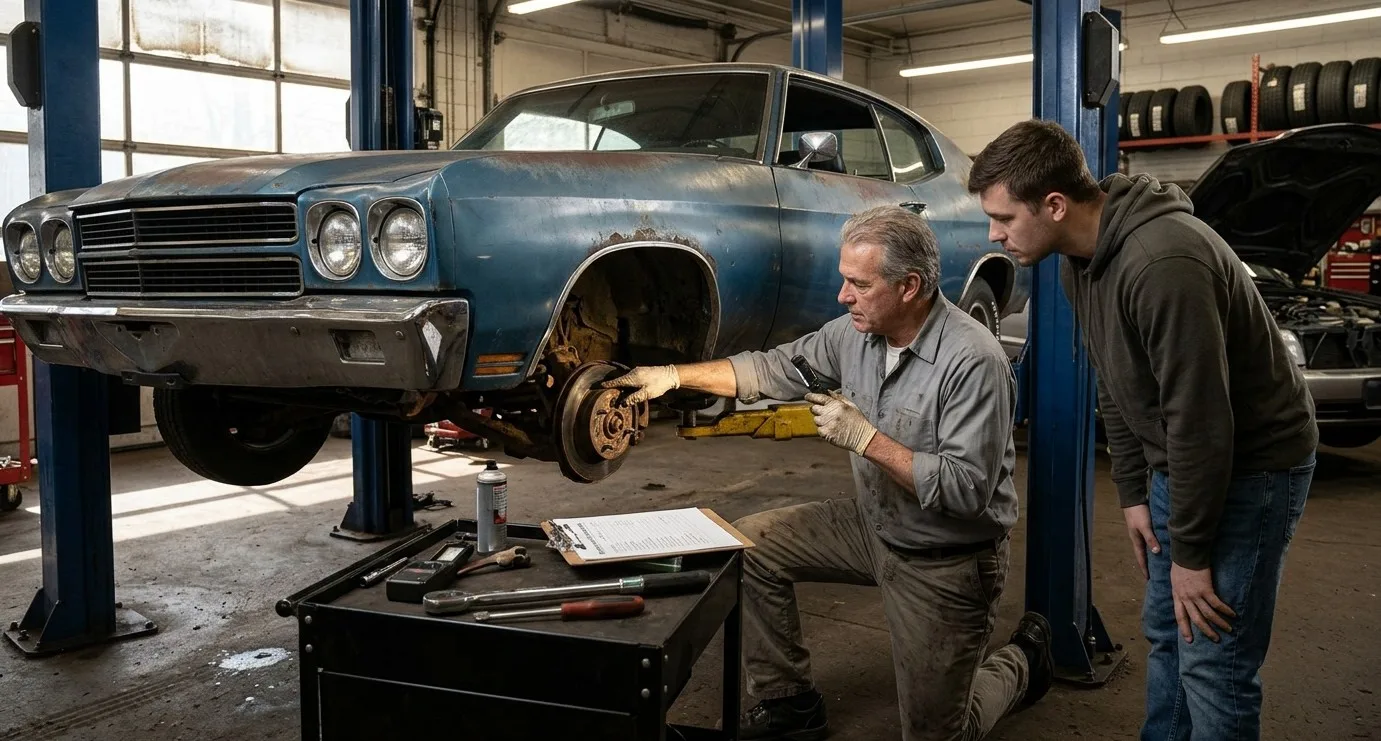
We always prioritize chassis structure over aesthetics. You can always repaint a fender, but you cannot easily replace the hard mounting points for your suspension.
Checkpoint | What to Look For (and Why) | Priority |
VIN and Paperwork | Verify the VIN on the firewall, dashboard, and engine block. It must match the title perfectly. | Critical |
Chassis Rails / Subframe | Get under the car. Check for buckling, crude welding, or aftermarket plates. Look at the mounting points for control arms. | Critical |
Bubbling Rust | Forget surface rust. Look for bubbling paint on roofs, A-pillars, rocker panels, and inside wheel wells. This is structurally significant, hidden rust. | Critical |
Suspension Wear | Push down on every corner. It should bounce once and stop. Look at bushing condition and for cracked coil springs. | Moderate |
2. Drivetrain and Electrical Complexity
You need to know if you are looking at a simple fix (no power to a standard component) or a complex nightmare (a mysterious CAN-Bus issue in a complex modern car).
Fluids (The First Diagnostic): Open the oil cap and look at the bottom. Milky white film means coolant is mixing with oil (likely a head gasket failure). Smell the transmission fluid (it must not smell burnt). Check brake fluid and coolant for transparency and correct colors.
The Cold Start: Ask the seller explicitly not to warm up the car before you arrive. Feel the valve covers yourself. You need to hear how that engine sounds when it’s genuinely cold. Listen for top-end tick (valve train) versus deep bottom-end knock (rod bearings).
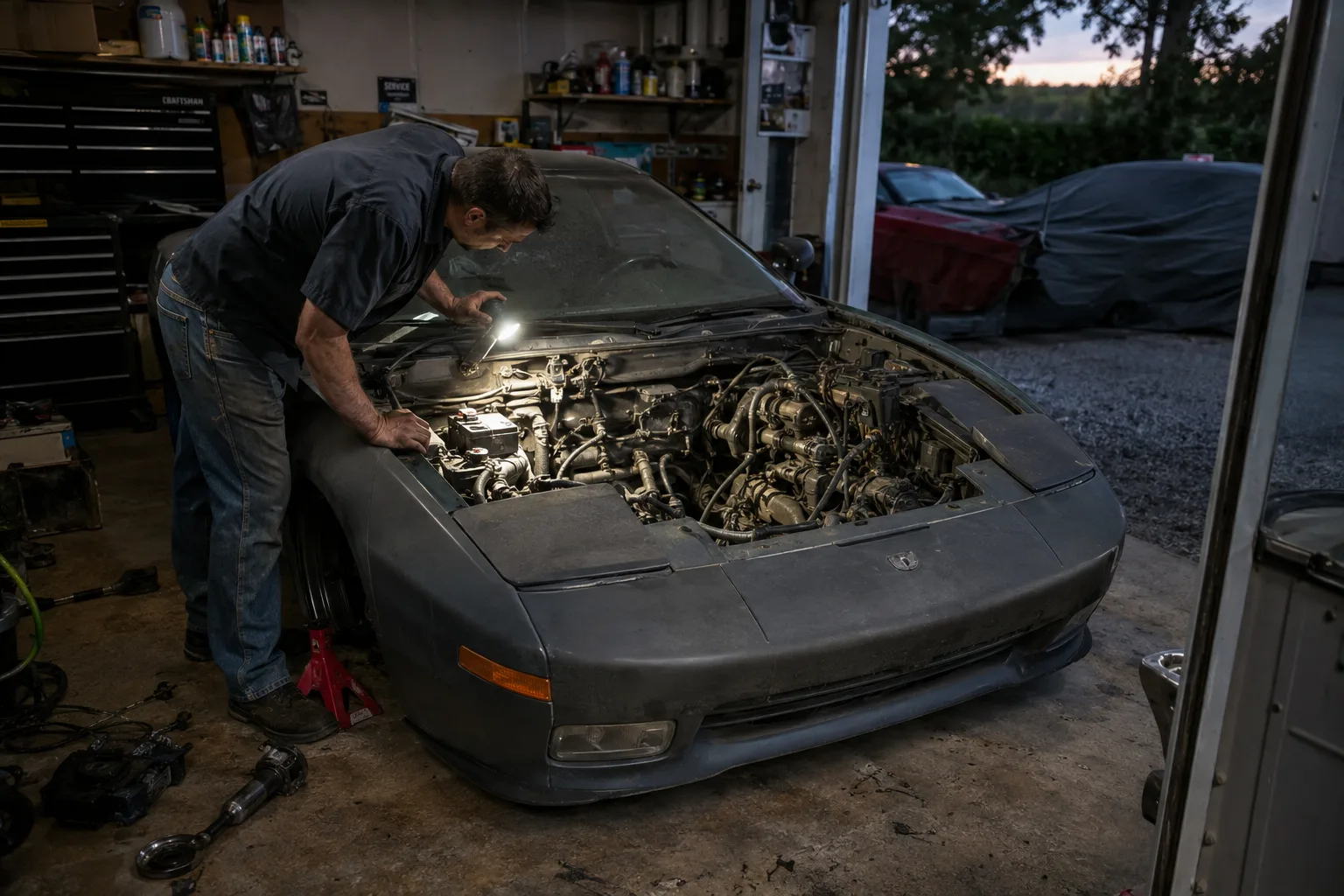
Electrical Clutter: In a project car, "aftermarket wiring" usually means a rats' nest of Scotchloks and electrical tape. Look at how standard accessories are wired. If they tapped into the ECU harness for a radio, prepare for months of mysterious diagnostic hell.
Practical Recommendations on Valuation: The Gap Theory
When you evaluate a project, you are comparing the cost of the raw car against the market value of a finished, clean running version. Your valuation of the 'problems' must be accurate.
If a finished running version of the car you want is worth $15,000, and you found one with a bad engine for $5,000, that looks like a $10,000 value gap.
Now, calculate the real cost to close that gap.
Gap Component | Real Cost to Fix (CCHQ Estimates) | Risk Level |
Blown Engine (Simple Swap) | $3,500 (Used motor, gaskets, fluids, your labor) | Low |
Transmission Rebuild (Auto) | $2,800 (Professional rebuild + removal/install labor) | Moderate |
Major Interior Restoration | $4,500+ (Dashboard, seats, door panels, carpet) | High |
Significant Bodyshop Work | $8,000+ (Rust repair, panel alignment, high-end paint) | Extreme |
If that "$10,000 gap" will actually cost you $15,000 in parts and outsourced labor, you are underwater before you even turn a wrench. The 'project car' was overpriced by at least $5,000.
How to Work with a Local Mechanic
If you are looking at a high-stakes project or aren't confident diagnosing critical systems ( Point A ), you need to outsource. An independent pre purchase inspection by a local shop ( Point B ) is a standard practice and is not insulting the seller.
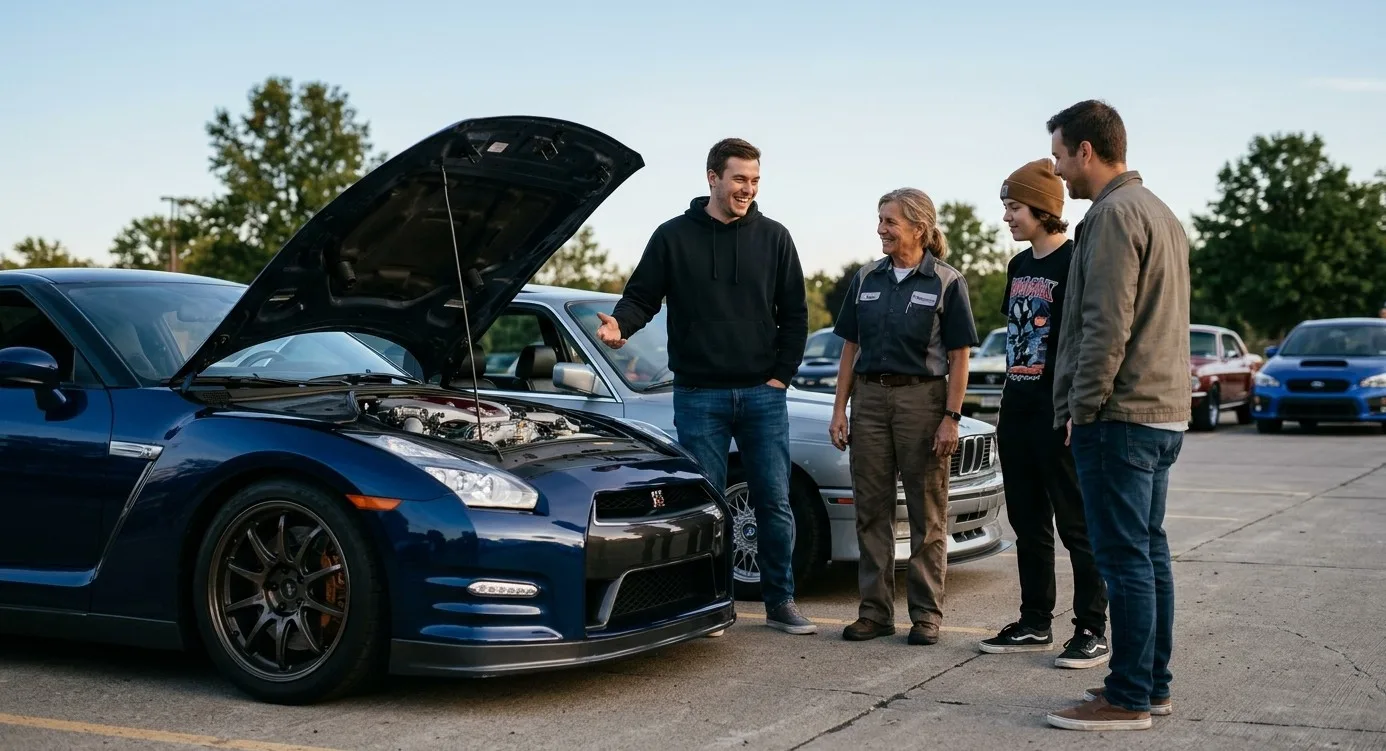
CCHQ Approved PPI Shops: We maintain a list of vetted shops with specific expertise (Muscle, JDM, Euro). Do not take a modified WRX to a general Goodyear shop for a PPI.
Explicit Scope: Do not ask for a generic inspection. Ask for a compression test, a borescope of the cylinders (essential for high-mileage boosted cars), and a structural analysis of the suspension geometry.
The Neutral Party: A service advisor is not emotionally invested in the purchase. If a trusted mechanic tells you a specific repair ( Point C ) is not feasible, listen to them.
Join CarCultureHQ
Claim your free digital garage
Build your ride profile, log modifications, join a crew, and get your build in front of thousands of enthusiasts.
Create your free garageFrequently asked questions
Can I do a PPI in a driveway without special tools?
You can do about 80% of the visual inspection, but you cannot perform a proper structural chassis analysis or a compression test without getting the car on a lift or using specific gauges. A driveway check is good for filtering out the obvious disasters, but it isn't a proper technical diagnosis for a project car.
What is the difference between surface rust and structural rust bubbling?
Surface rust is minor, atmospheric oxidation that you can sand off and primer. It is cosmetic. Structural bubbling (image_9.png) occurs when water is trapped inside a double-walled panel or the chassis structure. The rust pushes outward from the inside, meaning the metal itself is soft or gone. Look for this on sills, frame rails, and suspension pickup points.
What causes milky, white-looking engine oil?
Milky oil is caused when engine coolant leaks into the oiling system. This almost always indicates a blown head gasket, a cracked engine block, or a compromised oil cooler. This is a severe mechanical failure requiring immediate disassembly, not a minor fix.
Are all modifications in a pre-purchase inspection red flags?
No, but they dictate your inspection scope. High-quality modifications (like a recognized brand suspension kit with recent receipts and a professional installation) are valuable. Low-quality, mysterious mods (like unlabeled engine parts with custom wiring) are significant red flags that require you to assume the engine management or core internals are already stressed or damaged.




Comments
Join the conversation on Pre-Purchase Inspection: The Non-Negotiable Guide for Project Cars. Keep it civil — admins moderate reports.
Loading comments…