Fiberglass vs Urethane Body Kits: Don't Buy Until You Read This
Written and reviewed by the CarCultureHQ Editorial Team. See our Editorial Policy for sourcing and corrections.
Estimated Read Time: 8 minutes
Summary: Choosing an aftermarket body kit is about more than aesthetics. Your material choice, fiberglass versus urethane, dictates how well the parts fit, how they handle a daily driver, and what your body shop will charge you to paint them. This article skips the manufacturer hype to give you the real garage-floor truth about which material matters.
The Choice That Ruins Your Project
Every car person wants the look. Pushing standard aesthetic boundaries is baked into car culture. We see a clean aftermarket bumper or a sleek side skirt online, we hit "buy," and we immediately start planning how it will look parked at the local Cars & Coffee.
What happens next is usually a disaster.
The parts arrive. You eagerly unbox them in the garage, only to discover they have the texture of a concrete block, the symmetry of a Rorschach test, and they won't fit without an inch gap somewhere. That's when you call the body shop, and they give you the bad news about how much "refinement labor" you’re about to pay for.
The reason? You bought based on price, not material science. The choice between fiberglass vs urethane body kits is the most critical decision in car modification, and making the wrong one will waste your time, your cash, and your dignity.
Join CarCultureHQ
Claim your free digital garage
Build your ride profile, log modifications, join a crew, and get your build in front of thousands of enthusiasts.
Create your free garageFiberglass (FRP): Rigid, Intricate, and Painfully Fragile
Fiberglass, often labeled as Fiber Reinforced Plastic (FRP), is the oldest player in the game. It’s made by laying mats of glass fibers and saturating them with resin in a mold.
The Appearance Advantage
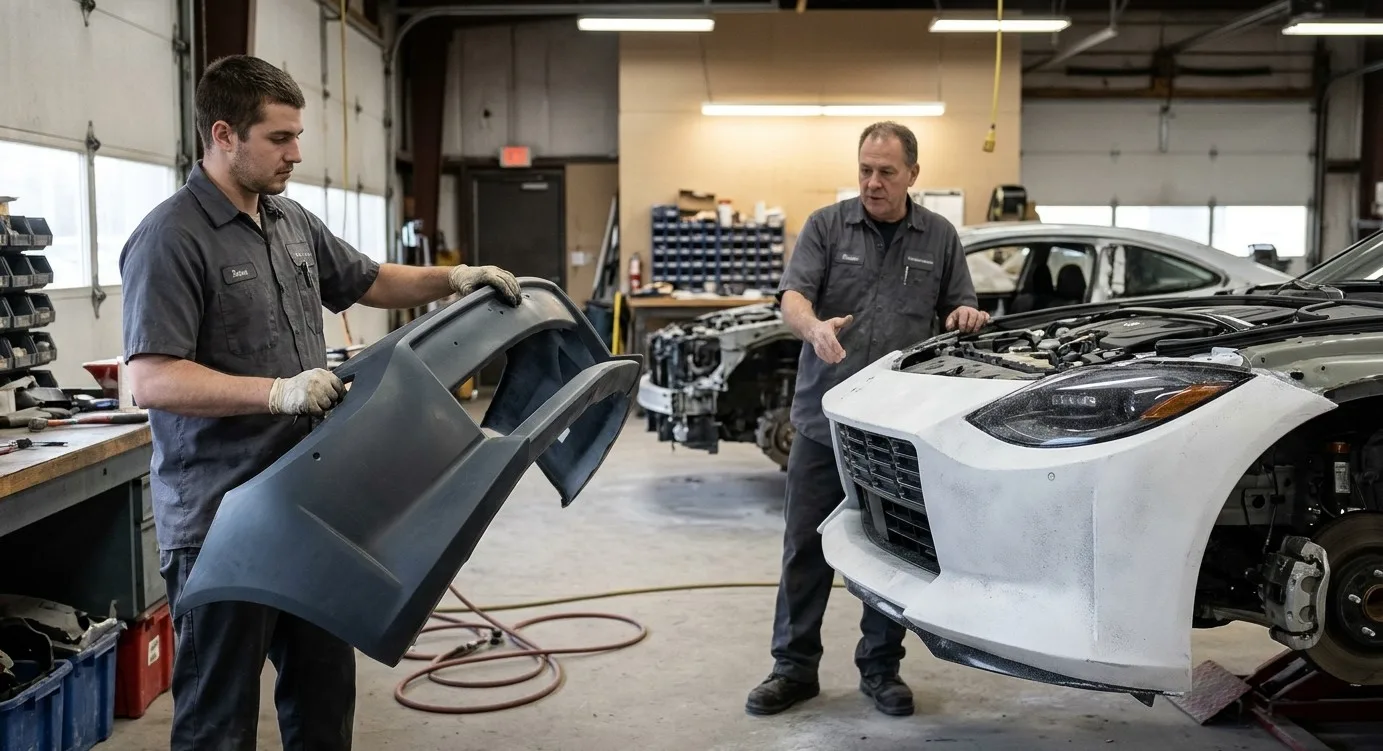
Fiberglass allows for sharp, complex, and dramatic designs that are physically impossible in flexible materials. The rigid nature of FRP means manufacturers can pull deep undercuts and intricate ventilation patterns. It takes to the sander well once cured, allowing a determined body tech to create razor-sharp panel lines (image_6.png).
The Critical Weakness: Total Lack of Compliance
The rigidity is also its curse. FRP has almost zero flexibility. If you scrape a driveway entry, bump a parking stop, or accidentally kiss a traffic cone at an autocross, the part will not flex; it will crack, shatter, or delaminate. Repairing cracked FRP is a skilled task, but once structurally compromised, it is never the same.
The "Gel-Coat" Trap
When you see a "white primered" fiberglass part online, you aren't looking at a paint-ready surface. You’re looking at gel-coat, which is a specialized resin layer designed to release the part from the mold and protect it during shipping.
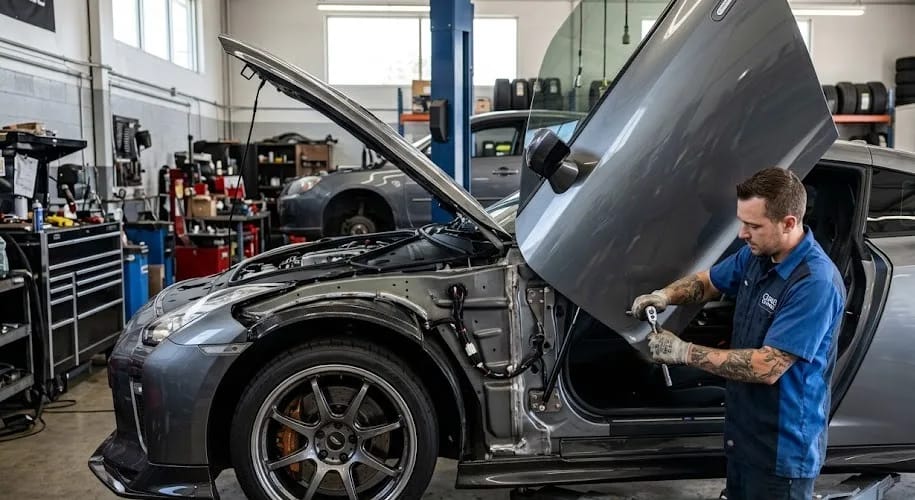
Every new fiberglass part needs structural modification to fit. Your body shop will spend hours grinding the edges, filling low spots with Bondo, and "blocking" (sanding with a long block) the entire surface to make it smooth. This isn't poor quality control; it’s just the raw nature of the manufacturing process.
Urethane (Polyurethane): The Daily Driver’s Real Community Bumper
Polyurethane (which everyone just calls urethane) is a semi-flexible, injected polymer material. If you touch your factory bumper, side skirt, or OEM spoiler, that’s urethane (image_6.png). It is the material used by manufacturers for a reason.
The Performance Advantage: Flex-On-Demand
Urethane is compliant. It is soft, bouncy, and highly durable. If you gently bump a low-speed curb, the part will deflect, absorb the energy, and usually snap back to its original shape. It can handle minor ruts, speed bumps, and driveway entries that would instantly shatter an FRP part. It is the only sensible choice for a street-driven modified car.
Superior Initial Fitment
Urethane is made using precision injection molding. This means the parts are much more consistent than hand-laid fiberglass. While a urethane bumper might arrive warped inside its box, you can usually heat it up with a heat gun (or leave it in the sun), and it will pop back into its correct form. Out of the box, urethane always fits better, requiring far less labor to get acceptable gaps.
The Urethane Trap: The Adhesion Nightmare
The paint will fail if it isn't prepped correctly. Urethane has a low surface energy, meaning paint doesn't want to stick to it. Manufacturers use specialized release agents in the mold which saturate the plastic's surface.
Painting urethane requires a specific multi-step process: standard sanding is useless unless followed by specialized plastic adhesion promoters and often flex agents (plasticizers) added to the clear coat and primer. If your paint starts flaking off in sheets, your painter got lazy and skipped these products.
CCHQ Final Verdict and Decision Criteria
This isn't generic advice. We’ve managed builds, watched budget bumpers fail on the track, and negotiated with frustrated body shop owners too many times. Your material decision must be based on how you actually use the car.
Use Case Scenario | CCHQ Recommended Material | Reason |
Street Car / Daily Driver | Urethane | Survival. You will hit something low. |
Show Car (Judged Events) | Fiberglass (High-Quality FRP) | Aesthetics. FRP can achieve impossibly sharp panel lines. |
Drift / Track Car | Fiberglass (Cheap FRP) | Replaceability. You’re going to destroy it anyway; fiberglass is cheap and easy to bond back together for "good enough" repairs. |
Complex Aero / Downforce | Fiberglass (FRP or Dry Carbon) | Rigid structure. Urethane flexes, defeating intended aero function at speed. |
Do not ever buy a body kit without knowing its material. If the listing only says "custom car part" and is unbelievably cheap, it is guaranteed to be poor-quality fiberglass that will cost you three times the parts-price in modification labor at the body shop.
Choose urethane for durability and easy installation. Choose fiberglass for sharp lines and track functionality. Buy the best you can afford, and always vet your body shop’s experience with painting flexible plastics.
Join CarCultureHQ
Claim your free digital garage
Build your ride profile, log modifications, join a crew, and get your build in front of thousands of enthusiasts.
Create your free garageFrequently asked questions
Can I install a fiberglass body kit myself?
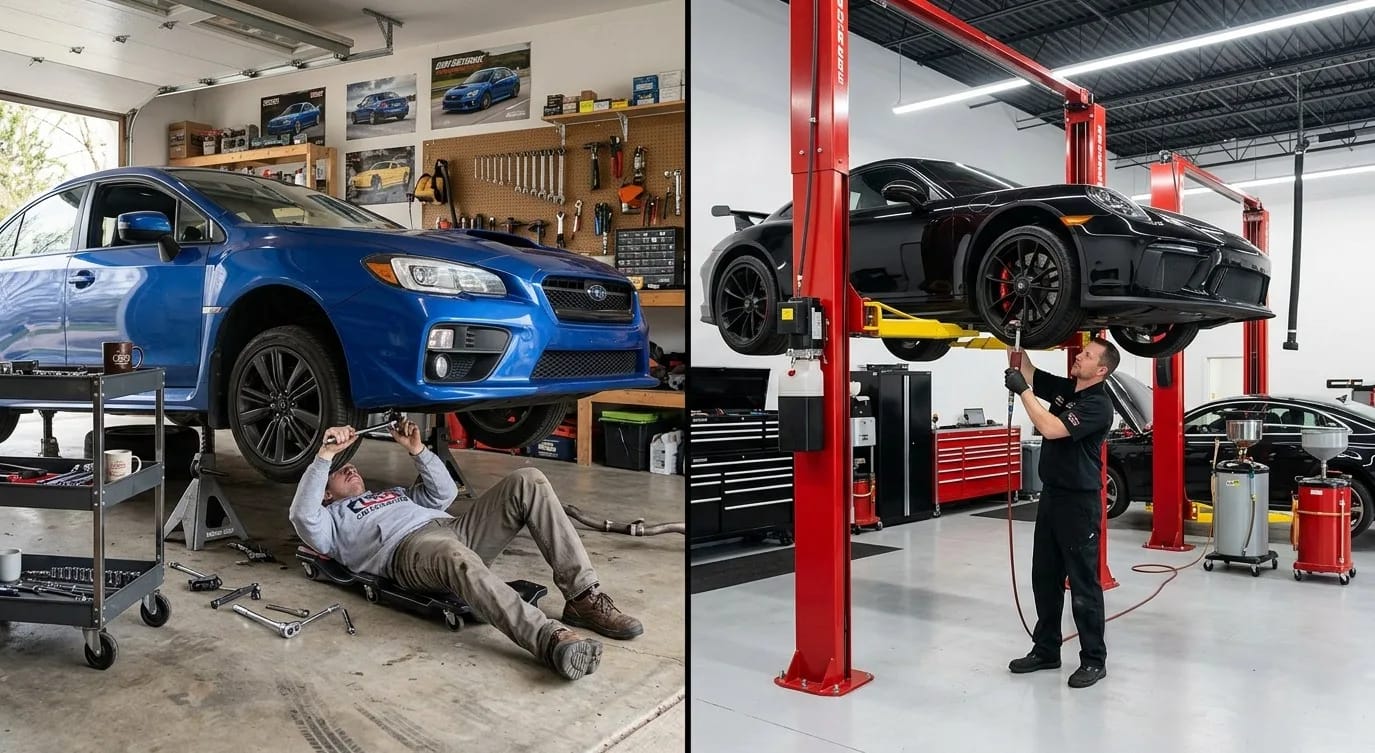
Installing any aftermarket body kit requires a deep toolbox: air tools, body filler, structural adhesives, fiberglass resin/mats, professional sanders, and paint skills. Fiberglass always requires cutting and grinding original panels to blend the seams, so unless you are an experienced fabricator, outsourcing to a professional body shop is almost non-negotiable.
What causes urethane body kit paint to flake off?
Flaking paint on urethane parts (image_6.png) is almost exclusively caused by improper preparation by the painter. Oily release agents from the mold must be scoured off using specific solvents, followed by the application of chemical adhesion promoters and flex agents added to the topcoats. If a painter skips these products to save money, the paint will have zero mechanical grip on the plastic.
Is carbon fiber a better choice than fiberglass?
Dry carbon fiber offers superior strength and extreme weight savings over both fiberglass and urethane. However, "wet carbon fiber" commonly sold as an aesthetic mod often consists of a single top layer of carbon over a fiberglass core, offering almost no weight benefit for a significantly higher price. For 90% of street car projects, the cost-benefit analysis favors urethane.
Do I need to buy the matching front, side, and rear parts?
While not strictly required, high-quality kits are designed as an integrated aerodynamic and aesthetic package. Mixing materials (a urethane front bumper with fiberglass side skirts) is usually fine, provided the parts are from the same manufacturer and match visually. Be cautious of mixing brands; they often have different height profiles or design languages.
Comments
Join the conversation on Fiberglass vs Urethane Body Kits: Don't Buy Until You Read This. Keep it civil — admins moderate reports.
Loading comments…